Industrial DC Battery Chargers are critical assets in substations, power plants, rail networks, factories, and emergency systems. In 2026, global buyers need more than impressive output ratings. They need stable charging, predictable maintenance, and dependable operation during outages. A charger may look excellent on paper. Field performance tells a different story.
This guide examines leading Industrial DC Battery Chargers for international purchasing teams. It considers input voltage, DC output stability, battery compatibility, alarm functions, communication interfaces, and thermal performance. Practical details matter. Cabinet ventilation, terminal access, display visibility, and spare-part availability can affect daily reliability. A charger operating in a dusty plant faces different demands than one installed in a clean control room. Experience matters here.
Reliability is earned. Manufacturers should provide clear test records, product traceability, technical manuals, and responsive service support. Buyers should also verify relevant certifications, local installation requirements, warranty terms, and grid conditions before ordering. Requirements vary between countries and industries. No single model fits every application. Even experienced engineers can overlook cable distance, ambient temperature, or future battery expansion. That is worth remembering.
The following overview compares representative 2026 solutions through a professional, evidence-based lens. It highlights strengths, limitations, and suitable use cases without treating marketing claims as proof. Some specifications may change as manufacturers update platforms. Confirm current data directly before making a purchase. That small step can prevent a costly mistake.
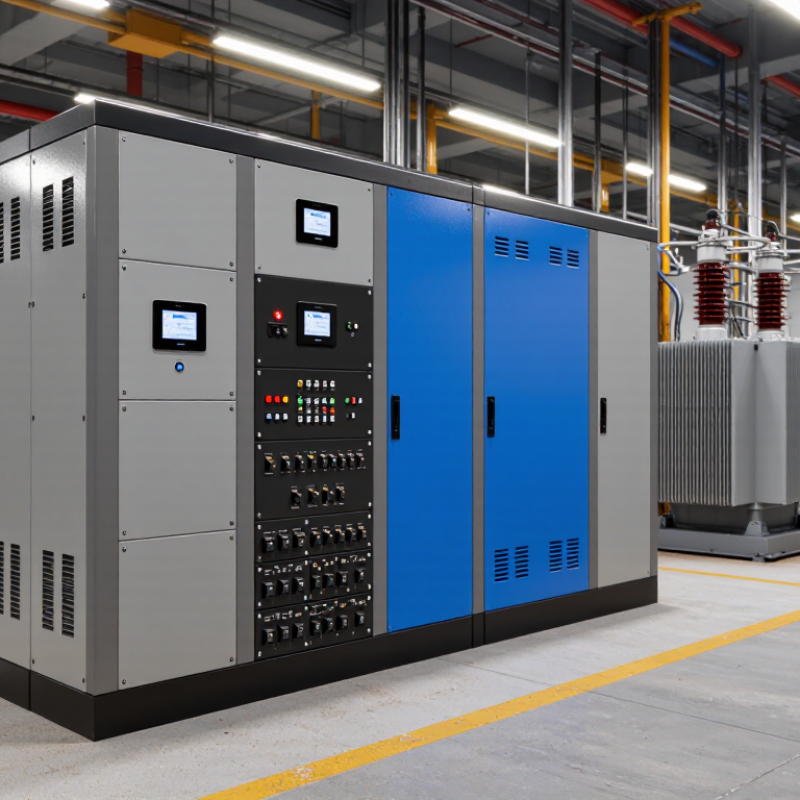
Industrial DC Battery Chargers in 2026: Types, Ratings, and Uses
2026 Top Industrial DC Battery Chargers for Global Buyers
Industrial DC Battery Chargers in 2026: Types, Ratings, and Uses
Industrial DC battery chargers maintain control power when utility electricity fails. They support substations, factories, rail systems, telecom rooms, and emergency equipment. Float chargers keep batteries fully charged during standby operation. Boost chargers deliver controlled recovery after deep discharge. High-frequency models are compact and efficient, while SCR chargers remain valued for rugged industrial environments. Modular chargers add service flexibility because technicians can replace one power module without stopping the entire system.
Ratings must match the battery bank and the connected load. Common DC outputs include 24V, 48V, 110V, 125V, and 220V. Current ratings may range from 10A to 600A. Check continuous load, recharge time, ripple, input voltage, and efficiency. Temperature compensation is important in outdoor cabinets. A wide operating range reduces charging errors in cold or hot locations. Protection against short circuits, overvoltage, reverse polarity, and overheating should be clearly documented.
Application conditions often decide the best design. A substation may require dual chargers, alarm contacts, and redundant control circuits. A factory may prioritize low noise and easy maintenance. Telecom sites often need remote monitoring and compact dimensions. Battery chemistry also matters; lead-acid and lithium systems require different charging controls. A perfect specification rarely exists. In practice, engineers sometimes overestimate future loads or underestimate ventilation needs. Reviewing measured demand, maintenance access, and local electrical conditions can prevent expensive redesigns. Safety margins should be deliberate, not automatic.
IEC 62477-1 and IEEE 946: Safety, Testing, and Reliability Standards
Industrial DC battery chargers should be evaluated against IEC 62477-1 and IEEE 946, not only by output voltage or charging speed. IEC 62477-1 addresses safety for power electronic converter systems. Its practical focus includes insulation coordination, protective bonding, touch current, temperature rise, and fire-related risks. Buyers should request test evidence for creepage, clearance, dielectric strength, and abnormal operating conditions. Small gaps matter.
IEEE 946 guides the design of DC auxiliary systems used in substations and generating facilities. It connects charger selection with battery sizing, autonomy, load profiles, redundancy, and maintenance access. A reliable specification should define float voltage tolerance, recharge time, alarm behavior, and operation during battery faults. IEEE 946 is a design practice, not a product certification. That distinction is often missed.
Reliability deserves financial attention. Uptime Institute’s 2023 Annual Outage Analysis reported that 55% of respondents experienced a latest outage costing more than 100,000 dollars. The IEA’s 2024 Batteries and Secure Energy Transitions report also indicates that global energy storage capacity must expand substantially by 2030. These trends increase pressure on DC systems. Factory acceptance testing should verify protection trips, thermal performance, communications, and load sharing. Site testing should repeat critical checks under realistic conditions. A checklist helps, but it can still miss poor cable termination, unclear alarms, or battery-room heat. Human review remains necessary.
Charger Sizing by Battery Capacity, Load Demand, and 0.1C–0.3C Rates
For global buyers, industrial DC battery charger sizing begins with three numbers: battery capacity, continuous load, and required recharge rate. A 48 V, 500 Ah battery has a nominal capacity of 500 Ah. At 0.1C, the charging current is 50 A. At 0.2C, it becomes 100 A, while 0.3C reaches 150 A. These rates are not interchangeable. Battery chemistry, temperature, ventilation, and manufacturer limits must guide the final choice.
Add the operating load to the desired charging current. A 20 A control system paired with a 500 Ah battery may need about 70 A for a 0.1C target. This allows the charger to supply the load while restoring battery capacity. A higher rate can shorten recovery time, but it may increase heat, stress, and maintenance demands. Measure the real load, not only the nameplate value. Pumps, relays, and emergency lighting can create brief surges.
Small details matter. Check charger output at the actual DC voltage, cable losses, ambient temperature, and end-of-charge behavior. A 110 V system, for example, needs different protection and insulation practices than a 24 V panel. I once sized equipment from average load data and underestimated a nighttime alarm circuit. The charger worked, but recovery took too long. That mistake reinforced a practical rule: include aging capacity, future loads, and site measurements before selecting the 0.1C–0.3C range.
2026 Top Industrial DC Battery Chargers for Global Buyers
Charger sizing by battery capacity, load demand, and 0.1C–0.3C charging rates
Example sizing basis: a 48 V nominal battery system with a continuous 2 kW DC load. Recommended charger output is calculated as battery charging power plus continuous load demand:
48 V × battery capacity × C-rate + 2 kW. Final selection should also account for efficiency, temperature, recharge time, battery manufacturer limits, and design margin.
Comparing 90–95% Efficiency, Power Quality, and Total Cost of Ownership
Selecting a 2026 industrial DC battery charger requires more than comparing a 90% and 95% efficiency label. A five-point difference can reduce heat inside a crowded electrical room. It can also lower cooling demand and annual energy waste. However, test conditions may differ. Check efficiency at 25%, 50%, and 100% load, not only at the best operating point.
Power quality deserves equal attention. Low input total harmonic distortion, stable power factor, and limited DC ripple protect batteries and connected control systems. During commissioning reviews, engineers should measure voltage stability under sudden load changes. A charger that performs well in a laboratory may behave differently beside motors, converters, or long cable runs. That gap is easy to overlook.
Tips: Request independent test records, thermal data, acoustic limits, and service intervals. Calculate total cost of ownership over ten years. Include electricity, cooling, spare parts, battery stress, labor, and planned replacement. A cheaper unit may become expensive after repeated fan failures or difficult maintenance access. Conversely, the highest efficiency option may not deliver the best value if its controls are complex or technicians need special training. Keep assumptions visible. Real projects are rarely perfect.
Global Buyer Checklist: IP54/IP65 Protection, Grid Compatibility, and Service
2026 Top Industrial DC Battery Chargers for Global Buyers
Global Buyer Checklist: IP54/IP65 Protection, Grid Compatibility, and Service
Industrial DC battery chargers face dust, moisture, vibration, and unstable operating rooms. Global buyers should match enclosure protection to the installation site, not marketing language. An IP54 enclosure resists limited dust entry and water splashes. IP65 provides stronger dust protection and resistance to water jets. Check the rating certificate, gasket condition, cable glands, and cabinet ventilation. A sealed door can still fail when installation work is careless.
Grid compatibility requires more than matching the listed voltage. Confirm input voltage, frequency, phase configuration, surge tolerance, and grounding requirements. Ask for test records under both low and high grid conditions. A charger may perform well in a factory test, then struggle with a weak local supply. Do not assume every site has clean power.
Service planning deserves equal attention. Request wiring diagrams, alarm definitions, maintenance intervals, and spare-parts availability before purchase. Confirm response times, technician coverage, language support, and training options. Battery rooms often need quick diagnosis, especially when alarms appear during overnight operation. Remote support helps, but it cannot replace practical field assistance. One weakness remains: many checklists ignore future component availability. Check the expected support period, repair process, and firmware update policy in writing.
FAQS
It maintains control power during utility failures. Common sites include substations, factories, rail systems, and telecom rooms. Standby operation matters.
Float charging keeps a battery fully charged during normal standby. Boost charging restores capacity after deep discharge. Recovery can create extra heat.
High-frequency chargers are compact and efficient. SCR chargers suit rugged environments. Modular chargers allow one power module replacement without stopping the whole system.
Match the charger with the battery bank and connected load. Common outputs include 24V, 48V, 110V, 125V, and 220V. Current ratings may reach 600A.
A 500 Ah battery needs 50A at 0.1C. Add the continuous load to the charging current. For a 20A load, the approximate size becomes 70A.
Nameplate values may miss pumps, relays, alarms, or emergency lighting surges. A nighttime alarm circuit once caused slow recovery. Average data can mislead.
Look for short-circuit, overvoltage, reverse-polarity, and overheating protection. Temperature compensation helps outdoor cabinets. Clear documentation is essential. Details matter.
Not automatically. Check efficiency at 25%, 50%, and 100% load. Higher efficiency can reduce heat, cooling demand, and energy waste.
Include electricity, cooling, spare parts, battery stress, labor, and replacement costs. Difficult maintenance can erase a low purchase price. Assumptions need review.
Conclusion
Industrial DC Battery Chargers are essential for maintaining reliable power in substations, telecommunications systems, industrial controls, transportation, and emergency backup applications. In 2026, global buyers should understand the differences among fixed, modular, floor-mounted, and rack-mounted charger designs, as well as key voltage, current, and battery chemistry ratings. Proper sizing requires evaluating battery capacity, continuous and emergency load demand, recharge time, and recommended charging rates such as 0.1C to 0.3C.
Safety and long-term reliability should be assessed against IEC 62477-1 and IEEE 946 principles, including insulation, protection, testing, and battery system performance. Buyers should also compare 90–95% efficiency, power quality, thermal management, and total cost of ownership rather than focusing only on purchase price. A practical global checklist should include IP54 or IP65 enclosure protection, grid and frequency compatibility, installation conditions, monitoring functions, spare parts availability, documentation, and responsive service support.