Blog

How to Choose Wearless Electronic DC MOSFET Relays

How to Choose Wearless Electronic DC MOSFET Relays

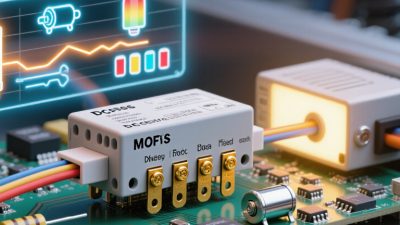
Choosing Wearless Electronic DC-MosFET Relays requires more than matching voltage and current ratings. These solid-state devices have no mechanical contacts to arc, bounce, or physically wear. However, “wearless” does not mean failure-proof. Heat, leakage current, voltage spikes, and poor circuit protection can still shorten service life. John G. Kassakian, a respected power electronics professor, described power electronics as “the technology associated with the efficient conversion, control, and conditioning of electric power.” That principle guides every reliable relay selection. Begin with the DC load type. A resistive heater behaves differently from a motor, solenoid, LED driver, or capacitive input. Check the maximum load voltage, continuous current, inrush current, and switching frequency. A relay rated for 10 amperes may not survive a motor’s starting surge. Look closely at the datasheet. Compare on-resistance, off-state leakage, switching speed, isolation rating, and thermal limits. A relay installed beside a warm power supply may need derating. In a narrow control cabinet, every lost watt becomes a small heater. For inductive loads, confirm whether the module includes a flyback diode, TVS clamp, or another suppression method. Also examine input compatibility, especially when a PLC output supplies only a limited control current. This guide explains how to choose Wearless Electronic DC-MosFET Relays with practical judgment. Some specifications appear clear but hide important conditions. Ambient temperature, wiring length, and installation quality can change the result. The safest choice is not always the relay with the largest headline rating. It is the relay that remains stable under the actual load, environment, and switching pattern.
Read more »
Clara By:Clara - November 1, 2026
China Best AC Inrush Current Limiters How to Choose?

China Best AC Inrush Current Limiters How to Choose?

Choosing the best AC Inrush Current Limiters from China requires more than comparing prices or product photos. The right device must match your equipment’s voltage, startup current, operating frequency, and expected service life. A limiter used in a 230 V LED power supply may not suit a large compressor or industrial transformer. Details matter. In practical design work, engineers often begin with the highest measured inrush current, not the normal running current. They also check the limiter’s energy rating, resistance curve, response time, and maximum ambient temperature. NTC thermistors are simple and cost-effective, while active limiters or bypass circuits may perform better during frequent switching. That assumption can fail. A component that works during laboratory testing may overheat inside a sealed cabinet. Reliable Chinese manufacturers should provide clear datasheets, production traceability, sample testing, and consistent electrical specifications. Ask for measured cold resistance, maximum permissible current, surge capability, and endurance results. Certification documents should be verified against the actual model, not a similar product. Communication quality matters too, especially when drawings or wiring changes are involved. Field experience suggests testing under real conditions is essential. Simulate repeated starts, low temperatures, voltage fluctuations, and restricted airflow. Watch the waveform with suitable measuring equipment. A low-cost AC Inrush Current Limiters solution may become expensive after nuisance trips, damaged relays, or premature failures. The “best” choice depends on the application, not the supplier’s headline claim. Even experienced buyers can miss one factor. Careful comparison remains necessary.
Read more »
Evelyn By:Evelyn - October 27, 2026
Why Choose Charging Rectifiers for DC-UPS Systems?

Why Choose Charging Rectifiers for DC-UPS Systems?

Why Choose Charging Rectifiers for DC-UPS Systems? Charging Rectifiers for DC-UPS systems convert incoming AC power into stable DC power. They also maintain the battery bank without interrupting critical loads. This dual role makes them central to telecom, utility, transportation, and industrial backup systems. In a 48 V DC installation, a well-designed rectifier keeps control equipment powered while charging batteries at a controlled current. Bimal K. Bose, a respected power-electronics scholar, wrote, “Power electronics is the technology associated with the conversion, control, and conditioning of electric power.” His statement explains the rectifier’s real value. It does more than charge batteries. It manages voltage quality, charging behavior, efficiency, and system response. Modern units can share current across modules, report alarms, and compensate for changing load demand. They can also simplify maintenance because faulty modules may be replaced without shutting down the entire DC bus. Reliability depends on more than efficiency figures. Engineers must examine ripple, thermal limits, battery chemistry, protection functions, and service access. A rectifier running in a hot cabinet may perform differently from one tested in a cool laboratory. That detail matters. Poor coordination can shorten battery life or create unstable charging conditions. Still, rectifiers are not a magic solution. They need correct sizing, ventilation, monitoring, and scheduled testing. Some projects may also require redundant modules or separate charging paths. The best choice comes from measured site conditions, not attractive brochures. A careful design may cost more initially. It can prevent a silent failure when the grid disappears.
Read more »
Evelyn By:Evelyn - October 22, 2026
2026 Top Industrial DC Battery Chargers for Global Buyers

2026 Top Industrial DC Battery Chargers for Global Buyers

Industrial DC Battery Chargers are critical assets in substations, power plants, rail networks, factories, and emergency systems. In 2026, global buyers need more than impressive output ratings. They need stable charging, predictable maintenance, and dependable operation during outages. A charger may look excellent on paper. Field performance tells a different story. This guide examines leading Industrial DC Battery Chargers for international purchasing teams. It considers input voltage, DC output stability, battery compatibility, alarm functions, communication interfaces, and thermal performance. Practical details matter. Cabinet ventilation, terminal access, display visibility, and spare-part availability can affect daily reliability. A charger operating in a dusty plant faces different demands than one installed in a clean control room. Experience matters here. Reliability is earned. Manufacturers should provide clear test records, product traceability, technical manuals, and responsive service support. Buyers should also verify relevant certifications, local installation requirements, warranty terms, and grid conditions before ordering. Requirements vary between countries and industries. No single model fits every application. Even experienced engineers can overlook cable distance, ambient temperature, or future battery expansion. That is worth remembering. The following overview compares representative 2026 solutions through a professional, evidence-based lens. It highlights strengths, limitations, and suitable use cases without treating marketing claims as proof. Some specifications may change as manufacturers update platforms. Confirm current data directly before making a purchase. That small step can prevent a costly mistake.
Read more »
Amelia By:Amelia - October 17, 2026
2026 Best Modular DC UPS Power Supplies for Global Buyers

2026 Best Modular DC UPS Power Supplies for Global Buyers

In telecom rooms, control cabinets, and remote monitoring sites, DC power rarely gets a second chance. When mains power fails, a dependable backup must keep controllers, sensors, and communication equipment working without interruption. Modular DC-UPS Power Supplies address this need by combining rectifiers, battery management, protection, and replaceable power modules. Small details matter. A 24 V system may suit automation equipment, while a 48 V platform can support demanding telecommunications loads. Engineers should check output current, battery chemistry, recharge time, operating temperature, installation space, and alarm interfaces. Field experience shows that a compact DIN-rail unit can simplify maintenance, but poor ventilation may reduce its service life. That trade-off deserves attention. This guide evaluates the 2026 options for global buyers through practical, technical, and purchasing perspectives. It considers modular expansion, N+1 redundancy, hot-swappable modules, remote monitoring, short-circuit protection, and total ownership cost. Real sites vary greatly. A coastal cabinet may face humidity and corrosion, while a desert installation may exceed 45°C. Therefore, a product that performs well in a laboratory may require careful derating outdoors. Look beyond attractive datasheets. Verify test reports, warranty terms, spare-module availability, local service coverage, and relevant regional certifications. Some manufacturers provide impressive efficiency figures but explain little about battery aging or partial-load performance. That gap should not be ignored. Our comparisons may not fit every installation, and certain data can change after publication. Still, the selection framework helps buyers ask better questions, reduce avoidable downtime, and choose a modular DC backup system with greater confidence.
Read more »
Amelia By:Amelia - October 12, 2026
What Is a DC Mini Grid DIN Rail Power Supply?

What Is a DC Mini Grid DIN Rail Power Supply?

A DC mini-grid is a local electricity network that serves homes, clinics, farms, or industrial loads without depending entirely on a national grid. It may combine solar panels, batteries, controllers, and efficient DC appliances. The International Energy Agency’s World Energy Outlook 2024 estimates that about 750 million people still lacked electricity access in 2023. This gap keeps distributed power systems relevant, especially in remote communities and weak-grid regions. Within these systems, DC Mini-Grid DIN Rail Power Supplies provide a compact and organized method for converting available power into stable direct current. A typical unit mounts inside a control cabinet, clips onto a standardized DIN rail, and supplies 12 V, 24 V, or 48 V DC to sensors, communication devices, protection relays, and control equipment. That small enclosure matters. It can reduce wiring clutter, simplify maintenance, and protect sensitive electronics from voltage fluctuations. However, a power supply is not the mini-grid itself. System designers must match its input range, output capacity, efficiency, cooling method, and protection features with the battery and load profile. The World Bank’s ESMAP mini-grid research emphasizes reliable operation, lifecycle costs, and appropriate technology selection. IRENA’s renewable-energy statistics also show the continuing expansion of solar generation, supporting wider use of modular storage-based networks. Field experience suggests that heat, dust, poor ventilation, and undersized terminals often cause more trouble than the headline specifications indicate. This is easy to overlook. Therefore, understanding DC Mini-Grid DIN Rail Power Supplies requires more than reading a datasheet; it requires examining real operating conditions, future load growth, and maintenance access. Some designs still appear efficient on paper, yet perform poorly in the cabinet.
Read more »
Evelyn By:Evelyn - October 7, 2026
China Best Wall Mount AC DC Power Supplies Manufacturer?

China Best Wall Mount AC DC Power Supplies Manufacturer?

Choosing the best China manufacturer for Wall-Mount AC/DC Power Supplies requires more than comparing prices. Buyers must examine engineering capability, production consistency, safety controls, and after-sales support. A dependable supplier should explain input ranges, output stability, protection features, cooling methods, and enclosure materials clearly. It should also provide traceable test records, relevant certifications, and samples that match mass-production specifications. Real-world performance matters. An experienced manufacturer can discuss mounting conditions, cable routing, heat accumulation, and voltage fluctuations without relying on vague promises. Look for practical evidence, such as thermal test data, aging procedures, load testing, and inspection reports. A well-designed power supply should operate quietly inside a control cabinet or against a factory wall, even when dust and heat create difficult conditions. Small details matter. No supplier is perfect. That deserves attention. Communication quality can reveal weaknesses early. Ask how engineers handle custom voltage requirements, connector changes, enclosure revisions, and failed samples. Reliable teams document changes instead of depending on informal messages. They also identify limitations before signing a purchase order. This honesty supports safer decisions and reduces costly surprises. This guide explores how to evaluate China-based manufacturers from a professional and practical perspective. It considers product quality, customization, factory capability, compliance awareness, delivery reliability, and technical service. Some suppliers may offer attractive specifications but lack consistent verification. Others may have strong engineering skills but limited international support. Careful comparison remains essential. The best choice is not always the cheapest one. It is the manufacturer that can repeatedly deliver safe, stable, and suitable power solutions for your application.
Read more »
Amelia By:Amelia - October 2, 2026
China Best 19 Inch Rack Mount Power Supplies?

China Best 19 Inch Rack Mount Power Supplies?

Choosing the China Best 19 Inch Rack Mount Power Supplies depends on more than price or a polished specification sheet. A unit may fit a standard rack yet struggle with heat, load changes, or crowded cable routes. Small details matter. Think of a cabinet running through a warm afternoon: fans are spinning, nearby equipment is drawing power, and every connector needs room. That is where careful comparison becomes useful. This guide looks at 19-Inch Rack-Mount Power Supplies through practical selection criteria, including output capacity, voltage options, cooling, protection features, installation dimensions, and documentation. It also considers how manufacturers describe testing, component quality, warranty coverage, and technical support. Clear product information is reassuring, but buyers should verify compatibility with their equipment and operating conditions. Heat is real. A listed rating alone cannot tell the whole story. There is no single best model for every rack. A compact unit might suit a light-duty setup, while a higher-capacity design may be more appropriate for demanding equipment. The right choice should leave sensible headroom without paying for capacity that will never be used. Some product pages make comparison harder than it needs to be; that is worth admitting. The following outline separates measurable specifications from claims that deserve a closer look, helping readers shortlist suitable options with fewer assumptions.
Read more »
Evelyn By:Evelyn - September 27, 2026
China Best Programmable DIN Rail Power Supplies?

China Best Programmable DIN Rail Power Supplies?

China Best Programmable DIN-Rail Power Supplies? This question matters wherever a control cabinet must deliver stable power, precise adjustment, and dependable communication. Programmable DIN-Rail Power Supplies can regulate voltage and current, record operating conditions, and support remote control through industrial interfaces. In a factory cabinet, that means fewer manual adjustments beside hot machinery. Market research supports the broader opportunity. MarketsandMarkets reported that the global power supply market was valued at approximately USD 32 billion in 2023, with industrial automation among its important application areas. Grand View Research also identifies automation, energy systems, and telecommunications as major drivers for industrial power-supply demand. These reports do not rank every DIN-rail model. They do show the pressure behind smarter, more efficient power conversion. Ray Ridley, a recognized power-electronics engineer and founder of Ridley Engineering, has repeatedly stressed a practical truth: “The power supply is often the most critical part of the system.” That warning should guide any China supplier comparison. A low price is not enough. Buyers should examine IEC 62368-1 or IEC 61010-1 relevance, EMC test evidence, ripple performance, overload recovery, thermal derating, and five-year availability. Look closely. The strongest candidates combine efficient switching, narrow DIN-rail mounting, clear front-panel indicators, and genuinely useful programming software. Some products claim advanced control but provide limited documentation. That is a weakness. This article evaluates China’s leading options through specifications, factory experience, certification evidence, application fit, and after-sales reliability. “Best” remains conditional. A laboratory needs different behavior from a remote pump station.
Read more »
Amelia By:Amelia - September 22, 2026
2026 Best Single Phase AC DC DIN Rail Power Supplies?

2026 Best Single Phase AC DC DIN Rail Power Supplies?

Selecting the 2026 best Single-Phase AC/DC DIN-Rail Power Supplies is not simply a comparison of wattage and price. A reliable unit must convert unstable mains power into clean DC output, often inside a narrow cabinet with limited airflow. Think of a crowded control panel: warm terminals, humming contactors, and only a few centimeters between devices. That environment exposes weak designs quickly. Christophe Basso, a widely recognized power-conversion engineer and author, has emphasized: “A power supply is part of the system, not an isolated component.” This principle matters when comparing modern DIN-rail models. Efficiency, thermal derating, short-circuit protection, surge resistance, and output stability deserve equal attention. A 120 W supply may look attractive, yet its usable power can fall sharply above 50°C. That detail is easy to miss. This guide evaluates Single-Phase AC/DC DIN-Rail Power Supplies through practical engineering criteria. We consider input voltage range, DC voltage adjustment, startup behavior, alarm contacts, installation depth, and compliance documentation. We also examine how manufacturers support real maintenance work, including clear status indicators and accessible specifications. Small details matter. Some rankings remain imperfect. Published efficiency figures may reflect laboratory conditions, not dusty factory cabinets. Distributor data can also become outdated. Therefore, the “best” supply depends on the load, enclosure, ambient temperature, and required service life. Readers should verify current datasheets before purchasing. A careful choice protects PLCs, sensors, relays, and production uptime without paying for unnecessary features.
Read more »
Amelia By:Amelia - September 22, 2026
2026 Best Three Phase AC DC DIN Rail Power Supplies?

2026 Best Three Phase AC DC DIN Rail Power Supplies?

Choosing the 2026 best Three-Phase AC/DC DIN-Rail Power Supplies requires more than comparing output voltage and catalogue prices. Industrial cabinets often hide the real challenges. A supply may face high ambient heat, narrow rail spacing, unstable input power, or repeated motor-starting surges. These conditions can expose weak thermal designs quickly. This guide examines dependable models through practical engineering criteria, including efficiency, power derating, hold-up time, protection functions, and terminal accessibility. Installation experience matters here. A compact unit with clear markings can reduce wiring mistakes during a rushed maintenance shift. Strong diagnostic indicators can also shorten fault-finding when a control panel stops unexpectedly. Still, no product fits every application. That point is easy to overlook. Load profiles, grounding arrangements, cabinet ventilation, and local electrical requirements must be checked before purchase. Manufacturer test data should support every major claim, rather than attractive marketing language alone. Independent certifications and current technical documentation add confidence, but they do not replace application review. Some comparisons may remain imperfect because published specifications use different test conditions. Readers should treat rankings as informed guidance, not absolute engineering approval. The most suitable supply balances reliability, safety, service life, and total operating cost. It should also leave reasonable capacity for future expansion. A crowded power supply rarely performs as comfortably as one selected with measured headroom. This article provides a practical starting point for engineers, integrators, and maintenance teams evaluating modern three-phase power solutions.
Read more »
Amelia By:Amelia - September 22, 2026