0%

A DC mini-grid is a local electricity network that serves homes, clinics, farms, or industrial loads without depending entirely on a national grid. It may combine solar panels, batteries, controllers, and efficient DC appliances. The International Energy Agency’s World Energy Outlook 2024 estimates that about 750 million people still lacked electricity access in 2023. This gap keeps distributed power systems relevant, especially in remote communities and weak-grid regions.

Within these systems, DC Mini-Grid DIN Rail Power Supplies provide a compact and organized method for converting available power into stable direct current. A typical unit mounts inside a control cabinet, clips onto a standardized DIN rail, and supplies 12 V, 24 V, or 48 V DC to sensors, communication devices, protection relays, and control equipment. That small enclosure matters. It can reduce wiring clutter, simplify maintenance, and protect sensitive electronics from voltage fluctuations. However, a power supply is not the mini-grid itself. System designers must match its input range, output capacity, efficiency, cooling method, and protection features with the battery and load profile.

The World Bank’s ESMAP mini-grid research emphasizes reliable operation, lifecycle costs, and appropriate technology selection. IRENA’s renewable-energy statistics also show the continuing expansion of solar generation, supporting wider use of modular storage-based networks. Field experience suggests that heat, dust, poor ventilation, and undersized terminals often cause more trouble than the headline specifications indicate. This is easy to overlook. Therefore, understanding DC Mini-Grid DIN Rail Power Supplies requires more than reading a datasheet; it requires examining real operating conditions, future load growth, and maintenance access. Some designs still appear efficient on paper, yet perform poorly in the cabinet.
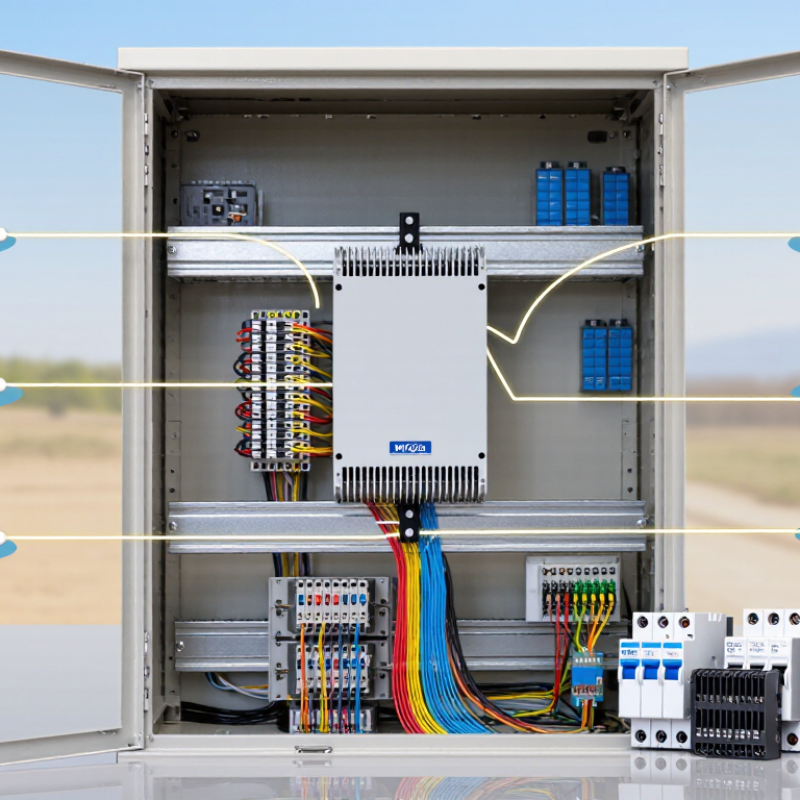
What Is a DC Mini Grid DIN Rail Power Supply?

Definition and Core Purpose of a DC Mini Grid DIN Rail Power Supply

What Is a DC Mini Grid DIN Rail Power Supply?

A DC mini grid DIN rail power supply converts incoming AC electricity into stable, usable DC power. It mounts on a standard DIN rail inside a control cabinet. Its core purpose is simple: feed several low-voltage devices from one controlled source. Typical outputs include 12V, 24V, or 48V DC.

In a small industrial panel, the supply may power sensors, controllers, communication equipment, and safety relays. A compact DC distribution network then carries power to each device. This arrangement reduces scattered adapters and keeps wiring easier to inspect. Many units include overload, short-circuit, and over-temperature protection. These features help protect both the supply and connected equipment.

The term “mini grid” can sound larger than it is. It usually describes a local DC power system, not a public electricity network. In practical panel work, checking voltage drop matters, especially across long cable runs. A device may show the correct voltage without a load, then fall during operation. That detail is easy to miss. Input range, output current, ventilation space, and grounding requirements also deserve careful review. A supply rated for 240 watts may not deliver that amount continuously in a hot, enclosed cabinet. Real installations are rarely perfect. Clear labeling and measured testing often prevent small wiring errors from becoming costly faults.

Key Components and Operating Principles

What Is a DC Mini Grid DIN Rail Power Supply?

A DC mini grid DIN rail power supply converts incoming AC or renewable DC into stable low-voltage DC power. It mounts inside a standard control cabinet. The DIN rail saves space and simplifies maintenance. Typical systems include a rectifier, DC bus, battery interface, circuit protection, monitoring unit, and connected loads.

The operating principle is straightforward. Solar panels or an AC source feed the power stage. The converter regulates voltage, while the controller balances generation, storage, and demand. Batteries support the DC bus during clouds, outages, or evening demand. Fuses and surge protection limit damage from short circuits and voltage spikes. The World Bank’s Mini Grids for Half a Billion People report estimates that mini grids could serve 490 million people by 2030. That scale demands reliable conversion, not merely low purchase prices.

Field experience shows that heat, dust, loose terminals, and poor ventilation often reduce performance. A tidy cabinet can still hide thermal problems. Designers should check efficiency, derating curves, isolation, ripple, and start-up behavior under full load. IEC 62477-1 provides safety principles for power electronic converter systems. However, compliance does not replace commissioning tests. Measurements matter.

Tips: Keep the power supply away from hot components. Leave airflow around the enclosure. Label every DC circuit clearly. Test battery changeover under realistic loads, not only at idle. Review the design after installation; real sites rarely behave perfectly.

Input, Output, and Power Conversion Specifications

What Is a DC Mini Grid DIN Rail Power Supply?
Input, Output, and Power Conversion Specifications

A DC mini grid DIN rail power supply converts available electrical energy into stable DC power for control systems, sensors, and communication devices. Many models accept 85–264 V AC at 50 or 60 Hz. Some support a DC input range for battery-backed systems. Always verify the input type, tolerance, and starting current before installation.

The output specification deserves closer attention. A unit may provide 12 V, 24 V, or 48 V DC, with current ratings from a few amperes upward. Calculate the load continuously, then allow headroom for startup surges and future devices. For example, a 24 V, 5 A supply delivers 120 W under rated conditions. It should not operate at that limit inside a hot cabinet. Thermal derating matters.

Conversion efficiency reduces heat loss, but efficiency figures can vary with input voltage and load. Check ripple, voltage regulation, isolation, short-circuit protection, and overload recovery time. A low ripple value helps sensitive instruments perform consistently. DIN rail mounting saves panel space and supports cleaner wiring. Still, a compact enclosure can trap heat. That detail is easy to miss. In practice, ventilation, conductor sizing, and fuse coordination influence reliability as much as the printed power rating. A tidy specification sheet is useful, but it cannot replace measurements during commissioning.

What Is a DC Mini Grid DIN Rail Power Supply?

The chart presents representative specifications for DC mini-grid DIN rail power supplies. These units commonly accept a regulated 24 V DC input and convert it to a lower DC output for control systems, sensors, communication equipment, and other distributed loads. Efficiency generally increases with the rated power capacity.

Input voltage is shown as a constant 24 V DC reference. Output power and efficiency are representative values commonly found in compact DIN rail power supply designs; actual specifications vary by model, load level, ambient temperature, and protection requirements.

Installation Methods and System Integration

What Is a DC Mini Grid DIN Rail Power Supply?

Installation Methods and System Integration

A DC mini-grid DIN rail power supply delivers regulated power to control devices, sensors, meters, and communication equipment. It usually mounts inside a grounded enclosure on a 35 mm DIN rail. Leave ventilation space above and below the unit. Heat accumulates quickly in sealed cabinets. Install a fuse or circuit breaker on the input side, then verify polarity before energizing the circuit. A simple label can prevent an expensive mistake.

System integration requires more than connecting wires. The supply may receive energy from a battery bus, photovoltaic controller, or AC-to-DC converter. Its output voltage must match the control network, commonly 12 V, 24 V, or 48 V DC. Separate high-current load cables from communication cables to reduce interference. IEC 60204-1 supports careful protection, isolation, and wiring practices for electrical equipment. IEC 60364 guidance also highlights earthing and overcurrent protection.

Scale matters.

The World Bank’s ESMAP report, Mini Grids for Half a Billion People, estimates that mini-grids could serve about 490 million people by 2030. The same report places the required investment near 127 billion US dollars. These systems need power supplies that tolerate voltage changes, dust, and temperature variation. The IEA also identifies mini-grids as important for expanding reliable electricity access. Still, field designs can be overly optimistic. A cabinet may pass a bench test, yet fail after months of heat, loose terminals, or battery undervoltage. Commissioning should include load testing, thermal inspection, alarm verification, and a documented restart procedure.

What Is a DC Mini Grid DIN Rail Power Supply? - Installation Methods and System Integration

Category Data Dimension Typical Value or Method Installation and Integration Notes
Electrical Characteristics Input voltage Single-phase AC, typically 100–240 V AC, 50/60 Hz Confirm the permitted input range before connecting the unit to the distribution board.
Output voltage Common fixed outputs include 12 V DC, 24 V DC, and 48 V DC Select the output voltage according to the connected loads, batteries, controllers, and protection devices.
Rated output current Approximately 1–20 A for compact DIN rail units The continuous load should remain below the rated current, with additional allowance for startup and temperature effects.
Rated power Approximately 24–480 W, calculated as output voltage × output current Use the actual continuous load profile rather than the nominal connected load when sizing the supply.
Efficiency Typically 85%–95%, depending on the power rating and operating point Higher efficiency reduces heat generation and improves energy utilization in solar, battery, and microgrid systems.
Output regulation Regulated DC output; typical adjustment range may be around ±5% where provided Set the output within the voltage tolerance of the connected equipment and verify it with a meter.
Installation Methods DIN rail mounting Snap mounting on a standard 35 mm top-hat DIN rail Install on a rigid rail inside an enclosure or control cabinet and lock the mounting clip securely.
Clearance and ventilation Maintain the manufacturer-specified clearance; 20–40 mm around ventilation areas is commonly used as a design allowance Do not block ventilation slots. Reduce the load or improve airflow if the enclosure temperature is high.
AC input wiring Connect line, neutral, and protective earth to the marked terminals Isolate the AC source before wiring. Use a correctly rated upstream disconnect and overcurrent protective device.
DC output wiring Connect positive and negative conductors with correct polarity Use conductors sized for the current, cable length, installation temperature, and allowable voltage drop.
Enclosure installation Use a ventilated, dry, accessible enclosure with suitable ingress protection Keep the power supply away from water, corrosive vapors, excessive dust, and strong heat sources.
Protection and Safety Short-circuit protection Electronic current limiting or hiccup-mode protection is commonly provided Remove the fault and allow the supply to recover according to its protection design.
Overload protection Output shutdown, current limiting, or thermal derating may occur Avoid operating continuously at the protection threshold; provide margin for transient loads.
Overvoltage protection Internal output overvoltage protection may be included Sensitive loads may require an additional DC surge suppressor or dedicated load protection.
Grounding and bonding Protective earth is connected to the enclosure and exposed conductive parts Follow local electrical codes. Do not bond DC negative to earth unless the system design requires it.
Isolation Many AC-to-DC supplies provide galvanic isolation between input and output Verify the isolation specification when connecting communication networks, battery banks, or multiple DC sources.
Mini Grid System Integration DC bus connection Connect the regulated output to a protected 12 V, 24 V, or 48 V DC distribution bus Place a fuse or circuit breaker close to the supply and use separate branch protection for each load group.
Battery integration Use a compatible battery charger or DC charging controller A standard regulated power supply should not replace a battery management system or an appropriate charging profile.
Renewable energy integration Connect photovoltaic or other renewable sources through a dedicated charge controller or DC-DC stage Prevent uncontrolled source paralleling and ensure reverse-current protection where required.
Redundant power arrangement Two supplies may be combined through redundancy or diode-ORing modules Check current sharing, reverse-current blocking, heat dissipation, and failure indication before commissioning.
Monitoring and control Optional relay contacts, DC OK signals, voltage monitoring, or external meters Connect status signals to a controller or energy management system for alarm and maintenance reporting.
Load classification Separate critical, non-critical, communication, and motor-driven loads Prioritize essential loads and account for inrush current from motors, relays, LED drivers, and converters.
Commissioning Checks Polarity verification Measure DC voltage and confirm positive and negative polarity before connecting loads Incorrect polarity can damage electronic equipment and protective devices.
Voltage-drop check Measure voltage at the supply and at the most distant load under operating conditions Increase conductor size or shorten cable runs if the load voltage falls outside its permitted range.
Thermal check Inspect enclosure temperature and supply temperature after the system reaches steady state Derate the supply when ambient temperature, enclosure density, or continuous load exceeds the design conditions.
Functional test Test normal operation, power interruption, restart behavior, alarms, and protected branch circuits Record measured values and update the wiring diagram and maintenance documentation.
Design note: The electrical ratings shown are typical design ranges for compact DC DIN rail power supplies. Always verify the exact datasheet, local electrical requirements, environmental limits, protection coordination, and load characteristics before installation.

Safety Standards, Applications, and Maintenance Considerations

What Is a DC Mini Grid DIN Rail Power Supply?

Safety Standards, Applications, and Maintenance Considerations

A DC mini grid DIN rail power supply converts AC input into stable DC power inside a control cabinet. Its clipped rail mounting saves space and simplifies wiring. In field installations, the supply may power sensors, controllers, communication devices, and battery-management equipment. Small errors matter.

Safety begins with correct separation between hazardous voltage and SELV or PELV circuits. Designers should check IEC 62368-1, IEC 61000-6-2, IEC 61000-6-4, and relevant machinery requirements under IEC 60204-1. Overcurrent protection, grounding, creepage distances, and thermal clearance deserve close inspection. A crowded enclosure can create heat pockets, even when the load appears modest. The 2022 ESMAP report, Mini Grids for Half a Billion People, estimated that mini grids could serve about 490 million people by 2030. That scale makes dependable protection more than a cabinet detail.

Applications range from rural electrification to factory automation and remote monitoring. The IEA’s Africa Energy Outlook 2022 reported that nearly 600 million people in Africa lacked electricity access. DC distribution can reduce conversion stages in solar and battery systems, but voltage drop still requires careful calculation. Maintenance should include terminal torque checks, dust removal, airflow inspection, and recorded output-voltage tests. Replace damaged wiring immediately. Do not ignore discoloration.

A supply can pass commissioning and still degrade early. Humidity, vibration, and repeated overloads are often underestimated. Maintenance records should include ambient temperature, measured voltage, alarm history, and load changes. No checklist replaces judgment. That remains an uncomfortable limitation.

FAQS

What does a DC mini grid DIN rail power supply do?

It converts AC or renewable DC into stable low-voltage DC for sensors, controllers, communication devices, and battery equipment.

Why is DIN rail mounting useful?

It saves cabinet space and keeps wiring orderly. Maintenance is usually easier, too.

What input and output ratings should be checked?

Confirm input voltage, frequency, starting current, output voltage, current capacity, ripple, and isolation. Printed ratings are not enough.

How much power does a 24 V, 5 A supply provide?

It provides 120 watts under rated conditions. Avoid continuous operation at that limit, especially inside a hot cabinet.

Why does thermal derating matter?

Heat reduces available output capacity and may shorten service life. Leave airflow around the enclosure and separate hot components.

How do batteries support a DC mini grid?

Batteries support the DC bus during clouds, outages, or evening demand. Test changeover with realistic loads, not only at idle.

What safety details need attention during installation?

Check grounding, overcurrent protection, creepage distances, conductor sizing, and separation between hazardous voltage and low-voltage circuits.

What maintenance should be performed?

Inspect terminals, remove dust, check airflow, record output voltage, and review alarm history. Do not ignore discoloration.

Can a successful commissioning test guarantee long-term reliability?

No. Humidity, vibration, loose terminals, and repeated overloads can cause later failures. Field conditions often behave imperfectly.

Conclusion

DC Mini-Grid DIN Rail Power Supplies are compact power-conversion devices designed to provide stable direct-current output for small electrical networks, control panels, and distributed equipment. Mounted on standard DIN rails, they convert an available AC or DC input into a regulated DC supply suitable for sensors, controllers, communication devices, and other low-voltage loads. Their core components typically include input protection, filtering, a conversion circuit, voltage regulation, thermal management, and output terminals. Key specifications include input-voltage range, rated output voltage, current capacity, efficiency, ripple, and overload response.

Installation generally involves securing the unit to a DIN rail, connecting the input and output wiring correctly, and integrating it with protective devices, batteries, renewable sources, or monitoring systems when required. DC Mini-Grid DIN Rail Power Supplies should be selected according to system load, environmental conditions, and applicable electrical safety standards. Proper grounding, ventilation, wiring practices, and regular inspection help prevent overheating, loose connections, and performance degradation, supporting reliable operation throughout the system’s service life.


Evelyn

Evelyn

Evelyn is a professional marketing specialist dedicated to helping businesses understand products, industries, and customer needs through clear, practical, and insight-driven content. With a strong understanding of the company’s product portfolio, she regularly contributes expert articles to the......