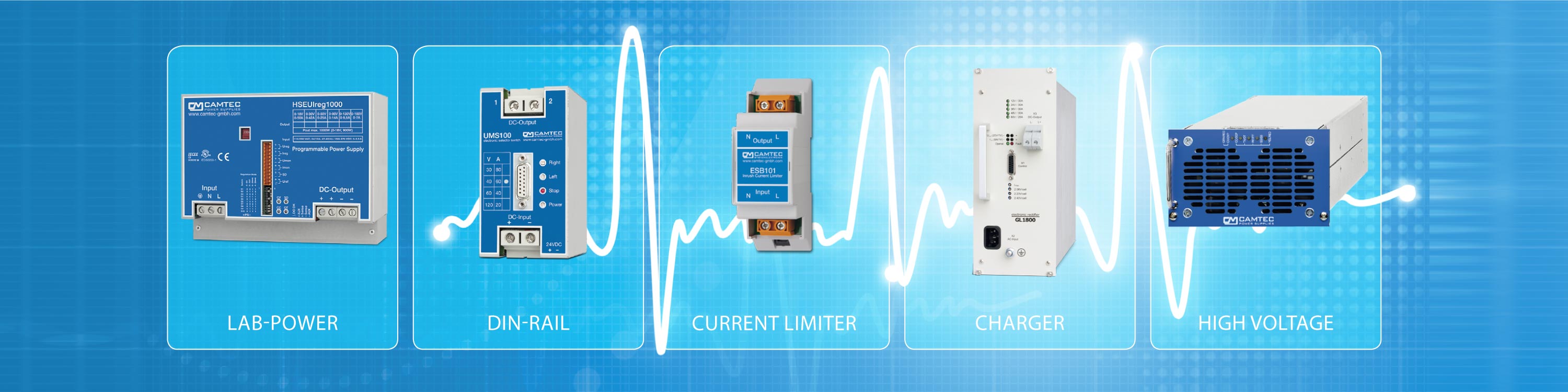
Market Outlook & Future Trends Future Procurement & Development Trends in Redundant Power Systems
As global industrial infrastructure transitions toward smart manufacturing (Industry 4.0), high-efficiency DC micro-grids, and decentralized automation networks, procurement parameters for redundant power supply modules are rapidly evolving beyond simple power delivery.
1. Transition to Wide-Bandgap Semiconductors (SiC & GaN)
Next-generation redundant power supply modules are incorporating Silicon Carbide (SiC) and Gallium Nitride (GaN) switching stages. This enables higher power densities, permitting 40A redundancy modules to be packaged in ultra-slim enclosures as narrow as 18mm to 32mm on standard DIN rails.
2. Predictive Maintenance & Digital Diagnostics
Future-ready procurement mandates smart telemetry. OEM buyers now require redundancy modules to transmit health metrics—including real-time channel currents, junction temperature trends, and input voltage ripple—directly to PLC edge gateways via IO-Link or Modbus protocols, replacing silent hardware failures with predictive alerts.
3. Convergence of DC-UPS and Active Redundancy
Industrial designers are shifting away from separate power supply, redundancy diode, and UPS battery charging blocks. Unified hybrid topologies combine active MOSFET decoupling with battery management within a single chassis, reducing cabinet wiring complexity by up to 60%.
4. Higher DC Distribution Voltages (380V – 800V DC)
Driven by e-mobility test stands, solar micro-grids, and AI data centers, power distribution is moving from traditional 24V/48V DC to high-voltage DC (HVDC) buses. Redundant power supply modules are adapting with isolation ratings exceeding 3kV AC and operating voltage windows up to 820V DC.