0%

Choosing the best China manufacturer for Wall-Mount AC/DC Power Supplies requires more than comparing prices. Buyers must examine engineering capability, production consistency, safety controls, and after-sales support. A dependable supplier should explain input ranges, output stability, protection features, cooling methods, and enclosure materials clearly. It should also provide traceable test records, relevant certifications, and samples that match mass-production specifications.

Real-world performance matters. An experienced manufacturer can discuss mounting conditions, cable routing, heat accumulation, and voltage fluctuations without relying on vague promises. Look for practical evidence, such as thermal test data, aging procedures, load testing, and inspection reports. A well-designed power supply should operate quietly inside a control cabinet or against a factory wall, even when dust and heat create difficult conditions. Small details matter.

No supplier is perfect. That deserves attention.

Communication quality can reveal weaknesses early. Ask how engineers handle custom voltage requirements, connector changes, enclosure revisions, and failed samples. Reliable teams document changes instead of depending on informal messages. They also identify limitations before signing a purchase order. This honesty supports safer decisions and reduces costly surprises.

This guide explores how to evaluate China-based manufacturers from a professional and practical perspective. It considers product quality, customization, factory capability, compliance awareness, delivery reliability, and technical service. Some suppliers may offer attractive specifications but lack consistent verification. Others may have strong engineering skills but limited international support. Careful comparison remains essential. The best choice is not always the cheapest one. It is the manufacturer that can repeatedly deliver safe, stable, and suitable power solutions for your application.
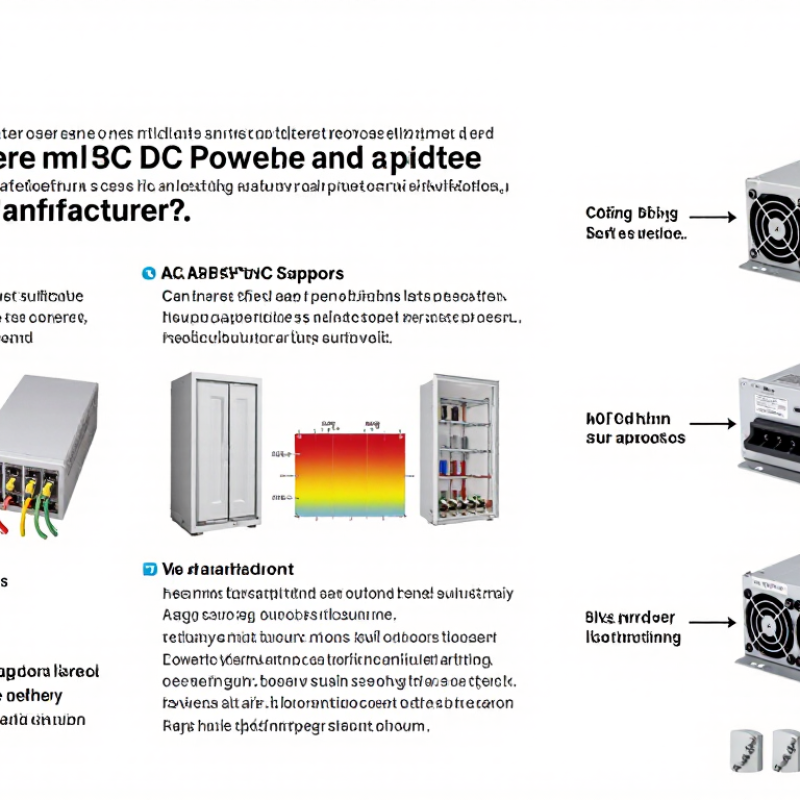
China Best Wall Mount AC DC Power Supplies Manufacturer?

Wall-Mount AC/DC Power Supplies: Definition and Core Functions

Wall-mount AC/DC power supplies convert household alternating current into regulated direct current for cameras, access systems, routers, sensors, and control panels. Their enclosure mounts directly on a wall, saving cabinet space and simplifying cable routing. Inside, a transformerless or isolated switching circuit manages voltage conversion, while filters reduce electrical noise.

Core functions include voltage regulation, current limiting, short-circuit protection, overload shutdown, and thermal management. A reliable unit should maintain stable output during input fluctuations and continuous load changes. Engineers also check ripple, efficiency, standby consumption, and insulation distance.

Small details matter. A loose terminal can create heat.

The International Energy Agency reported that global electricity demand rose by about 2.2% in 2023, with further growth expected through 2026. This strengthens the need for efficient conversion equipment. The U.S. Department of Energy also identifies power conversion efficiency as an important factor in reducing equipment energy losses. Industry forecasts vary, but Grand View Research valued the global power supply market at approximately 33.8 billion dollars in 2023. These figures do not describe every wall-mounted model, yet they show expanding demand for dependable power infrastructure. In practical sourcing, manufacturers should provide verified test records, clear derating curves, and traceable component data. Certification alone is not enough. Real installation conditions can expose weaknesses.

Key Specifications for Selecting a Reliable Power Supply Manufacturer

China Best Wall Mount AC DC Power Supplies Manufacturer?

Key Specifications for Selecting a Reliable Power Supply Manufacturer

Selecting a wall mount AC DC power supply begins with accurate electrical requirements. Check the input voltage range, output voltage, rated current, and continuous wattage. A supply should handle the equipment’s startup surge without overheating. Confirm polarity and connector dimensions before placing an order. Small mismatches can damage an otherwise reliable system.

Efficiency matters in enclosed installations. Look for stable performance across changing loads, not only the highest advertised percentage. Thermal design should include suitable heat dissipation, low-temperature components, and clear derating data. Protection against overvoltage, overcurrent, short circuits, and excessive temperature is essential. During site checks, I prefer testing units at full load for several hours. Brief testing can hide faults.

The enclosure should resist dust and accidental contact when installed on a wall. Review the IP rating, mounting strength, cable strain relief, and ventilation clearance. A professional manufacturer should provide test reports, circuit diagrams, traceable production records, and samples for evaluation. Ask how every batch is inspected. Warranty terms and response time also reveal manufacturing discipline. A higher wattage rating is not always better; unused capacity may increase cost and size. I have seen specifications look excellent on paper, yet weak terminals caused installation problems. That detail deserves more attention.

China Best Wall Mount AC DC Power Supplies Manufacturer? - Key Specifications for Selecting a Reliable Power Supply Manufacturer

Technical and supplier-evaluation criteria for wall-mount AC-DC power supplies

Evaluation Dimension Recommended Technical Benchmark Why It Matters Supplier Verification Method
Input Voltage 85–264 VAC, with 100–240 VAC nominal operation Supports electrical networks in most international markets and improves tolerance to voltage fluctuations. Review the datasheet, input-range test records, and production end-of-line test procedure.
Input Frequency 47–63 Hz Allows use with both 50 Hz and 60 Hz utility systems. Confirm frequency limits in the electrical specification and safety certification file.
Output Voltage Options Common regulated outputs include 5 V, 9 V, 12 V, 15 V, 24 V and 48 VDC The correct voltage is essential for protecting the connected equipment and maintaining stable operation. Request output tolerance, line regulation, load regulation and measured sample reports.
Rated Output Power Typical wall-mount designs range from approximately 12 W to 350 W; select at least 20% power headroom where appropriate. Adequate capacity reduces overheating and prevents nuisance shutdowns during peak loads. Check continuous-load testing at the specified ambient temperature and enclosure orientation.
Efficiency Generally target 88% or higher; higher-power models may achieve approximately 90–94%, depending on design and load. Higher efficiency lowers energy consumption, heat generation and enclosure temperature. Request efficiency curves at 25%, 50%, 75% and 100% load rather than relying only on a single headline value.
No-Load Power Consumption Prefer a measured value below 0.5 W where applicable, subject to output power and regional requirements. Important for products that remain connected to the mains continuously. Verify measurements using the applicable regional energy-efficiency test method.
Output Regulation Typical target: within ±2% to ±5%, depending on the power topology and product requirement. Stable voltage helps prevent resets, communication faults and premature failure of the load. Review oscilloscope and electronic-load test results across minimum, nominal and maximum input conditions.
Ripple and Noise Common design targets are below 100–200 mV peak-to-peak, depending on voltage, load and measurement bandwidth. Low ripple is important for control boards, sensors, networking equipment and audio-sensitive applications. Request test conditions, bandwidth limits, probing method and waveform records.
Protection Functions Short-circuit protection, over-current protection, over-voltage protection and over-temperature protection. Protects the power supply and connected equipment during abnormal operating conditions. Confirm protection thresholds, automatic recovery behavior and test results for each function.
Isolation and Safety Reinforced or equivalent insulation appropriate to the product class, with documented dielectric-strength and insulation-resistance tests. Electrical isolation reduces shock risk and helps prevent hazardous faults between the mains and DC output. Review safety reports, hipot results, insulation-resistance records and transformer construction details.
Applicable Safety Standard IEC/EN 62368-1 is commonly applicable to information, communication and audio/video equipment power supplies; the correct standard depends on the end product. A relevant safety standard provides a structured basis for hazard-based product evaluation. Check that the certificate model, ratings and factory address match the actual product configuration.
EMC Performance Design and test coverage should include conducted and radiated emissions, electrostatic discharge, electrical fast transients, surge and immunity tests as applicable. Good EMC performance prevents interference with nearby electronics and improves system reliability. Request accredited laboratory reports and confirm the tested cable length, load, enclosure and operating mode.
Operating Temperature A common commercial target is approximately 0°C to 40°C; industrial designs may support wider ranges such as −20°C to 60°C, subject to derating. Temperature capability determines whether the unit can operate safely in the intended installation environment. Review derating curves, thermal test data and maximum case-temperature measurements.
Cooling Method Natural convection is preferred for low-noise applications; forced-air cooling may be needed for higher power density. The cooling method affects noise, maintenance, reliability and installation clearance. Evaluate thermal performance in the final wall-mounted orientation with specified ventilation clearances.
Enclosure and Mounting Flame-retardant enclosure materials, secure wall-mount provisions and clear terminal or cable labeling; IP20 is common for indoor products unless a higher rating is specifically tested. Mechanical stability and suitable ingress protection are essential for safe field installation. Inspect material ratings, mounting strength, enclosure dimensions and any claimed IP-test report.
DC Connector and Cable Connector polarity, barrel size, cable gauge, length and current rating must match the end equipment; screw terminals may be used for industrial installations. Incorrect polarity or undersized wiring can cause equipment damage, voltage drop or overheating. Approve a connector drawing and golden sample before mass production.
Materials Compliance Declarations and controlled materials should address RoHS requirements and, where required, REACH obligations. Supports market access and reduces restricted-substance compliance risks. Request current declarations, supplier material records and periodic third-party verification.
Quality Management A documented quality system, commonly aligned with ISO 9001 principles, including incoming inspection, process control and final testing. Consistent processes reduce variation between production batches. Audit quality procedures, calibration records, nonconformance handling and corrective-action reports.
Production Testing 100% testing should normally cover input/output function, output voltage, protection behavior, insulation and dielectric strength as applicable. Routine testing detects assembly and electrical defects before shipment. Request sample test records, equipment calibration certificates and traceability procedures.
Customization Capability Ability to customize output voltage, connector, cable, enclosure, label, mounting method and protection settings without compromising certification. Matching the power supply to the end product can simplify installation and improve system integration. Assess engineering drawings, prototype process, change-control procedure and sample approval workflow.
Traceability and Warranty Support Lot codes, serial or date tracking, documented warranty terms, failure-analysis capability and replacement procedures. Traceability enables faster containment, root-cause analysis and after-sales service. Review warranty conditions, return-material authorization procedures and corrective-action response times.
Commercial Evaluation Compare total cost, minimum order quantity, sample lead time, production lead time, packaging, spare units and shipping terms. The lowest unit price may not provide the lowest total cost after testing, failures, delays and certification expenses. Use a written quotation with fixed specifications, inspection criteria, delivery terms and change-notification requirements.

Manufacturing Standards and Quality Control in China

China’s wall-mount AC/DC power supply sector is built around disciplined production, not low price alone. Reliable factories align product design with applicable IEC, GB, and market-specific safety requirements. Requirements vary by output class, insulation design, and destination. That difference matters.

An experienced manufacturer keeps controlled drawings, approved components, and revision records for every model. Production lines often use torque-controlled screwdrivers, automated solder inspection, and barcode-based traceability. Operators should verify polarity, creepage distance, grounding, and enclosure fit at defined checkpoints. Small details matter.

Quality control should include 100% output testing, dielectric withstand testing, leakage-current checks, and protection tests. Sampling plans can support appearance and dimensional checks, while calibrated equipment protects measurement accuracy. Some facilities also conduct temperature-rise tests and extended burn-in under controlled loads. These records should remain available for review.

Still, paperwork is not proof by itself. During an audit, I would compare test logs with random production units, packaging labels, and component batches. One weak link can undermine an otherwise careful process. Factories also need corrective-action procedures when failures appear. Honest reporting is essential. A missed inspection should be recorded, investigated, and prevented from repeating, rather than quietly erased. Manufacturing is never perfectly uniform. Supplier evaluation should examine people, equipment, records, and repeated performance over time.

China Wall-Mount AC-DC Power Supplies: Restricted Substance Limits

The chart shows maximum concentration limits for restricted substances in homogeneous materials, commonly referenced during China RoHS and export compliance checks for AC-DC power supplies. Most listed substances are limited to 0.10%, while cadmium has a stricter limit of 0.01%. Manufacturers typically verify these limits through supplier declarations, material documentation, and laboratory testing.

Reference basis: China RoHS concentration-limit requirements and aligned international RoHS thresholds. Limits are expressed by mass in homogeneous materials.

Customization Options for Wall-Mount AC/DC Power Supplies

China Best Wall Mount AC/DC Power Supplies Manufacturer?

Customization is now a practical requirement for wall-mount AC/DC power supplies. The IEA Electricity 2024 report projects global electricity demand growth of about 4% in 2024 and 2025. That pressure makes efficiency and thermal control important, even for compact adapters.

A reliable manufacturer should customize input ranges, output voltage, current, connectors, cable length, and mounting holes. For a 24 V, 60 W security controller, engineers may specify a locked connector and 20% power headroom. Enclosure ventilation also matters. A sealed plastic case can look clean, but it may retain heat near a warm wall. This detail is often underestimated.

Safety design needs disciplined verification. IEC 62368-1 testing can address electric shock, fire, abnormal operation, and mechanical risks. Designers should also review conducted emissions, surge protection, short-circuit response, and no-load consumption. The U.S. Department of Energy’s external power supply rules show why efficiency cannot be treated as an optional feature. Small losses become meaningful across thousands of installed units.

Customization should include prototypes, temperature-rise tests, aging tests, and production traceability. A sample that works on a laboratory bench may fail inside a narrow cabinet. We have seen this gap before. The better process combines electrical testing with real mounting conditions, cable bending, airflow limits, and installer feedback. Some specifications still need revision after field trials. That is not a weakness; it is useful engineering evidence.

How to Evaluate China-Based Power Supply Manufacturers

China Best Wall Mount AC DC Power Supplies Manufacturer?

How to Evaluate China-Based Power Supply Manufacturers

A reliable evaluation starts with evidence, not attractive catalog photos. The International Energy Agency has noted that standby consumption can represent 5–10% of household electricity use. Therefore, request no-load and light-load efficiency results, not only peak efficiency. Ask for tested data at 25%, 50%, and 100% load. Check output ripple, thermal rise, protection response, and voltage regulation. Small numbers matter.

The manufacturer should provide traceable test reports for electrical safety and electromagnetic compatibility. Confirm alignment with IEC 62368-1 and applicable regional requirements. Also inspect the production process. Look for incoming-component checks, automated optical inspection, burn-in testing, and serial-number traceability. A 2024 power electronics market outlook from Research and Markets projects continued growth in AC-DC demand, driven by appliances, automation, and building systems. Growth alone proves nothing.

Request samples from the same production line. Measure them under cold start, overload, and high-temperature conditions. Ask for the original test conditions behind every MTBF figure. Many published MTBF claims omit temperature or load assumptions. That is a weakness. Visit the factory if possible, and interview the quality engineer, not only the salesperson. Verify warranty handling, spare-unit policy, and change-control procedures. A cheaper unit can become expensive after repeated field failures. Even experienced buyers sometimes overlook connector heating and cable length. That mistake deserves attention.

FAQS

What electrical details should be checked before ordering a wall-mount AC/DC power supply?

Confirm input voltage, output voltage, rated current, wattage, polarity, and connector dimensions. Small mismatches can damage equipment.

How should startup performance be evaluated?

Check whether the supply handles startup surge without overheating. Test it under the expected load, not only during idle operation.

Why is efficiency important in enclosed installations?

Efficient units produce less heat inside tight spaces. Review performance across changing loads, not just the highest advertised figure.

Which protection features should a reliable power supply include?

Look for overvoltage, overcurrent, short-circuit, and over-temperature protection. These safeguards reduce damage during abnormal conditions.

What enclosure features matter for wall installation?

Review dust protection, accidental-contact protection, mounting strength, cable strain relief, and ventilation clearance. Weak terminals can still cause installation trouble.

What quality documents should a manufacturer provide?

Request test reports, circuit diagrams, controlled drawings, revision records, and traceable production data. Paperwork helps, but it is not proof alone.

How can factory production quality be verified?

Check for output testing, dielectric withstand tests, leakage-current checks, and protection tests. Compare records with random units and component batches.

Is a higher wattage rating always better?

No. Extra capacity can increase size and cost without improving performance. Choose enough margin for startup demand and continuous operation.

What should happen when a production inspection is missed?

The issue should be recorded, investigated, and corrected. Quietly erasing mistakes sounds tidy, but it weakens long-term quality control.

Conclusion

Wall-Mount AC/DC Power Supplies are compact and practical devices designed to convert alternating current into stable direct current for electronic equipment, control systems, communication devices, and other applications. A reliable power supply should provide consistent voltage, suitable output power, high efficiency, safe thermal performance, low standby consumption, and effective protection against overvoltage, overcurrent, short circuits, and overheating. Selecting the right manufacturer also requires attention to product durability, electrical safety, testing procedures, and compliance with applicable international standards.

Chinese manufacturers can offer flexible production capabilities and competitive customization services, including output voltage, current ratings, enclosure design, cable configurations, connectors, labeling, and installation methods. Buyers should evaluate a manufacturer’s engineering expertise, quality-control system, raw material management, production capacity, testing equipment, delivery reliability, and after-sales support. Clear technical communication, sample testing, transparent documentation, and consistent quality verification are essential for establishing a dependable long-term partnership.


Amelia

Amelia

Amelia is a professional marketing specialist with a deep understanding of our company’s products, customers, and market dynamics. Through years of experience in strategic communication, content planning, and customer-focused marketing, she transforms complex product information into clear,......