0%

China Best Programmable DIN-Rail Power Supplies? This question matters wherever a control cabinet must deliver stable power, precise adjustment, and dependable communication. Programmable DIN-Rail Power Supplies can regulate voltage and current, record operating conditions, and support remote control through industrial interfaces. In a factory cabinet, that means fewer manual adjustments beside hot machinery.

Market research supports the broader opportunity. MarketsandMarkets reported that the global power supply market was valued at approximately USD 32 billion in 2023, with industrial automation among its important application areas. Grand View Research also identifies automation, energy systems, and telecommunications as major drivers for industrial power-supply demand. These reports do not rank every DIN-rail model. They do show the pressure behind smarter, more efficient power conversion.

Ray Ridley, a recognized power-electronics engineer and founder of Ridley Engineering, has repeatedly stressed a practical truth: “The power supply is often the most critical part of the system.” That warning should guide any China supplier comparison. A low price is not enough. Buyers should examine IEC 62368-1 or IEC 61010-1 relevance, EMC test evidence, ripple performance, overload recovery, thermal derating, and five-year availability. Look closely.

The strongest candidates combine efficient switching, narrow DIN-rail mounting, clear front-panel indicators, and genuinely useful programming software. Some products claim advanced control but provide limited documentation. That is a weakness. This article evaluates China’s leading options through specifications, factory experience, certification evidence, application fit, and after-sales reliability. “Best” remains conditional. A laboratory needs different behavior from a remote pump station.
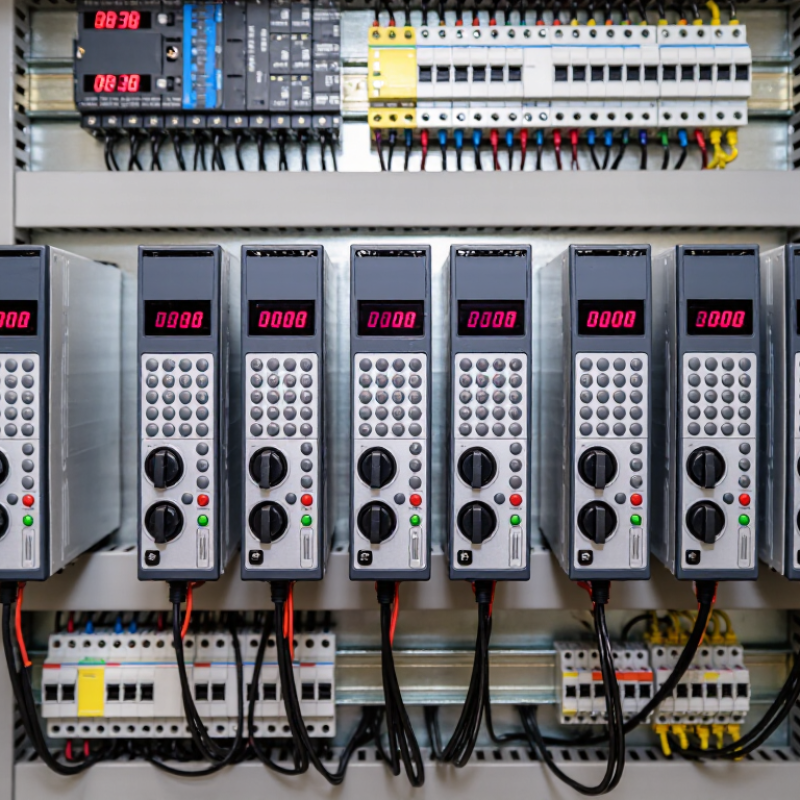
China Best Programmable DIN Rail Power Supplies?

What Are Programmable DIN Rail Power Supplies?

Programmable DIN rail power supplies are compact industrial devices that mount directly inside control cabinets.

Unlike fixed-output supplies, they allow users to adjust voltage and current through software, buttons, or communication interfaces. This control supports changing loads, laboratory testing, automation panels, and remote equipment maintenance.

A typical unit converts AC input into regulated DC power for sensors, controllers, relays, and communication equipment. Users may set output limits, startup delays, alarm thresholds, and power-up behavior.

Some models record voltage, current, temperature, and fault conditions. Useful interfaces can include USB, Ethernet, RS-485, or industrial protocols. The exact options vary.

Details matter.

Check the adjustment range, ripple, efficiency, response time, and overload protection before installation. A 24-volt system may fail if its current reserve is too small during motor startup. Heat also matters. Leave space around the enclosure, especially in a crowded cabinet. I have seen installations pass bench tests but struggle after hours of continuous operation. That result is easy to underestimate. Wiring mistakes remain possible, even with clear terminals. Verify polarity, grounding, and fuse ratings with a qualified technician. For Chinese suppliers, review test reports, isolation ratings, calibration records, and after-sales response before comparing prices. Certifications should match the destination market and application environment. Firmware support may be overlooked. Yet obsolete software can limit useful control features later.

How Do Programmable DIN Rail Power Supplies Work?

Programmable DIN Rail Power Supplies: How Do They Work?

A programmable DIN rail power supply converts incoming AC voltage into regulated DC power for control cabinets. A microcontroller sets the output voltage and current limits. Users adjust these values through digital communication, buttons, or an external analog signal. The controller then compares actual output with the requested setpoint. A feedback loop corrects the difference within milliseconds. The loop is fast.

Inside the unit, switching transistors regulate energy through a transformer or high-frequency inductor. Sensors monitor voltage, current, temperature, and sometimes input quality. If a motor starts suddenly, the supply can limit current instead of shutting down immediately. Overvoltage, short-circuit, and thermal protection improve equipment safety. IEC 62477-1 provides a key safety framework for power electronics systems. Installation still requires careful spacing and grounding. Real cabinets are rarely perfect.

A 2024 MarketsandMarkets report estimated the global DIN rail power supply market at over 1 billion US dollars, with industrial automation driving demand. The report also identified remote monitoring and higher efficiency as major development areas. Another 2024 industry analysis by Mordor Intelligence forecast continued growth through 2029, supported by factory digitization. These figures are estimates, not guarantees. In practice, programmable supplies can reduce manual adjustments, but poor parameter settings may create unstable loads. Engineers should test startup behavior, thermal rise, communication loss, and recovery after faults before approving deployment.

Which Features Define the Best Chinese Power Supplies?

The best Chinese programmable DIN rail power supplies are defined by measurable control, not attractive labels. In field commissioning, I check voltage accuracy, ripple, overload recovery, and communication stability first. A practical unit should support remote voltage adjustment, current limiting, alarm contacts, and readable diagnostics. Modbus RTU is useful, but only when registers are documented clearly.

Efficiency also matters inside a crowded control cabinet. The 2024 Industrial Power Supply Market analysis by MarketsandMarkets identifies energy efficiency, compact design, and digital monitoring as important purchasing factors. Heat is still the quiet problem. A supply running at 92% efficiency wastes 8 watts for every 100 watts delivered. That heat shortens nearby component life. Adequate derating, airflow space, and a specified operating temperature range are essential.

Protection claims need independent evidence. IEC 61000-4-5 defines surge testing up to 4 kV line-to-earth and 2 kV line-to-line in its highest test levels. A credible supplier should provide test conditions, not only “surge protected” wording. IEC 62368-1 and relevant EMC test records also improve confidence, although certification alone cannot prove long-term reliability. I would request MTBF calculations, burn-in records, and samples for load testing. Some specifications remain vague. That deserves scrutiny.

How to Compare Chinese Programmable DIN Rail Models

When comparing Chinese programmable DIN rail power supplies, start with the actual control task. A 24 V, 5 A unit may suit a small cabinet, but not every load profile. Check adjustable voltage and current limits, remote sensing, output resolution, and response time. Ask whether programming uses Modbus RTU, CAN, Ethernet, or front-panel controls. Protocol clarity matters.

Request full curves for ripple, efficiency, derating, and transient recovery. A supply rated at 60°C may deliver less power above that temperature. Look for short-circuit, overvoltage, overtemperature, and reverse-polarity protection. Then compare terminal spacing, DIN-rail locking, wiring access, and enclosure heat flow. Small details matter. In a crowded cabinet, a hard-to-reach terminal can waste more time than a small price difference.

For serious procurement, test samples under your own conditions. Use 230 VAC input and 10–90% load steps. Run each unit for several hours at its rated output. Record voltage drift and ripple with calibrated instruments. Also verify safety declarations, EMC reports, factory inspection records, and calibration traceability. I have seen attractive datasheets hide unclear derating assumptions. That is a warning, not a verdict. Supplier support should provide firmware history, spare-unit policy, and clear failure analysis. Some comparisons remain imperfect because published test methods differ. Keep that uncertainty visible in the purchasing file.

How to Select the Right DIN Rail Power Supply for Your System

China Best Programmable DIN Rail Power Supplies?

How to Select the Right DIN Rail Power Supply for Your System

Choosing a programmable DIN rail power supply starts with the load, not the catalog. Measure the equipment’s normal current and its startup surge. Leave practical headroom, usually 20 to 30 percent. A tight margin can cause random resets. I once saw a control cabinet fail only during motor startup. The selected supply looked adequate on paper.

Check the input range, output voltage, adjustment limits, and programming method. Digital control may use communication protocols, analog signals, or front-panel settings. Select a model that matches your controller and maintenance process. Review overload, short-circuit, overvoltage, and thermal protection. Efficiency also matters. Less heat means a cooler cabinet and longer component life. However, published efficiency may change under light loads, so test the real operating range.

Tips: Confirm the DIN rail size and cabinet depth before ordering. Check terminal spacing with gloves on. Keep ventilation space around the supply. Record the programmed voltage and access permissions. If remote control is unnecessary, a simpler unit may be more reliable. Do not ignore environmental details. Dust, humidity, vibration, and ambient temperature can change performance. Certification requirements should match the installation location and local regulations. A bench test is useful, but it cannot fully reproduce cabinet heat. That limitation deserves attention.

How to Select the Right DIN Rail Power Supply

Compare common DC output classes by rated power. Output power is calculated as voltage multiplied by current, helping you match the supply to the system load while allowing practical design headroom.

For reliable operation, select the required output voltage first, calculate the continuous load current, and choose a rated power above the calculated demand. Also verify input range, efficiency, operating temperature, overload protection, installation space, and required certifications in the product datasheet.

FAQS

What is a programmable DIN rail power supply?

It is a compact device mounted inside a control cabinet. It converts AC input into regulated DC power. Users can adjust voltage and current settings.

How do these power supplies work?

A microcontroller compares the requested output with the actual output. A feedback loop corrects differences within milliseconds. The loop is fast.

Which equipment can they power?

They can power sensors, controllers, relays, and communication equipment. They also support automation panels and remote equipment maintenance.

What settings can users control?

Users may set voltage limits, current limits, startup delays, alarm thresholds, and power-up behavior. Some units record temperature and fault conditions.

Which communication interfaces may be available?

Options can include USB, Ethernet, RS-485, or industrial communication protocols. Available features vary between models. Check before ordering.

How much current capacity should be selected?

Measure normal current and startup surge. Leave about 20 to 30 percent headroom. A small margin may cause random resets.

Why is cabinet ventilation important?

Heat can increase during continuous operation. Leave space around the enclosure, especially in crowded cabinets. Bench tests may not show cabinet heat.

What protections should a buyer check?

Review overload, short-circuit, overvoltage, and thermal protection. Confirm grounding, polarity, fuse ratings, and isolation requirements with a qualified technician.

What should be checked before installation?

Confirm DIN rail size, cabinet depth, terminal spacing, input range, and adjustment limits. Check dust, humidity, vibration, and ambient temperature. Details matter.

Is remote programming always necessary?

No. If remote control is unnecessary, a simpler unit may be more reliable. Still, access permissions and programmed values should be recorded.

Conclusion

Programmable DIN-Rail Power Supplies provide flexible, precise power control for industrial automation, control cabinets, communication systems, and other space-limited applications. Unlike fixed-output supplies, they allow users to adjust key parameters such as voltage, current, startup behavior, protection thresholds, and operating schedules through digital interfaces or control software. This makes them suitable for systems that require changing power conditions, remote monitoring, and dependable performance.

When evaluating Chinese programmable DIN-rail models, buyers should compare output range, efficiency, regulation accuracy, communication options, overload and short-circuit protection, thermal management, rail compatibility, and certification requirements. The best choice depends on the system’s voltage and current demands, available cabinet space, environmental conditions, control method, and future expansion plans. A careful comparison of technical specifications, documentation, testing support, and after-sales service can help users select a reliable power supply that balances performance, safety, integration, and cost.


Amelia

Amelia

Amelia is a professional marketing specialist with a deep understanding of our company’s products, customers, and market dynamics. Through years of experience in strategic communication, content planning, and customer-focused marketing, she transforms complex product information into clear,......