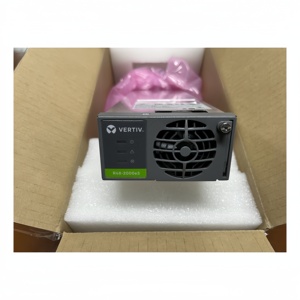
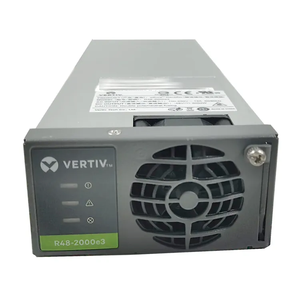
Engineered for high power density, thermal endurance, and continuous long-term operations across telecommunications, EV infrastructure, and electroplating automation.
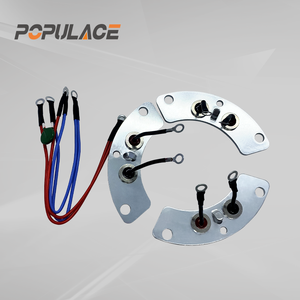
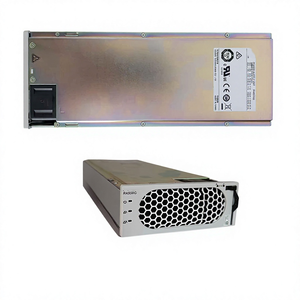
In the contemporary industrial power landscape, high-efficiency AC/DC power rectifiers form the operational backbone of critical infrastructure—ranging from 5G telecom base stations (FTTH/RRU power nodes) and ultra-fast DC EV charging networks to high-current electroplating automation and micro-grid energy storage hubs. Selecting certified power rectifier modules requires a rigorous evaluation of electromagnetic compatibility (EMC), low voltage electrical safety directives (LVD), power factor performance, and thermal management topology.
As a global OEM/ODM manufacturer and exporter of CE-certified power rectifiers, our engineering framework integrates strict European compliance criteria (EN 62477-1, EN 61000-6-2, EN 61000-6-4) with high-frequency switch-mode power supply (SMPS) design principles. This technical whitepaper outlines structural trends in power rectification, detailed certification parameters, procurement risk mitigation strategies, and system integration practices for global engineering buyers.
Procuring power supplies for export to the European Economic Area (EEA), North America, and high-standard industrial regions necessitates multi-layered safety and performance standard verification. Non-compliant rectifiers introduce phase imbalances, voltage ripple anomalies, harmonics overload, and prematurely degrade downstream sensitive equipment such as programmable logic controllers (PLCs) and fiber optic transceivers.
Our manufacturing and assembly protocols strictly adhere to the following international standards:
Industrial rectifiers have evolved from bulky, low-frequency 50/60Hz transformer phase-controlled rectifiers to high-frequency resonant switch-mode units. Utilizing Silicon Carbide (SiC) Schottky diodes and Gallium Nitride (GaN) power switches, modern rectifier modules operate at switching frequencies exceeding 100kHz to 300kHz. This dramatically reduces magnetic core dimensions, shrinks enclosure footprints, and drives peak power efficiency up to 96.5% and beyond.
| Topological Characteristic | Legacy SCR / Diode Bridge | Standard High-Freq SMPS | Advanced SiC/GaN Modular Rectifier |
|---|---|---|---|
| Energy Efficiency Grade | 75% – 85% | 91% – 94% | 95.5% – 97.5% (Super Efficiency) |
| Power Factor (PFC) | 0.65 – 0.80 (Requires external filter) | > 0.95 (Active PFC) | > 0.99 (Ultra-Low Harmonic THDi < 3%) |
| Power Density | Low (< 0.5 W/cm³) | Medium (1.5 - 2.5 W/cm³) | High Power Density (> 4.0 W/cm³) |
| Scalability & Servicing | Hardwired / Hard Shutdown | Rack Mounted / Basic Parallel | Hot-Swappable N+1 Modular Redundancy |
| Control Interface | Analog 0-10V / Potentiometer | Basic RS485 / Modbus | CANbus 2.0B / SNMP v3 / Digital Twin AI |
Different industrial scenarios dictate specialized power conversion parameters. As a qualified manufacturer, our engineering design tailors the output current dynamic response, cooling architecture, and enclosure protection levels according to the specific application environment:
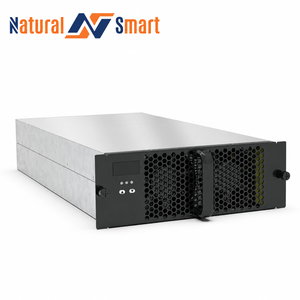
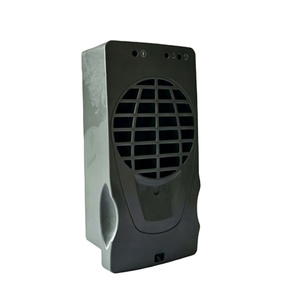
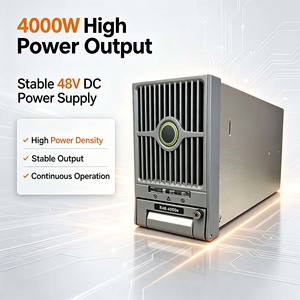
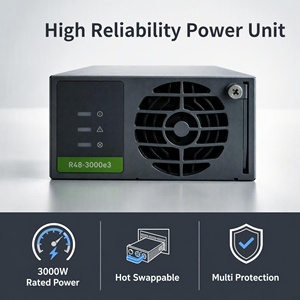
A. Telecommunications & Data Center DC Power Systems (48V Output): Telecom power architectures rely on extremely dependable 48V DC nominal outputs (adjustable from 42V to 58V DC) to feed battery back-up banks and sensitive transmission nodes. High-frequency hot-swappable modules (e.g., 2000W, 3000W, and 4000W standard 19-inch rack units) allow seamless live insertion, ensuring zero downtime for critical communication networks during maintenance cycles.
B. EV Fast DC Charging Infrastructure (150V – 1000V DC Output): Electric vehicle charging modules demand ultra-wide constant power output ranges, precise current regulation, and high immunity against extreme ambient operational temperatures (-40°C to +75°C). Utilizing dual-phase interleaved PFC and soft-switching LLC resonant circuitry, our 20kW, 30kW, and 40kW EV power modules achieve stable DC output for megawatt-level charging parks.
C. Electroplating & Industrial Surface Finishing (High Current Low Voltage): Electroplating applications require constant voltage/current switching modules resistant to corrosive airborne chemistry and high humidity. Custom IP54-rated conformal coated rectifiers provide ripple rates below 1%, protecting bath chemical integrity and delivering uniform plating layer thickness.
Direct-from-manufacturer reliability, certified engineering rigors, and dedicated lifecycle support for system integrators and distributors worldwide.
Every batch undergoes rigorous ISO 9001:2015 controlled assembly, SMT optical inspection, high-voltage insulation dielectric testing, and dynamic load stress validation.
Patented airflow channel designs combined with intelligent variable-speed cooling fans deliver full load output at high ambient temperatures with reduced acoustic noise.
In-house engineering team provides customized output voltage ranges, busbar pinouts, enclosure form factors, dynamic CANbus message mapping, and private branding.
Comprehensive export documentation, CE declarations of conformity, customs HS code guidance, and expedited international logistics for OEM equipment makers.
Key technological shifts shaping the next generation of power electronics sourcing and equipment specification through 2030.
Transitioning from traditional Silicon MOSFETs to SiC and GaN devices reduces internal switching losses by up to 50%. Future procurement standards will prioritize modules operating at >97% efficiency to satisfy corporate net-zero carbon goals and reduce operational cooling expenses.
Smart rectifiers now feature real-time telemetry output via CANbus, Modbus-TCP, and SNMP v3. Modern industrial sites leverage cloud telemetry to monitor capacitor degradation, thermal stress indexes, and fan lifetime profiles, transitioning maintenance from reactive replacement to predictive intervention.
Industrial automation is adopting direct 400V - 800V DC mini-grids to link renewable solar PV, battery storage, and variable frequency drives directly. Rectifiers are evolving into bi-directional active front-end (AFE) modules that can feed excess energy back to the AC grid when required.
Answers to common questions regarding CE certification, custom specifications, hot-swap redundancy, and international ordering.
Ready to upgrade your system power reliability, request CE documentation, or evaluate sample units? Our power electronics engineering team is available to assist your procurement process.
Inquire Now