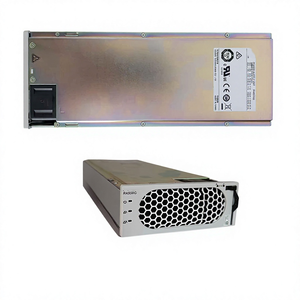
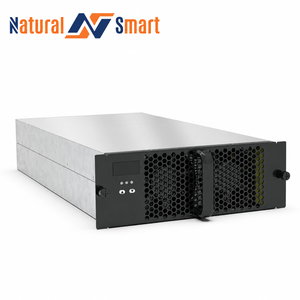
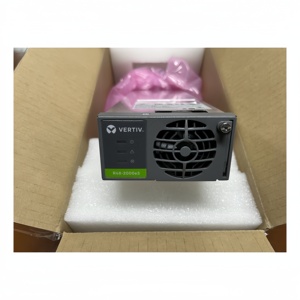
Explore our CE-certified line of high-frequency power switching rectifiers, EV charging modules, telecom power units, and heavy industrial plating regulators designed for continuous long-term operation.
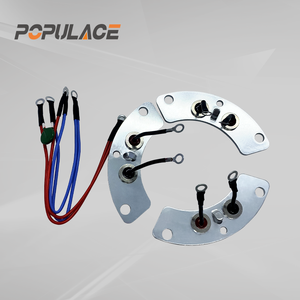
Heavy-duty 220V electroplating bridge rectifier engineered for harsh continuous galvanic operations.
Get a Quote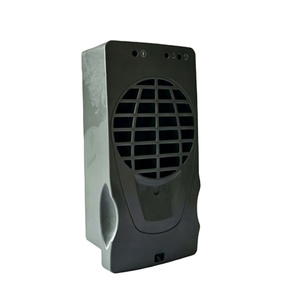
Optimized thermal architecture designed for uninterrupted 24/7 long-term industrial loads.
Get a Quote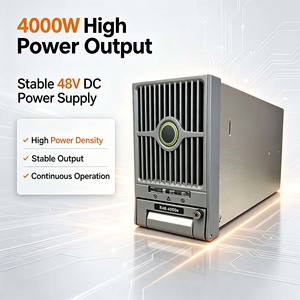
High-density 4000W DC output designed for demanding industrial base station power racks.
Get a Quote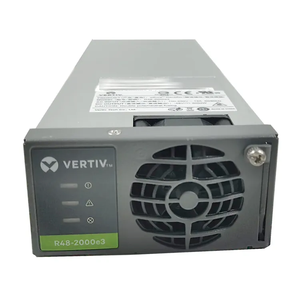
High-frequency DSP digital control architecture featuring advanced power factor correction.
Get a Quote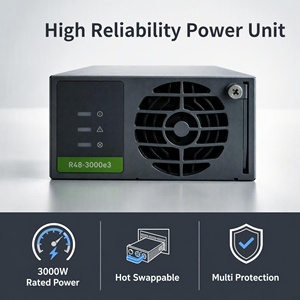
Engineered specifically for data center power plants, switching equipment, and core racks.
Get a QuoteModern industrial automation, telecommunication hubs, and fast-charging EV infrastructures require unprecedented power density, thermal efficiency, and grid-side compliance. As a leading CE certified power regulator exporter, our engineering mandate focuses on bridging the gap between severe grid fluctuations and sensitive electronic loads. Voltage regulation is no longer simply about stepping down voltage; it encompasses real-time Digital Signal Processor (DSP) control, active power factor correction (PFC), harmonic attenuation, and dynamic transient suppression.
Whether deploying high-frequency switch-mode power supplies (SMPS) or industrial DC rectifiers, procurement teams face complex challenges: balancing initial capital expenditure against long-term total cost of ownership (TCO), ensuring compliance with international electromagnetic compatibility (EMC) standards, and maintaining modular scalability. This document details the technical parameters, future procurement trends, and quality verification standards necessary for selecting enterprise-grade power regulators.
Advanced power regulators integrate active PFC circuitry, achieving Power Factor (PF) values >0.99. This dramatically reduces total harmonic distortion (THD < 5%), minimizing grid penalty costs and reducing copper heating in supply lines.
Industrial systems operate under harsh grid conditions. Our certified modules support ultra-wide input voltage ranges (e.g., 85V AC to 300V AC or 150V to 1000V DC for EV applications), eliminating premature low-voltage tripping.
For mission-critical infrastructure like telecom 5G sites and data center UPS systems, modules feature zero-downtime hot-swap capabilities paired with active current sharing to guarantee 99.999% system availability.
The global power electronics sector is experiencing a paradigm shift driven by decarbonization, electrification of transport, and the explosion of edge-computing network nodes. Sourcing directors must align their procurement strategies with four key technology vectors:
| Technology Vector | Traditional Architecture | Next-Generation CE Regulator Standard | Procurement Advantage |
|---|---|---|---|
| Semiconductor Substrate | Silicon (Si) MOSFETs & IGBTs | Gallium Nitride (GaN) & Silicon Carbide (SiC) | Up to 30% reduction in thermal loss; 40% footprint shrinkage. |
| Control Topology | Analog PWM Controller Feedback | Dual DSP High-Speed Digital Architecture | Sub-millisecond transient response & programmable curves. |
| Thermal Management | High-CFM Constant Speed Fans | Smart Speed-Controlled Fans / Cold Plate Conduction | Extended fan lifespan (>80,000 hrs) and reduced noise pollution. |
| Grid Connectivity | Isolated Analog Output Signals | CAN Bus / RS485 / SNMP & IoT Remote Telemetry | Predictive maintenance algorithms and live health monitoring. |
To assist technical buyers in identifying the precise regulatory module for their installation requirements, we segment our export product lines into specialized application domains:
Represented by models such as the Vertiv R48-3000e3 and ZHIHENG R4850G, these 48V DC output modules operate with ultra-high thermal density. They are engineered to buffer sensitive telecom switching boards, fiber-to-the-home (FTTH) cabinets, and remote cellular towers against AC brownouts.
High-power AC/DC rectifiers ranging from 20kW to 40kW (as seen in our CE/TUV-certified EV charger series) convert 3-phase grid AC into ultra-wide DC voltage (150V to 1000V). These units allow system integrators to build fast-charging stations compatible with both standard 400V passenger vehicles and 800V commercial transport fleets.
Specific industrial operations like electroplating, anodizing, and electrolysis require extreme low-voltage, high-current ripple control. Modules such as the POPULACE 220V T30 Rectifier utilize heavy-duty diode bridge arrays to deliver steady DC power under severe cyclic current spikes.
As an established export leader in power electronics, our manufacturing and engineering governance is built upon transparency, compliance, and quality control. Every unit leaving our production line undergoes rigorous testing before shipment.
Our production facilities maintain strict quality assurance workflows certified under ISO 9001:2015. Every manufacturing step—from SMT component placement to manual transformer winding—is logged and fully traceable.
Our power regulators comply with European Low Voltage Directive (LVD 2014/35/EU) and Electromagnetic Compatibility Directive (EMC 2014/30/EU). Units carry EN 62368-1 safety certification and pass EN 55032 Class B emission standards.
We eliminate early-stage component failures by submitting 100% of finished power modules to high-temperature full-load burn-in testing inside environmental aging chambers prior to final packaging and export clearance.
Key insights addressing common compliance, engineering, and OEM customization queries from enterprise buyers.
Connect directly with our senior power electronics engineering team. We provide tailored technical recommendations, compliance documentation, and competitive export quotations.