Industrial Power Redundancy Systems

CE Certified Redundant Module Manufacturer & Supplier

High-Availability N+1 Power Decoupling, Hot-Swappable Telecom Rectifiers & Industrial DIN-Rail Systems Engineered for Zero-Downtime Mission-Critical Operations

Featured Portfolio

Industrial Rectifiers & CE Certified Redundancy Modules

Explore our high-performance power decoupling solutions, hot-swappable telecom rectifiers, and high-voltage DC-DC converters designed for uninterrupted industrial power distribution.
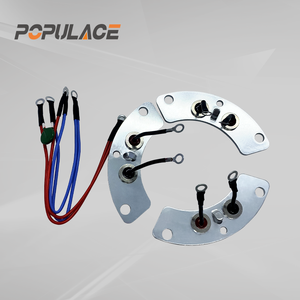
POPULACE 220V Voltage T30 Alternator Rectifier Module
POPULACE 220V Voltage T30 Alternator Electroplating Rectifier Bridge Module
  • Operating Voltage: 220V AC / DC
  • Diode Bridge Decoupling Topography
  • Industrial Electroplating & Heavy Duty
  • CE Certified Safety & Insulation
Inquire Now
ZHIHENG R4850G Rectifier Module Telecom Base Station
ZHIHENG R4850G G2/G6 48V 50A Hot-Swappable Telecom Rectifier Module
  • Output Rating: 48V DC / 50A (2400W)
  • Hot-Swappable N+1 Architecture
  • ETP48-200 Cabinet System Compatible
  • Ultra-High Peak Efficiency >96%
Inquire Now
20kw 30kw 40kw DC EV Charging Power Module
20kW / 30kW / 40kW DC EV Fast Charging AC/DC Power Module (150-1000V)
  • Wide Output Voltage: 150V – 1000V DC
  • Maximum Output Current: 133A
  • Dual CAN-Bus Telemetry Interface
  • CE & TUV Certified Safety Standards
Inquire Now
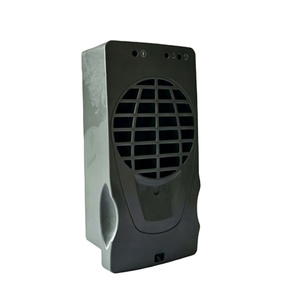
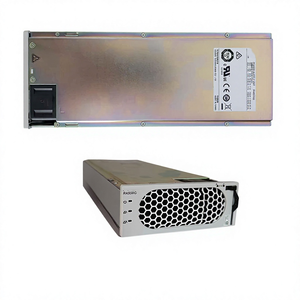
APR48 Rectifier Module 48V Constant Voltage
APR48 High-Reliability 48V Constant Voltage Fast Heat Dissipation Module
  • Constant 48V Regulated Output
  • Forced Air Thermal Management
  • Designed for 24/7 Continuous Operation
  • Active Power Factor Correction (PFC)
Inquire Now
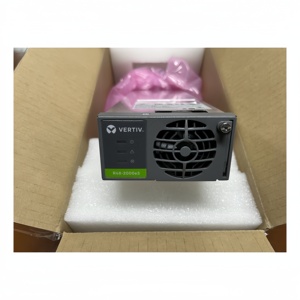
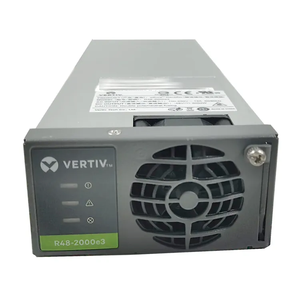
EMERSON Vertiv R48-2000e3 Rectifier Module
EMERSON Vertiv R48-2000e3 Telecom Power Rectifier Module 48V 2000W
  • 2000W Continuous Output Power
  • Compact High-Density 1U Profile
  • Wide Operating Temperature Range
  • Full CE & Global Safety Compliance
Inquire Now
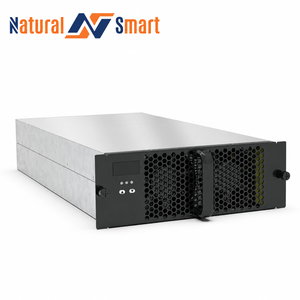
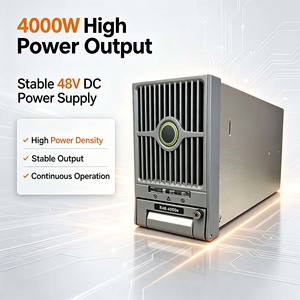
R48-4000e Rectifier Module 4000W 48V DC
R48-4000e High Power 4000W 48V DC Telecom Base Station Rectifier Module
  • High Power Output: 4000W / 48V DC
  • Industrial Base Station Cabinet Ready
  • Active Current Sharing & Redundancy
  • Transient Overvoltage Protection
Inquire Now
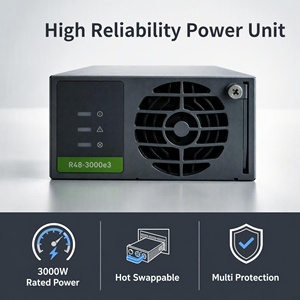
Vertiv R48-3000e3 Telecom Power Rectifier Module
Vertiv R48-3000e3 High-Frequency Network Power Rectifier 48V 3000W
  • 3000W High Efficiency Rectification
  • High-Frequency Soft Switch Topology
  • Intelligent Signal Monitoring
  • Low Total Harmonic Distortion (THD)
Inquire Now
R48-3000e3 Data Center Rectifier Module
R48-3000e3 Data Center High-Reliability AC/DC Power Rectifier Module
  • Optimized for Mission-Critical Racks
  • Hot-Plug Fault Decoupling Isolation
  • Extended MTBF > 500,000 Hours
  • CE, UL, & ISO Quality Standardized
Inquire Now
99.999%
Power Uptime Guarantee
>500K hrs
Mean Time Between Failures (MTBF)
10W - 100kW
Scalable Decoupling Range
100%
CE & ISO 9001:2015 Compliant

Engineering High-Availability Power Networks with CE Certified Redundant Modules

In modern automated manufacturing, data infrastructure, electric vehicle charging hubs, and telecom base stations, power continuity is directly linked to operational profitability. A single power supply unit (PSU) failure can cause catastrophic system downtime, micro-controller reset loops, and expensive data corruption. As a premier CE Certified Redundant Module Manufacturer & Supplier, our engineering philosophy focuses on eliminating single points of failure (SPOF) through advanced active decoupling, hot-swappable N+1 architecture, and robust thermal isolation technologies.

Redundant modules serve as the safety nexus between multiple parallel power supplies and critical DC load buses. By dynamically decoupling inputs using fast-switching MOSFETs or high-efficiency Schottky diode arrays, our redundancy solutions prevent short-circuit fault propagation back to the main DC bus bar. Whether integrating 24V DIN-rail control systems, 48V telecom rectifiers, or high-voltage 1000V EV fast-charging units, understanding the physics and topology of power decoupling is essential for system integrators and procurement engineers.

1. Active MOSFET Decoupling vs. Passive Diode OR-ing

Historically, power redundancy relied on passive diode OR-ing modules. While functionally simple, conventional silicon diodes introduce a forward voltage drop ($V_f$) ranging from 0.7V to 1.2V. In high-current applications (e.g., 48V, 50A telecom rectifiers or 100A industrial buses), this voltage drop creates substantial conduction losses ($P_{loss} = I \times V_f$), requiring oversized aluminum heat sinks and aggressive cabinet cooling fans.

Our next-generation active redundancy modules utilize low $R_{DS(on)}$ N-Channel MOSFETs driven by high-speed microsecond comparator controllers. By reducing the effective forward resistance to milliohms, thermal dissipation is reduced by up to 85%. This structural thermal advantage improves total energy conversion efficiency, lowers internal enclosure ambient temperatures, and drastically extends the operational lifespan of surrounding electrolytic capacitors.

2. N+1 Architecture and Dynamic Active Load Balancing

Implementing an N+1 or 1+1 redundant topology requires more than simply wiring two power supplies in parallel. Without active voltage balancing or decoupling modules, the power supply unit with the marginally higher output voltage will supply 100% of the load current, leaving the secondary supply completely idle. This asymmetric stress leads to premature thermal aging of the primary unit.

Our intelligent redundant module systems feature integrated current-sharing signals and active load-balancing telemetry. By maintaining thermal equilibrium across all active rectifier modules, thermal stress is distributed evenly across the power powertrain. In the event of a internal component short circuit on Supply A, the integrated decoupling module isolates Supply A within less than 2 microseconds, ensuring that the 24V/48V system bus voltage remains rock-solid without even a millisecond dip in power.

Technological Superiority

Core Engineering Advantages of Our Decoupling Platforms

Built upon European power engineering standards and audited ISO 9001:2015 manufacturing processes, our redundancy products deliver unmatched durability under extreme operating conditions.

Ultra-Fast Fault Isolation

Advanced analog comparator circuits detect shorted inputs and disconnect failing power supply units within microseconds, suppressing reverse current feed back into the damaged unit.

High Surge & Inrush Withstand

Integrated transient voltage suppression (TVS) diodes and wearless electronic protection prevent high-voltage inductive spikes from reaching sensitive PLC inputs and industrial processors.

CE, UL & RoHS Full Compliance

Every module undergoes rigorous third-party auditing to comply with the European Low Voltage Directive 2014/35/EU, EMC Directive 2014/30/EU, and environmental EuP Eco-Design guidelines.

Hot-Swappable Maintenance

Live-swappable module designs enable system maintenance engineers to slide out a faulty rectifier card and plug in a replacement without powering down the host cabinet or disrupting operations.

Dry Contact Signal Relays

Equipped with floating OK relay contacts and diagnostic LEDs, offering immediate visual and digital status signals to remote SCADA and PLC control units.

Conformal Coating Options

Optional acrylic or silicone PCB coating protects internal surface-mount devices (SMD) against high ambient humidity, chemical vapor, industrial dust, and electroplating atmospheres.

Selection Matrix

Comparing Power Decoupling & Redundancy Architectures

Review the key technical attributes between legacy passive diode systems, modern active MOSFET modules, and hot-swappable telecom rectifiers to select the correct topology for your application.

Architecture Type Efficiency & Heat Dissipation Fault Isolation Speed Primary Application Field Maintenance Mechanism
Passive Diode OR-ing Modules Medium (Forward drop ~0.8V) Instantaneous (< 1 µs) Low-voltage control cabinets, standard 24V PLCs Hard-wired terminal removal
Active MOSFET Redundancy Ultra-High (Power loss < 2W) Ultra-Fast (< 2 µs) High-density automation, heavy manufacturing, process plants DIN-Rail quick disconnect
Hot-Swappable Rectifiers (48V) 96% - 98% Peak Efficiency Controlled DSP Interlocking Telecom Base Stations, FTTH, Datacenter Power Racks Tool-less Hot-Plug insertion
High-Voltage EV Power Modules 95.5% Constant Efficiency CAN-Bus Active Shutdown DC Fast EV Chargers (150V-1000V output) 19-inch Subrack modular swap
Industry Insights

Future Procurement Trends in Industrial Power Redundancy

The global power electronics market is undergoing a seismic shift driven by industrial automation, renewable energy integration, and electric vehicle infrastructure expansion. System procurement managers must anticipate these trends to build resilient supply chains:

  • Transition to Wide Bandgap (WBG) Semiconductors: Silicon Carbide (SiC) and Gallium Nitride (GaN) switching components are rapidly replacing conventional silicon MOSFETs, pushing rectifier power densities past 40W/in³.
  • Digitization & Predictive Maintenance: Procurement is moving toward redundancy modules with onboard PMBus or CAN-bus interfaces that transmit real-time thermal metrics, capacitor health, and dynamic load currents to centralized IoT dashboards.
  • DC Micro-Grid Adoption: Industrial parks are increasingly deploying 450V–820V DC internal micro-grids to connect solar photovoltaics directly with battery storage and motor drives, driving demand for high-voltage DC-DC redundant converters.
  • Strict CE & Eco-Design Mandates: European EuP Eco-Design directives require power redundancy infrastructure to maintain low standby power draw and maximum full-load conversion efficiency across extended lifecycles.

Enterprise Quality Assurance

As a verified manufacturer, every redundant module and rectifier system undergoes rigorous multi-stage testing before leaving our facility:

100% Automated Optical Inspection (AOI) Ensures perfect SMT solder joint integrity on high-density PCBs.
Full-Load Thermal Burn-In Testing Modules operate under 100% load at elevated ambient temperatures for extended stress periods.
High Voltage Galvanic Isolation Verification Rigorous Hi-Pot testing up to 3000V AC to guarantee operator and control safety.
Procurement FAQ

Frequently Asked Questions by Systems Engineers & Buyers

Get instant answers regarding certification standards, custom OEM modifications, thermal derating, and redundant module selection.

What does CE Certification guarantee for redundant power modules?
CE Certification ensures that our redundant power modules meet all essential European safety, health, and environmental protection directives. Specifically, our modules comply with the Low Voltage Directive (LVD 2014/35/EU) for electrical safety and insulation resistance, and the Electromagnetic Compatibility Directive (EMC 2014/30/EU) to guarantee that our units neither cause nor suffer from electrical interference in harsh industrial environments.
How does a redundant module protect a DC bus bar if one power supply fails?
When two or more power supplies are connected in parallel, an internal component failure (such as a shorted output diode or capacitor) in one supply can pull down the entire common DC bus. The redundant module acts as a unidirectional valve—using active MOSFETs or decoupling diodes—to block reverse current flow from the healthy bus into the shorted power supply in less than 2 microseconds, maintaining system operation without voltage disruption.
Can your engineering team customize output voltages and connector layouts for OEM platforms?
Yes. Because our design, engineering, SMD assembly, and testing teams operate within our integrated fabrication facilities, we routinely deliver customized OEM solutions. We offer custom output voltage calibration (e.g., 12V, 24V, 48V, 72V, 110V DC), specialized heavy-duty screw terminals or pluggable connectors, conformal coating for high-humidity environments, and customized signal relay logic.
What is the difference between hot-swappable rectifiers and standard DIN-rail modules?
Hot-swappable rectifiers (like the ZHIHENG R4850G or Vertiv R48-3000e3) feature blind-mate backplane connectors and blind-latch mechanical mechanisms. This allows technicians to replace a rectifier module inside a live 19-inch cabinet without powering down the load or using hand tools. Standard DIN-rail redundant modules are designed for fixed cabinet mounting and require wiring disconnections during service, making hot-swappable units ideal for telecom and data infrastructure.
What thermal derating considerations should be applied in sealed cabinets?
Our redundant modules are designed to provide 100% rated output current up to +60°C ambient operating temperature. Above +60°C, a linear thermal derating profile (typically 2.5% per °C) applies up to the maximum operating limit of +70°C. For sealed, non-ventilated enclosures, we recommend selecting active MOSFET redundancy modules due to their significantly lower internal heat output.
What MTBF figures can we expect from your industrial rectifier line?
Our industrial rectifiers and active redundant modules achieve Mean Time Between Failures (MTBF) exceeding 500,000 hours according to Telcordia SR-332 and MIL-HDBK-217F standards at 25°C operating conditions. High-reliability component selection, premium 105°C Japanese electrolytic capacitors, and conservative thermal derating ensure long service life in continuous 24/7 applications.

Partner with a Leading Redundant Power Module Manufacturer

Consult with our power supply application engineers to receive custom engineering drawings, technical datasheets, or competitive bulk factory pricing.