Engineered for high reliability, modular scalability, and maximum energy efficiency across global telecom base stations and data centers.

Industrial T30 alternator bridge rectifier module designed for high voltage regulation and heavy duty conversion stability.
Get a Quote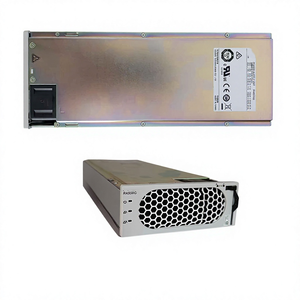
High-efficiency silver rectifier module fully compatible with ETP48-200 systems, engineered for FTTH & 5G base stations.
Get a Quote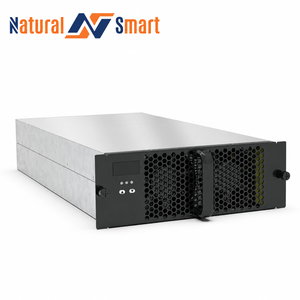
Ultra-wide voltage output range AC/DC converter module certified by CE and TÜV for high-power DC fast charging setups.
Get a Quote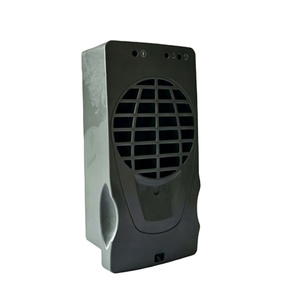
Features accelerated heat dissipation architecture engineered specifically for long-term continuous 24/7 operational stability.
Get a Quote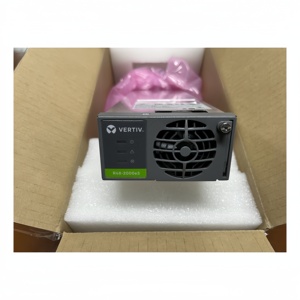
New and original high-density telecom power rectifier offering energy-saving performance and robust fault protection.
Get a Quote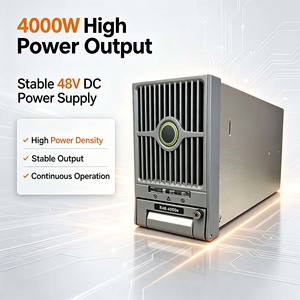
Designed for central base station power cabinets requiring maximum wattage density and advanced telemetry monitoring.
Get a Quote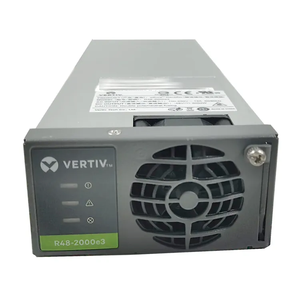
Premium grade high-frequency network power module built for low harmonic distortion and seamless parallel expansion.
Get a Quote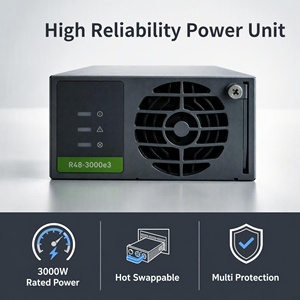
Optimized for critical data center infrastructure and enterprise telecom networks demand zero downtime.
Get a QuoteDiscover why global telecom operators and industrial system integrators rely on our CE-certified power supply solutions.
Our rectifiers utilize advanced zero-voltage switching (ZVS) topologies, achieving ultra-high power density in standard 1U/2U footprints for simplified cabinet integration.
Every single unit manufactured in our certified facilities meets rigorous European CE directives (LVD, EMC), UL requirements, and RoHS environmental standards.
Live-swappable module designs ensure zero downtime during maintenance or capacity expansion. Power subsystems automatically load-share with intelligent CAN bus communication.
The global telecommunications landscape is undergoing a massive transformation driven by the deployment of 5G Standalone (SA) networks, edge computing architectures, and the rapid expansion of fiber-to-the-home (FTTH) infrastructure. As wireless base stations transition toward massive MIMO antenna arrays and higher compute densities, the demand placed on underlying AC/DC and DC/DC telecom power units has reached unprecedented levels. Modern energy architectures must deliver uncompromised efficiency, extreme thermal stability, and seamless scalability while strictly adhering to international CE certification standards.
Core Industry Imperative: Power conversion efficiency in telecom central offices and remote cell towers directly impacts Operational Expenditure (OpEx). Upgrading from legacy 90% rectifiers to premium 96.5% high-efficiency modules yields multi-million dollar annual savings across large-scale mobile networks.
A telecom-grade rectifier must convert raw, wide-range AC mains input (typically 85V AC to 300V AC) into clean, tightly regulated -48V DC power (adjustable between 42V DC to 58V DC) to feed sensitive transceiver electronics and float-charge standby lithium/lead-acid battery banks. To achieve minimal total harmonic distortion (THD < 3%) and high power factor (PF > 0.99), modern CE-certified factories employ active bridgeless Power Factor Correction (PFC) stages followed by isolated LLC resonant DC/DC converters.
By leveraging wide-bandgap (WBG) semiconductors such as Silicon Carbide (SiC) MOSFETs and Gallium Nitride (GaN) switches, modern power units run at significantly elevated switching frequencies. This dramatically reduces the physical volume of passive magnetic components (transformers and inductors), giving rise to power densities exceeding 45W/in³.
Below is an engineering benchmark comparing key electrical parameter thresholds across standard vs. advanced enterprise telecom power supply modules:
| Performance Metric | Legacy Telecom Rectifiers | CE Certified Enterprise Grade | Next-Gen SiC/GaN Platform |
|---|---|---|---|
| Peak Conversion Efficiency | 90.5% - 92.0% | 95.5% - 96.5% | 97.2% - 98.0% |
| Input AC Voltage Range | 186V - 264V AC | 85V - 300V AC (Full Derating) | 85V - 305V AC (Universal Wide) |
| Power Factor (PF) @ 100% Load | > 0.95 | > 0.99 | > 0.998 |
| Total Harmonic Distortion (THD) | < 10% | < 5% | < 2.5% |
| Operating Temperature Range | -20°C to +50°C | -40°C to +75°C (>65°C derating) | -40°C to +85°C (Extreme Thermal) |
| MTBF (Telcordia SR-332) | 250,000 Hours | 500,000 Hours | > 1,000,000 Hours |
Thermal stress is the single leading cause of component failure in outdoor telecom enclosures. Advanced modules, such as the APR48 and Vertiv R48 series featured in our lineup, utilize dual intelligent speed-controlled cooling fans coupled with extruded aluminum heat sinks coated in high-emissivity ceramic layers. The internal airflow path is completely isolated from sensitive control circuitry, preventing moisture, dust, and industrial pollutants from inducing micro-short circuits on the PCB.
As telecom networks expand into remote geographic locations and dense urban environments, energy management is evolving from simple power conversion into an intelligent, interconnected sub-system. Procurement leaders and engineering teams must align their sourcing strategy with the following major trends shaping the market over the next decade:
Global telecom operators are aggressively targeting Net-Zero operational goals. In off-grid or unstable grid regions, telecom cabinets are shifting away from pure diesel generator backups toward hybrid renewable microgrids. Modern rectifiers now feature multi-input power routing capable of seamlessly blending AC mains, solar PV power, and battery storage. Advanced MPPT (Maximum Power Point Tracking) technology is directly embedded into DC power racks to prioritize renewable solar input over grid energy whenever available.
Edge power systems are no longer isolated hardware boxes. Today's telecom rectifiers integrate microcontrollers with RS485, CAN bus, SNMP, and Modbus protocol interfaces. With embedded telemetry, site management software can monitor individual module health, real-time load distribution, ambient temperature curves, and battery impedance. Machine learning algorithms analyze historical performance to predict fan failures or battery degradation weeks before an operational outage occurs.
5G networks rely heavily on high-frequency mmWave spectrums, requiring dense small-cell deployments mounted on utility poles, streetlights, and building facades. Power supplies for these applications must be zero-maintenance, passively cooled, IP65/IP67 weather-rated, and compact enough to fit into unobtrusive street-level enclosures.
Navigating the global sourcing market for enterprise power supplies requires balancing initial capital expenditure (CapEx) against long-term maintenance costs (OpEx). B2B buyers and telecom contractors are adopting more rigorous auditing protocols when selecting export partners:
As a leading exporter of industrial power conversion equipment, our manufacturing infrastructure is structured to meet the uncompromising requirements of worldwide telecommunications operators, industrial automation builders, and data center operators.
Strict quality control processes, rigorous design validation testing (DVT), and ISO 9001:2015 certified manufacturing protocols ensure absolute precision in production.
Every single power module undergoes elevated-temperature full-load burn-in screening prior to packaging, guaranteeing zero dead-on-arrival (DOA) units for global shipments.
Comprehensive international compliance documentation (CE, UL, RoHS, REACH) accompanied by rapid technical support for seamless custom OEM/ODM modifications.
Direct answers to essential technical, compliance, and ordering questions regarding our telecom rectifiers.
Looking for reliable CE-certified 48V DC telecom rectifiers, hot-swappable modules, or high-power EV charging solutions? Speak directly with our technical engineering sales team today.
Get a Quote