CE Certified UPS System Factories & Exporters

Enterprise Technical Whitepaper & B2B Global Sourcing Framework for High-Availability Industrial Power Rectifiers, DC-UPS Architectures, and Power Conversion Systems

CE Certified Industrial Power Rectifiers & UPS System Modules

Explore high-efficiency switch-mode power supplies, hot-swappable telecom rectifiers, and high-voltage DC conversion modules manufactured under ISO 9001:2015 and CE quality standards.
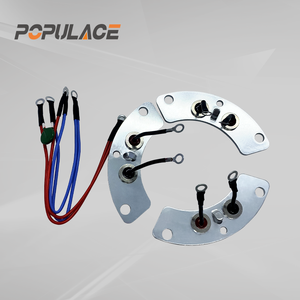
POPULACE 220V Voltage T30 Alternator Electroplating Rectifier Machine Module

POPULACE 220V Voltage T30 Alternator Electroplating Rectifier Machine Module Bridge Rectifiers Diode T30

Inquire Now
ZHIHENG R4850G Rectifier Module

ZHIHENG R4850G G2/G6/N2/N6 48V 50A Silver Rectifier Module for Telecom Base Station FTTH Hot-Swappable Compatible with ETP48-200

Inquire Now
20kw 30kw 40kw DC EV Charging Power Module

20kw 30kw 40kw DC EV Charging Power Module AC/DC Rectifier 150-1000V 133A for EV DC Charger CE TUV Certificate

Inquire Now
APR48 Rectifier Module 48V

APR48 Rectifier Module 48V Constant Voltage Fast Heat Dissipation Power Module For Long-Term Continuous Operation

Inquire Now
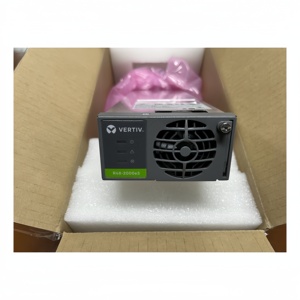
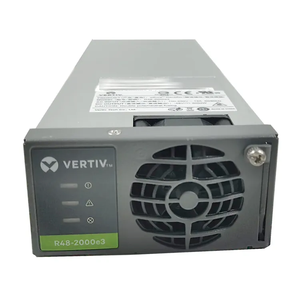
EMERSON VERTIY R48-2000e3 Rectifier Module

EMERSON VERTIY R48-2000e3 Rectifier Module New and Original 48V 2000W Telecom Power

Inquire Now
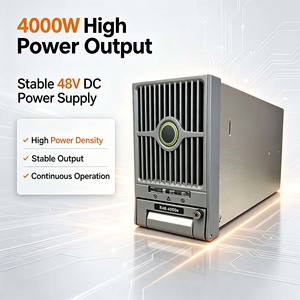
R48-4000e Rectifier Module High Power 4000W

R48-4000e Rectifier Module High Power 4000W 48Volt DC Telecom Rectifier Module For Base Station Cabinet Power System

Inquire Now
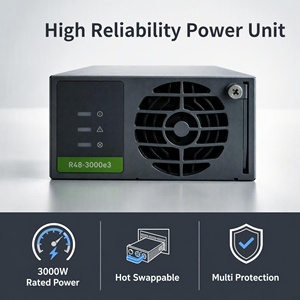
Vertiv R48-3000e3 Telecom Power Rectifier Module

Vertiv R48-3000e3 Telecom Power Rectifier Module High Frequency Network Power 48V 3000W

Inquire Now
R48-3000e3 Telecom Rectifier Module Data Center

R48-3000e3 Telecom Rectifier Module 3000W 48V Output High Reliability AC DC Power Rectifier Module For Data Center

Inquire Now
96.5%
Peak Energy Conversion Efficiency
< 2 ms
Seamless Transfer Switching Time
> 500k h
Calculated MTBF (Telcordia SR-332)
100%
CE (EN 62040-1/-2/-3) Compliant

Executive Whitepaper: Sourcing CE Certified Industrial UPS Systems & Power Conversion Modules

In modern industrial automation, telecommunications infrastructure, healthcare facility operations, and data center management, electrical continuous availability is non-negotiable. An enterprise-grade Uninterruptible Power Supply (UPS) system functions as the foundational safeguard against grid volatility, voltage surges, frequency variations, and catastrophic power outages. Sourcing industrial power electronics from CE certified UPS system factories and direct exporters ensures that electrical systems conform to rigorous European Union directives regarding health, safety, electromagnetic compatibility (EMC), and environmental sustainability.

This comprehensive technical whitepaper analyzes the core engineering architectures of industrial AC/DC rectifiers, DC-UPS backup units, and high-frequency switched-mode power supply (SMPS) topologies. Designed specifically for OEM system integrators, electrical procurement managers, and plant infrastructure directors, this guide bridges the gap between low-level component engineering and high-level procurement strategies, emphasizing verified compliance, total cost of ownership (TCO), and long-term operating reliability.

Enterprise Manufacturing Competence & Engineering Benchmarks

Leading global UPS system exporters and power supply manufacturers operate state-of-the-art production environments inspected regularly under DIN EN ISO 9001:2015 quality management frameworks. German power design philosophies and automated high-volume assembly lines combine to deliver unmatched power density, wide temperature tolerance, and long-term service longevity.

ISO 9001 & CE Compliance

Every industrial unit undergoes strict component qualification, automated SMD surface mounting, vacuum varnish coating for humid environments, and multi-stage automated optical inspection (AOI).

Inrush Current Suppression (ESB)

Integrated electronic inrush current limiters prevent premature circuit breaker trips during cold start capacitive charging, enabling dense parallel circuit layouts without oversizing breakers.

Active Power Factor Correction

Advanced PFC topologies achieve Power Factor values exceeding 0.99 with Harmonic Current Distortion (THDi) under 3%, satisfying stringent grid connection requirements worldwide.

Wearless Redundancy Modules

Utilizing high-power DC MosFET relays and decoupling diodes, our power architectures provide wear-free N+1 redundancy switching with microsecond failure isolation.

Intelligent Telemetry & SNMP

Modbus RTU, CAN-Bus, and ethernet-based telemetry controllers provide real-time digital monitoring of individual cell voltages, ambient thermal profiles, and remaining service life.

Hot-Swappable Modular Chassis

High-density 1U/3U rack-mount subracks support hot-pluggable rectifier insertion under live load conditions, reducing Mean Time to Repair (MTTR) to under 5 minutes.

Architectural Matrix: Comparing Industrial UPS Topologies

Selecting the optimal uninterruptible power configuration requires evaluating electrical isolation, transfer efficiency, maintenance flexibility, and footprint density. Below is a engineering comparison of primary industrial UPS design frameworks deployed across enterprise facilities.

UPS Architecture Transfer Time Typical Efficiency Primary Industrial Applications Regulatory Standards
Online Double Conversion (VFI) 0 ms (Continuous) 92% – 95% Critical Server Racks, Healthcare CT/MRI Scanners, Semiconductor Fab Lines CE EN 62040-3 Class 1
Line-Interactive (VI) 2 ms – 4 ms 95% – 97% Industrial Automation Cabinets, Telecom Edge Switches, Traffic Control Nodes CE EN 62040-3 Class 2
Modular DC-UPS (DC-Bus) 0 ms (DC Direct) 96% – 98% 24V/48V Control Logic PLCs, EV DC Fast Charging Stations, Battery Storage Nodes CE / UL 1778 / CSA
High-Voltage DC Mini-Grid (450V-820V) Sub-millisecond 97.5% – 99% Solar PV Hybrid Microgrids, Heavy Industry Crane Systems, BESS Sub-stations CE / TUV EN 61800-5

Need Custom Power System Engineering or OEM Rectifier Manufacturing?

Consult with our senior power electronics engineers to specify customized output voltages, wide temperature derating curves, dynamic load sharing, or specialized battery charging profiles.

Inquire Now

Future Procurement Trends in Industrial UPS & Rectifier Technologies

The global industrial power management landscape is undergoing a structural transition driven by decarbonization, electrification, and digital automation. Strategic procurement departments must anticipate technological evolution over a 10-year horizon to prevent infrastructure obsolescence.

1. Silicon Carbide (SiC) & GaN Power Semiconductor Adoption

Wide-bandgap (WBG) semiconductors like SiC MOSFETs and GaN switches are replacing traditional Silicon IGBTs. This shift allows switching frequencies to exceed 100 kHz, reducing passive magnetic transformer volume by 40% while maintaining conversion efficiencies above 97% even under partial loads.

2. Transition to Lithium Iron Phosphate (LiFePO4) BESS

Legacy Valve-Regulated Lead-Acid (VRLA) batteries are rapidly being replaced by intelligent LiFePO4 battery modules equipped with integrated Battery Management Systems (BMS). LiFePO4 offers 3x to 5x the cycle life, 60% weight reduction, and superior thermal stability up to +60°C ambient temperatures.

3. Direct High-Voltage DC (HVDC) Distribution Systems

Modern industrial plants are abandoning multiple AC-to-DC and DC-to-AC conversion steps in favor of centralized 380V–800V DC mini-grids. Direct DC coupling eliminates inverter transformation losses, increasing overall energy utilization across solar PV arrays, battery storage, and variable speed drives.

Key Product Development Trends in CE Certified UPS Systems

To meet the demands of Industry 4.0 smart factories, UPS manufacturers are embedding intelligent features into standard rectifiers and continuous backup hardware:

  • Predictive Maintenance Algorithms: Real-time operational analysis of electrolytic capacitor degradation, thermal resistance changes, and fan RPM drop-offs allows automated maintenance alerts before physical system breakdown occurs.
  • Bi-Directional Power Flow: Next-generation industrial rectifiers support bi-directional power movement, enabling UPS batteries to feed excess stored energy back into the local facility grid during peak tariff demand hours (Vehicle-to-Grid V2G and Battery-to-Grid B2G integration).
  • Ultra-Wide Input Voltage Windows: Modern 3-phase rectifiers accommodate line input fluctuations between 260VAC and 530VAC without switching to battery power, dramatically extending battery operational lifespans in emerging market grids.
  • Advanced Thermal Management: Conduction-cooled cold-plate designs and IP65 potted enclosures enable fanless operation in dusty, aggressive chemical, or offshore maritime settings.

Frequently Asked Questions (FAQ) for Industrial UPS Buyers

Comprehensive answers to complex technical questions faced by global procurement managers and electrical design teams during supplier audit and contract negotiation.

What specific testing standards must a CE certified UPS factory comply with?
A genuine CE certified UPS system must comply with three core standards: EN 62040-1 (General and safety requirements), EN 62040-2 (Electromagnetic Compatibility / EMC requirements for Category C1–C4 environments), and EN 62040-3 (Method of specifying performance and test requirements). Furthermore, components must conform to Low Voltage Directive (LVD) 2014/35/EU, EMC Directive 2014/30/EU, and RoHS/REACH environmental directives. Factories should supply verified Declaration of Conformity (DoC) documents issued by accredited third-party bodies such as TÜV, UL, or Intertek.
What is the difference between a DC-UPS system and an AC Double Conversion UPS?
An AC Double Conversion UPS converts incoming AC grid power to DC, charges the battery, and continuously reconstructs a clean AC output waveform via an inverter stage (AC-DC-AC). It is designed for standard AC loads like IT servers and AC motors. A DC-UPS system rectifies incoming AC directly into a stabilized DC output (e.g., 24VDC, 48VDC) and directly buffers the DC bus via a battery. When mains power fails, the DC-UPS feeds the load without any inverter transformation stage, achieving higher energy efficiency, lower component counts, compact DIN-rail mounting, and zero transfer time for DC control electronics (PLCs, sensors, drives).
Why is Active Inrush Current Limiting critical when selecting industrial power supplies?
Industrial switch-mode power supplies contain large internal electrolytic capacitor banks. When energized, these capacitors act as near short-circuits, drawing massive peak current spikes (inrush current) lasting several milliseconds. Without active limitation, this spike can nuisance-trip upstream circuit breakers or damage switch contactors. High-end power supplies integrate electronic inrush limiters (ESB series) using active MosFETs or NTC/relay circuits that limit cold-start current to safe nominal levels, enabling multiple units to be connected to a single circuit breaker without tripping.
Can hot-swappable telecom rectifier modules be integrated into industrial automation cabinets?
Yes. Telecom rectifiers (such as 48V 50A or 3000W series modules) are built to extreme reliability standards (MTBF > 500,000 hours) with hot-swap functionality, constant current limiting, wide temperature tolerance (-40°C to +75°C), and remote digital telemetry. Integrating hot-swappable subracks into industrial cabinets allows live replacement of faulty units without shutting down critical process logic, providing N+1 redundancy in compact 19-inch 1U/3U footprints.
What thermal derating factors should be considered when operating UPS rectifiers at elevated ambient temperatures?
Most standard industrial power supplies deliver 100% nominal power up to +50°C or +60°C. Above this ambient threshold, power electronics must be derated by approximately 2.5% to 5% per degree Celsius up to their maximum operating limit (+70°C). When procuring UPS hardware for tropical installations, enclosed outdoor control boxes, or high-density server racks, buyers must verify the factory's published thermal derating curves to ensure the power supply is not overstressed, which exponentially reduces life expectancy.
What lead times and OEM/ODM customization options are available from certified UPS exporters?
Established OEM power supply manufacturers typically offer standard off-the-shelf module delivery within 1 to 3 weeks, while custom OEM/ODM modifications (such as custom output voltages, conformal PCB coatings, ruggedized vibration mountings, preset firmware parameters, or custom branding) require 6 to 12 weeks for prototyping, engineering testing, and safety re-certification.

Request Technical Datasheets & Global Exporter Price Lists

Connect directly with our engineering sales specialists for bulk tender quotations, OEM customization inquiries, or compliance documentation.

Inquire Now