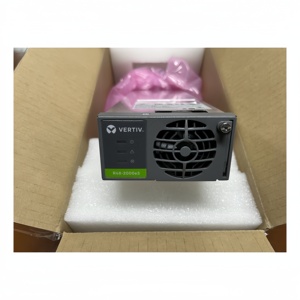
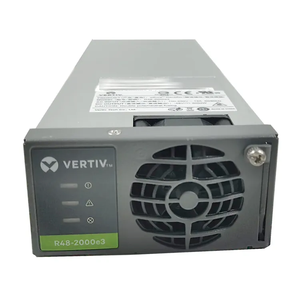
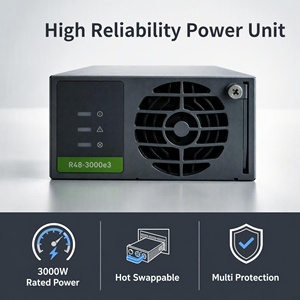
Explore our CE and TÜV-compliant power conversion modules designed for critical industrial automation, telecommunications infrastructure, electroplating, and EV charging stations.
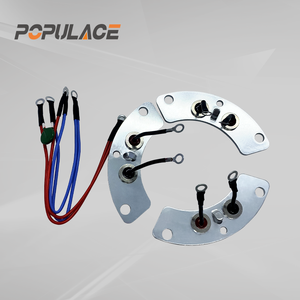
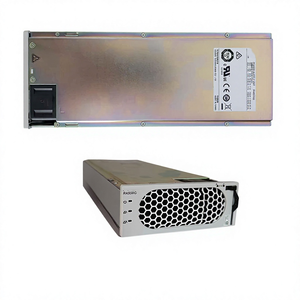
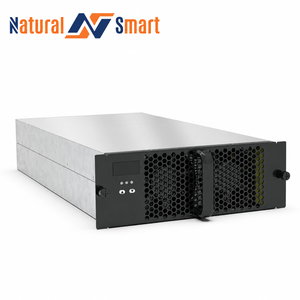
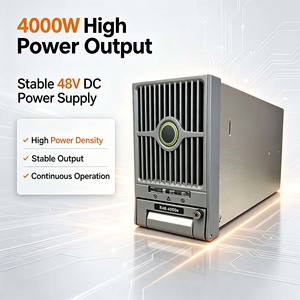
Understanding how modern high-frequency switching rectifiers, static automatic voltage regulators (AVR), and solid-state conditioning modules protect sensitive industrial payloads from severe grid anomalies.
"In automated manufacturing and telecommunication nodes, over 87% of critical equipment downtime is caused by voltage micro-sagging, phase imbalance, and harmonic distortion rather than complete blackout events. Engineering robust CE-certified voltage stabilization is the foundational requirement for Industry 4.0 continuity."
Industrial facilities operating heavy inductive loads—such as servo-driven CNC machining hubs, electroplating rectifiers, and high-capacity HVAC units—frequently subject line power to voltage surges, sag, brownouts, and phase-angle distortions. A CE Certified Voltage Stabilizer acts as an active electronic barrier between unconditioned grid power and sensitive control automation systems.
Unlike legacy electromechanical servo-motor stabilizers that suffer from slow reaction times (200ms to 500ms) and mechanical carbon-brush wear, modern high-frequency Switch-Mode Power Supply (SMPS) rectifiers and static voltage regulators utilize Insulated Gate Bipolar Transistors (IGBTs) and Silicon Carbide (SiC) MOSFETs. This enables sub-millisecond correction response rates (< 1ms) with precision output voltage accuracy within ±0.5% tolerances.
To qualify as a verified international supplier and exporter, voltage stabilizers and AC/DC power modules must satisfy rigorous European Harmonized Standards under the Low Voltage Directive (LVD 2014/35/EU) and Electromagnetic Compatibility (EMC) Directive (2014/30/EU). Key compliance frameworks engineered into our power architecture include:
Traditional uncontrolled bridge rectifiers draw pulse-like currents from the mains, leading to poor Power Factor (PF < 0.70) and excessive Total Harmonic Distortion (THD > 35%). This generates dangerous thermal overheating in power transformers and neutral conductors.
Our CE-certified switch-mode voltage rectifiers integrate Active Power Factor Correction (PFC) circuitry driven by continuous boost topologies. This achieves an outstanding Power Factor of >0.99 across 20% to 100% load spectrums while suppressing Total Current Harmonic Distortion (THDi) below 3.5%, meeting stringent IEEE 519 and EN 61000-3-2 guidelines.
| Electrical Parameter | High-Frequency SMPS Rectifier | Static IGBT Regulator | Servo-Driven Autotransformer |
|---|---|---|---|
| Correction Speed | < 1 ms (Ultra-Fast) | 1 ms – 5 ms | 20 ms – 50 ms/V (Slow) |
| Output Precision | ± 0.2% to ± 0.5% | ± 1.0% | ± 1.5% to ± 3.0% |
| Power Factor (PF) | > 0.99 (Active PFC) | 0.95 - 0.98 | Depends on Load (0.80) |
| THDi Content | < 3.5% | < 5.0% | Linear (Unchanged) |
| Maintenance Profile | 100% Wearless (Solid-State) | 100% Wearless | Requires Brush Replacement |
| Efficiency (Nominal) | 95.5% – 97.2% | 96.0% | 92.0% – 94.0% |
From initial engineering design to full-scale OEM manufacturing, our manufacturing capabilities adhere to zero-defect quality standards audited under ISO 9001:2015 frameworks.
Every single power unit undergoes continuous Automated Optical Inspection (AOI), 100% high-voltage dielectric insulation testing, and mandatory full-load burn-in under elevated ambient temperatures prior to export dispatch.
Our voltage stabilization modules operate across severe input fluctuations (85VAC to 300VAC continuous) and sustain un-derated full-power output across ambient operating ranges from -25°C up to +65°C.
Direct access to hardware and firmware design teams allows custom output voltage set-points, conformal coating for harsh environments, specialized connector pinouts, and custom communication protocols (CANbus, MODBUS, SNMP).
Modular telecom and industrial rectifiers feature plug-and-play internal decoupling diodes and hot-swappable bus connections, enabling non-disruptive maintenance and zero-downtime N+1 module expansion.
Complete regulatory clearance with CE, TÜV, UL, RoHS, and REACH documentation. Our export division manages door-to-door global logistics, specialized seaworthy packaging, and regional tech support.
Strategic insights for enterprise procurement officers and system integrators preparing for next-generation power grid transformations.
The global transition from silicon to Gallium Nitride (GaN) and Silicon Carbide (SiC) switching components allows power modules to operate at 5x higher switching frequencies. This reduces heat dissipation by 40% and footprint size by up to 60%, yielding unprecedented power densities exceeding 45W/in³.
Modern factories and data centers are shifting from traditional AC distribution to centralized 380V–800V DC micro-grids. Power supplies are evolving into bidirectional DC-DC mini-grid converters that directly interface solar photovoltaic arrays, energy storage systems, and fast EV chargers without redundant inverter stages.
Next-generation CE voltage stabilizers now feature embedded telemetry microprocessors. By continuously monitoring internal capacitor Equivalent Series Resistance (ESR), operating thermal gradients, and total operational hours, systems transmit predictive maintenance alarms over MQTT/RS485 prior to component failure.
Detailed answers regarding technical specifications, CE compliance, custom engineering options, and international supply logistics.
Every product family sold under our CE label is verified by independent third-party ISO/IEC 17025 accredited laboratories. Detailed test reports covering low voltage safety (EN 61558-1 / EN 62368-1) and electromagnetic compatibility emissions/immunity (EN 61000-6-2 / EN 61000-6-4) are provided alongside our official EC Declaration of Conformity.
Hot-swappable modules utilize staggered power pins (ground-first, signal-second, main-DC-third) combined with internal soft-start circuits and anti-arcing OR-ing MOSFET switch topologies. This prevents line voltage dips or transient inrush currents on the live DC bus during hot-plugging actions.
Yes. Our industrial voltage stabilizers feature an ultra-wide input voltage dynamic window (up to ±30% nominal AC voltage) and extended frequency acceptance (45Hz to 65Hz). Advanced digital phase-locked loops (PLL) ensure seamless synchronization even when powered by high-THD diesel generator sets.
These high-density units feature active thermal management driven by variable-speed brushless DC fans. Integrated NTC thermistors continuously report temperature data to internal DSP controllers, initiating intelligent fold-back thermal derating above 55°C ambient, preventing catastrophic shutdown while maximizing operational uptime.
Standard catalog modules carry zero MOQ for sample orders, with immediate warehouse dispatch. Custom engineering modifications (such as specific output voltages, custom mechanical chassis, or special conformal coating) typically carry a 50-unit evaluation MOQ with prototyping lead times of 3 to 4 weeks.
High-power voltage stabilizers contain large electrolytic capacitor banks. At switch-on, these capacitors act as short circuits, drawing massive peak inrush currents (up to 20x nominal current) that trip upstream breakers. Integrating an ESB limiter ramps up line current smoothly, preventing breaker tripping and extending contactor lifespan.
Connect directly with senior application engineers to evaluate project schematics, verify CE compliance documentation, or receive volume pricing quotes.