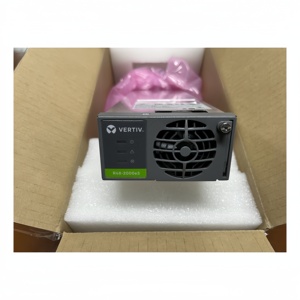
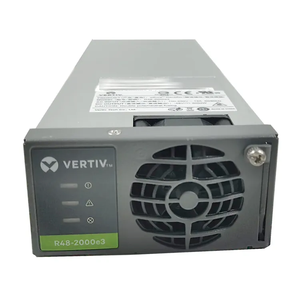
Engineered for continuous heavy-duty operation, high efficiency, and seamless deployment across telecom base stations, EV fast charging, and decentralized microgrids.
The global transition toward decentralized clean energy infrastructure has shifted the engineering paradigm from centralized power generation to intelligent localized power networks—commonly known as microgrids. A modern microgrid acts as an autonomous energy ecosystem capable of operating in dual modes: grid-tied and islanded. It harmonizes distributed energy resources (DERs), such as solar photovoltaic (PV) arrays, wind turbines, stationary battery energy storage systems (BESS), thermal cogeneration, and industrial loads.
At the core of every high-reliability microgrid lies the power electronics architecture. As a premium China micro grid factory and OEM/ODM supplier, our engineering methodologies focus on resolving critical power quality challenges: voltage stabilization, high-frequency AC/DC rectification, ultra-wide DC bus matching (ranging from 48V DC telecom buses to 450V–820V DC microgrid backbones), and bidirectional power flow management. Power conversion hardware must withstand harsh environmental transients, heavy load fluctuations, and continuous thermal stress while delivering ultra-high energy efficiency.
Key Engineering Insight: Transitioning from conventional linear power supplies to high-density switch-mode power supplies (SMPS) with SiC/GaN semiconductor topologies reduces energy losses by up to 40% and footprint by 60% in industrial microgrid cabinets.
Whether deploying remote off-grid telecommunication stations, industrial electroplating facilities, fast-charging EV hub infrastructure, or data center backup power systems, selecting the appropriate AC/DC rectifier modules and DC/DC converters is the single most critical determinant of system uptime, operational expenditure (OPEX), and total cost of ownership (TCO).
Combining state-of-the-art automated manufacturing in China with rigorous international quality standards to deliver bulletproof industrial power systems.
Every batch of power supplies undergoes 100% full-load burn-in testing, automated optical inspection (AOI), high-voltage isolation tests, and strict component trace-ability under audited ISO 9001:2015 frameworks.
Our industrial rectifiers feature active Power Factor Correction (PFC > 0.99) and soft-switching resonant topologies, achieving peak efficiency ratings exceeding 96.5% to minimize heat dissipation.
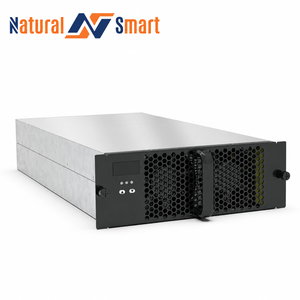
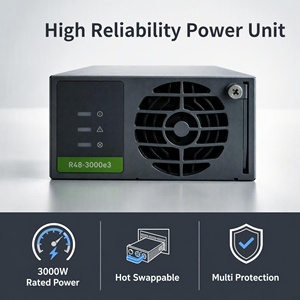
Designed for mission-critical uninterrupted power (DC-UPS), our 19-inch rack-mount and DIN-rail modules support seamless hot-swapping without shutting down the master system bus.
Conformal-coated printed circuit boards (PCBs), wide operating ambient temperature ranges (-40°C to +75°C), and integrated electronic surge limiters protect equipment against dusty, humid, or corrosive environments.
From non-standard output voltages (e.g., custom 150V–1000V wide range for EV chargers) to customized CANbus / RS485 communication protocols, our R&D team delivers tailored modifications rapidly.
Incorporating wearless electronic DC MosFET relays and active inrush current limiters (ESB series) to eliminate contact erosion, prevent breaker tripping, and extend system operational life.
Technical performance comparison across primary industrial power architecture categories.
| Product Architecture | Input Voltage Range | Nominal DC Output | Peak Efficiency | Primary Industrial Application | Certification Compliance |
|---|---|---|---|---|---|
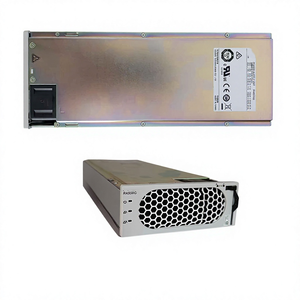
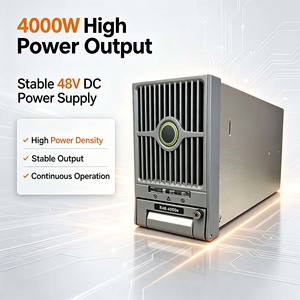
| 48V Telecom Rectifier Modules | 85V – 300V AC (1-Phase) | 48V DC (50A / 2000W / 3000W) | 96.5% | 5G Base Stations, FTTH, Telecom Cabinets | CE / UL / TUV |
| EV Charger Power Modules | 260V – 485V AC (3-Phase) | 150V – 1000V DC (20kW–40kW) | 96.0% | EV Fast Charging Stations, Fleet Microgrids | CE / TUV |
| Electroplating Heavy Rectifiers | 220V / 380V AC ±15% | 0 – 30V DC / High Current T30 | 92.0% | Industrial Anodizing, Electroplating, Electrolysis | ISO 9001 / CE |
| DC/DC Mini-Grid Converters | 450V – 820V DC (High Voltage Bus) | 24V / 48V DC Isolated | 95.5% | Solar PV + Battery Microgrid Backbone | CE / RoHs |
| DC-UPS & Battery Chargers | 90V – 264V AC / 3-Phase 400V | 12V / 24V / 48V DC (Up to 105kW) | 94.8% | Uninterrupted Automation PLCs, Substation Control | UL / CSA / CE |
| Inrush Current Limiters (ESB) | 115V / 230V / 400V AC | Inrush Limiting (Up to 46kW) | 99.2% | Capacitive Load Soft-Start, Transformer Feeders | CE / DIN-Rail |
As global procurement teams, system integrators, and engineering consultants evaluate suppliers in China for microgrid infrastructure, several macroeconomic and technological shifts are redefining sourcing criteria:
Traditional industrial sites rely on multiple AC-to-DC and DC-to-AC conversions, leading to cumulative energy losses ranging from 8% to 15%. Modern microgrid procurement heavily favors centralized High-Voltage DC (HVDC) backbones operating at 450V to 820V DC. Sourcing rectifiers and isolated step-down converters designed specifically for direct coupling to DC microgrids minimizes inverter stages, increases system efficiency, and drastically simplifies renewable energy integration.
To eliminate system downtime during maintenance, procurement specifications now universally demand modular, hot-swappable shelf architectures (such as 19-inch 1U/2U/3U rack enclosures). Supply chain managers prioritize modules compatible with industry-standard footprints—such as Emerson/Vertiv R48 series or Eaton APR48 form factors—allowing drop-in replacement flexibility and reducing sole-supplier dependency risks.
Silicon Carbide (SiC) MOSFETs and Gallium Nitride (GaN) field-effect transistors are rapidly replacing conventional silicon switches in premium AC/DC rectifiers and DC EV charging modules. Procurement managers must evaluate suppliers' thermal management and SiC driver design expertise. SiC technology permits higher switching frequencies (over 100 kHz), reducing inductor and transformer sizes while achieving operating efficiencies above 96.5% under varying load conditions.
Future microgrids will no longer view storage as passive backup power. Procurement of rectifiers and power conversion systems (PCS) is transitioning toward bidirectional converters capable of Vehicle-to-Grid (V2G) and Battery-to-Grid energy arbitrage. Advanced digital signal processors (DSPs) integrated into modules allow real-time switching between grid-following and grid-forming modes to stabilize frequency and voltage in islanded microgrid operations.
Staying competitive in the industrial power sector requires continuous innovation in topology design, digital control, and material science. Key technology vectors shaping China’s top microgrid suppliers include:
Essential answers for system integrators, technical buyers, and electrical design engineers.
Need customized power conversion modules, bulk OEM pricing, or technical design review for your energy storage microgrid project? Our application engineering team is ready to assist.