High-reliability AC/DC rectifiers, DC/DC converters, and modular power supplies designed for continuous defense, communications, and industrial applications.
Modern defense systems, tactical communications networks, radar installations, and mission-critical industrial infrastructures require power electronics that operate flawlessly under severe environmental stress. As a primary global manufacturing hub, China's power supply manufacturing ecosystem has undergone a massive technological shift over the past decade. Top Chinese military power suppliers and exporters have transitioned from standard industrial OEM production to state-of-the-art switched-mode power supplies (SMPS), high-frequency rectifiers, and modular DC-UPS units built to stringent international and defense standards.
Whether deploying stationary command centers, tactical mobile communication units, or high-capacity microgrids, global system integrators demand absolute reliability, exceptional power density, and continuous electromagnetic compliance. This technical guide examines the architectural capabilities, manufacturing processes, quality assurance frameworks, and future procurement trends defining Chinese defense and high-reliability power exporters.
Strategic Procurement Insight: Modern defense power conversion demands more than peak wattage. Key metrics include high Mean Time Between Failures (MTBF > 500,000 hours), compliance with MIL-STD-461 EMI specifications, and robust thermal dissipation architectures capable of un-derated operation up to 55°C ambient temperatures.
Our engineering and manufacturing facilities adhere to strict ISO 9001:2015 and military-grade quality management frameworks. Every high-power rectifier, AC/DC switching module, and DC/DC converter undergoes rigorous testing protocols before export, ensuring seamless drop-in integration into defense and telecom environments worldwide.
By leveraging active Power Factor Correction (PFC > 0.99) combined with Zero-Voltage Switching (ZVS) and Phase-Shifted Full-Bridge (PSFB) resonant conversion, our rectifiers achieve ultra-high conversion efficiencies exceeding 96.5%. This dramatic reduction in thermal dissipation lowers cooling energy requirements, extends internal electrolytic capacitor life, and minimizes overall operational costs.
Standard commercial power supplies fail when subjected to severe shock, vibration, or atmospheric humidity. Our specialized defense power modules feature:
Defense communication systems and radar equipment are highly sensitive to electrical noise. Our high-frequency power modules feature multi-stage input/output EMI filters designed to exceed CISPR 32 / EN 55032 Class B standards, protecting sensitive upstream electronics from switching transients, harmonic distortion, and electromagnetic interference.
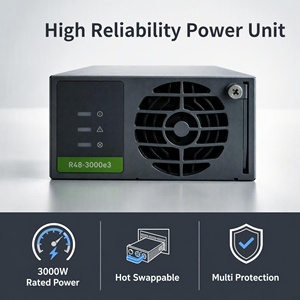
Modular 48V telecom and defense rectifiers allow live insertion and replacement without interrupting power to mission-critical operational loads.
Integration of Gallium Nitride (GaN) and Silicon Carbide (SiC) MOSFETs drastically reduces switching losses and footprint dimensions.
Self-resetting over-voltage, active output short-circuit protection, over-temperature shutdown, and reverse-polarity safeguards.
As international defense authorities and heavy industrial sectors transition toward high-density DC microgrids and electrified equipment fleets, procurement strategies are evolving rapidly. Global procurement directors must evaluate several key technological macro-trends when sourcing power conversion systems from China:
Next-generation tactical shelters, EV charging hubs, and industrial energy storage systems (ESS) are increasingly standardizing on high-voltage DC bus topologies (450V to 1000V DC). Multi-range AC/DC rectifiers capable of seamless transition between traditional 3-phase grid power and local DC microgrids are quickly becoming the primary specification requirement.
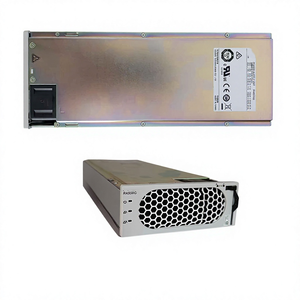
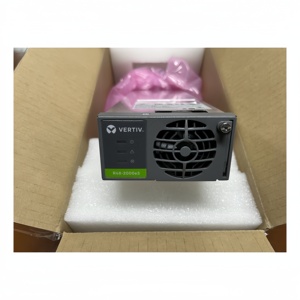
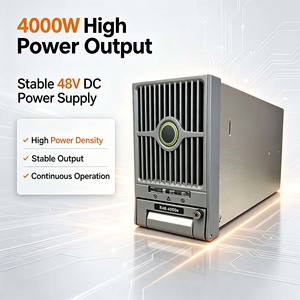
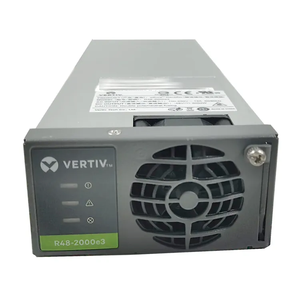
Analogue status relay contacts are being replaced by digital communications interfaces. Modern high-power rectifiers (such as the Emerson/Vertiv R48 series and 30kW EV charging modules) integrate CANbus or Modbus protocols, allowing central controllers to dynamically adjust output voltage set-points, balance system current sharing, and log predictive maintenance analytics.
Integrating Lithium Iron Phosphate (LiFePO4) battery banks directly into DC power systems demands intelligent dual-mode rectifiers. These units serve both as constant-voltage system power supplies and temperature-compensated smart chargers, optimizing battery longevity and ensuring zero-millisecond transfer times during primary grid power loss.
Selecting the optimal power supply architecture depends on load dynamics, voltage requirements, mounting constraints, and thermal environments. The table below outlines core operational parameters across primary product classes:
| Module Category | Typical Voltage & Current | Efficiency Rating | Primary Application | Cooling Topology |
|---|---|---|---|---|
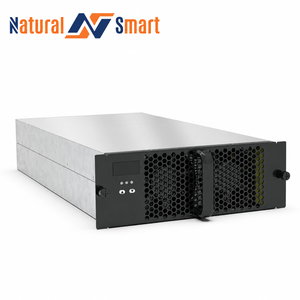
| Telecom Rectifiers (e.g., R4850G, R48-3000e) | 48V DC (42–58V) / 50A–62.5A | 95.5% – 96.5% | Telecom Base Stations, Defense Shelters, DC-UPS | Smart Speed-Controlled Fan |
| High-Power EV Modules (20kW–40kW) | 150V – 1000V DC / 0–133A | >95.0% | DC Fast Chargers, Fleet Electrification, ESS | Forced Air Ducting / Liquid Option |
| Industrial Plating Rectifiers (T30 Series) | 220V AC Input / High Current Output | 92.0% – 94.0% | Electroplating, Electrolysis, Heavy Anodizing | Heavy Aluminum Heat Sink + Fan |
| Constant-Voltage Continuous (APR48) | 48V DC / 1500W–2000W | 94.5% – 95.5% | 24/7 Industrial Automation, Security Control | Direct Convection & Auxiliary Fan |
Explore answers to critical technical and logistical questions faced by engineering leads and international procurement officers when purchasing high-reliability power equipment from Chinese suppliers.
