Explore tier-1 industrial rectifiers, telecom power modules, and EV DC charging converters engineered for high reliability.
The global transition toward electrification, 5G digital infrastructure, high-power DC fast charging for Electric Vehicles (EVs), and industrial automation has shifted the power electronics manufacturing ecosystem dramatically. China has emerged as the central manufacturing hub for switch-mode power supplies (SMPS), AC/DC rectifiers, DC/DC converters, and specialized electroplating modules. System integrators, OEM engineers, and procurement directors must evaluate Chinese power module manufacturers based not merely on unit cost, but on Power Density (W/in³), Topology Architecture (LLC / Soft-Switching), Thermal Management Capabilities, and E-E-A-T (Experience, Expertise, Authoritativeness, and Trustworthiness) compliance.
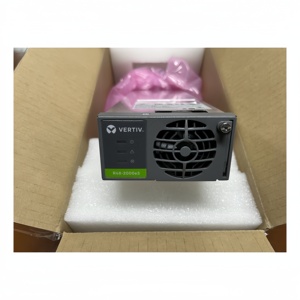
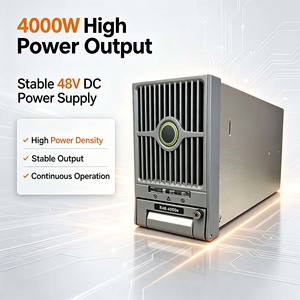
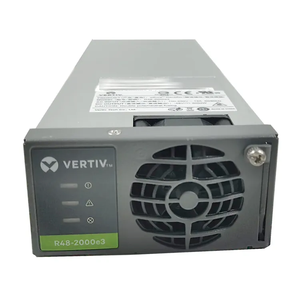
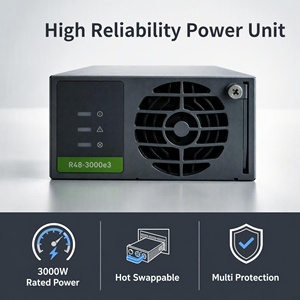
Whether sourcing standard telecom 48V rectifiers (such as the R48-3000e3 or APR48 platforms), ultra-wide voltage range EV DC charging modules (150V to 1000V DC), or industrial high-current electroplating rectifiers, evaluating manufacturer capabilities requires a systematic breakdown of component-level sourcing, SMT automation, thermal testing, and international compliance certifications.
Top-tier Chinese power electronics factories operate under strict ISO 9001:2015, ISO 14001, and IATF 16949 automotive quality management standards. To ensure long-term, zero-downtime performance in mission-critical deployments—such as telecom base station cabinets and high-capacity data centers—leading suppliers adhere to rigorous fabrication standards:
Fully automated surface-mount placement with 3D Automated Optical Inspection (AOI) and X-ray inspection for BGA/Power MOSFET solder joint integrity.
100% active burn-in testing under elevated ambient temperatures (50°C–65°C) for a minimum of 4 to 24 hours to eliminate early-life component failure (infant mortality).
Automated robotic conformal coating application (acrylic/silicone) protecting PCBs against high humidity, salt spray, industrial dust, and chemical vapors.
Furthermore, China's centralized electronics supply chain in the Greater Bay Area (Shenzhen, Dongguan, Guangzhou) provides unparalleled access to high-grade magnetic cores (Nanocrystalline, Ferrite), low-ESR electrolytic and film capacitors, and direct semiconductor foundry allocations. This localized integration reduces lead times from standard industry averages of 16-24 weeks down to 4-6 weeks for OEM modifications.
Selecting the appropriate power module architecture requires matching electrical specs to the intended operational environment. The comparison table below highlights key parameters across primary application classes:
| Feature / Parameter | Telecom Power Modules (48V) | EV DC Fast Charger Modules | Electroplating & Industrial Modules |
|---|---|---|---|
| Typical Voltage Output | 42V DC – 58V DC (Nominal 53.5V) | 150V DC – 1000V DC (Constant Power) | 6V DC – 220V DC (High Current Output) |
| Power Rating per Unit | 2000W – 4000W (1U / 2U Rack) | 20kW – 40kW per Module | 3kW – 50kW (Custom Scalable) |
| Peak Efficiency Topologies | 96.5% – 97.8% (LLC Resonant) | 95.5% – 97.2% (SiC Interleaved) | 92.0% – 95.0% (IGBT Bridge) |
| Cooling Topology | Forced Air (Speed-Controlled Fan) | Forced Air / Liquid Cooled Plate | Air Cooled / Oil-Immersed / Water Cooled |
| Communication Protocols | CANbus, RS485, SNMP via Controller | CAN 2.0B / Ethernet / MODBUS | 0-10V Analog, RS485, PLC Interface |
| Redundancy & Scalability | N+1 Hot-Swappable Backplane | Modular Parallel Matrix (up to 480kW) | Parallel Master-Slave Configuration |
The landscape of industrial power electronics is experiencing rapid technological disruption driven by semiconductor innovations and market demand for extreme efficiency. Sourcing teams and chief technology officers should align their product roadmaps with five critical trends:
Procuring power modules from Chinese suppliers at scale requires a structured risk mitigation workflow. Sourcing managers should implement the following strategic protocols during vendor evaluation:
Verify whether target modules (e.g., Emerson Vertiv R48 series or Zhiheng R4850G compatible units) match original mechanical form factors, backplane pinouts, and software register maps for seamless plug-and-play drop-in substitution.
Examine full thermal derating charts. High-grade modules deliver 100% nominal power up to 50°C ambient, whereas lower-tier designs begin derating output current at 40°C, leading to unexpected system shutdowns in warm climates.
Calculate heat dissipation costs. A 3kW module operating at 97% efficiency loses 93W as heat, whereas a 93% efficient module loses 225W. Over a 10-year deployment, electricity and cooling savings far outweigh initial module price differentials.
In-depth technical answers addressing common engineering and procurement inquiries.
Original brand rectifiers (such as Vertiv Emerson or Eaton) carry established global brand equity but often come with premium price points and strict allocation lead times. Top-tier Chinese OEM compatible modules (like ZHIHENG R4850G or specialized 48V rectifiers) utilize identical electrical specifications, mechanical backplane dimensions, and firmware communication protocols at 30% to 50% lower unit costs. Furthermore, premier Chinese manufacturers allow custom hardware modifications (e.g., conformal coating upgrades, specialized connectors, and custom CANbus IDs) that legacy brands rarely accommodate for medium-volume orders.
High-quality Chinese EV charging power modules (such as 20kW, 30kW, and 40kW series) incorporate active Power Factor Correction (PFC) circuitry utilizing three-phase three-wire Vienna or interleaved T-type neutral point clamped topologies. This achieves a Power Factor >0.99 and Total Harmonic Distortion (THD) <5% across a wide input voltage window (typically 260V AC to 485V AC). Integrated varistors and transient voltage suppression (TVS) diodes protect internal switching devices against grid surges up to 6kV/5kA in accordance with IEC 61000-4-5 standards.
For European market entry, modules must carry the CE mark, complying with the Low Voltage Directive (LVD IEC/EN 62368-1 for IT/telecom or IEC/EN 61851-23 for EV charging) and Electromagnetic Compatibility (EMC IEC/EN 61000-6-2 / 6-4). RoHS and REACH compliance certificates are mandatory for environmental chemical regulations. For North America, look for UL Recognized components under UL 62368-1, UL 2202 (EV Charging), or CSA C22.2 certification. TÜV Rheinland or TÜV SÜD test reports offer high credibility during customs clearance and final equipment audit.
Hot-swappable architecture allows maintenance engineers to remove or insert live rectifier modules into an active power shelf without powering down the entire cabinet or interrupting output DC bus power to critical loads. Hot-swap modules feature staggered connector pins (first-mate last-break ground pins), soft-start inrush control circuits, and internal isolation diodes. This ensures zero arcing, zero voltage transient spikes on the DC bus, and minimal Mean Time to Repair (MTTR), maintaining 99.999% ("five nines") system availability.
Chinese power electronics factories offer extensive customization (ODM/OEM), including customized output voltage set-points (e.g., high-voltage electroplating DC outputs or custom 110V DC utility control voltages), tailored mechanical mounting brackets, IP65/IP67 ruggedized enclosed housings, specialized pinout arrangements, customized CANbus/MODBUS register maps, user-defined fan speed curves for ultra-quiet operating environments, and branded labeling/packaging.
Conduct a thorough audited evaluation focusing on four key pillars: (1) SMT Production Lines: Ensure the vendor utilizes high-speed automated placement equipment (e.g., Fuji, Panasonic, Yamaha) with integrated 3D AOI and SPI; (2) Burn-In Facilities: Request proof of 100% full-load burn-in testing chambers equipped with automated monitoring software; (3) Quality Certifications: Verify valid ISO 9001 and ISO 14001 certificates issued by accredited bodies (such as SGS, TÜV, or Bureau Veritas); (4) Component Traceability: Ensure the supplier maintains strict Lot Traceability for critical semiconductors, transformers, and electrolytic capacitors.
Need customized power module engineering specs, OEM/ODM price quotes, or sample evaluation units? Contact our technical engineering team for immediate technical consultation.
Get a Quote