Explore our export-ready, high-reliability power modules engineered for telecom base stations, EV charging infrastructure, electroplating systems, and commercial LED driver integration.
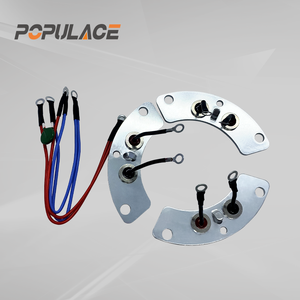
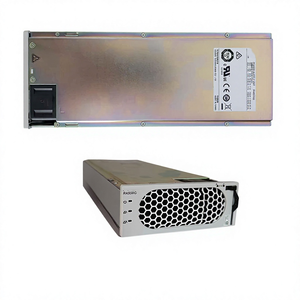
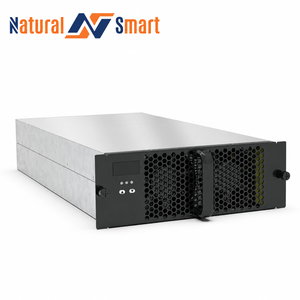
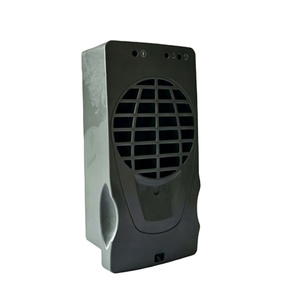
In the rapidly evolving landscape of global electronics procurement, selecting a robust manufacturing partner for wholesale LED drivers, switch-mode power supplies (SMPS), and high-frequency industrial rectifiers is a critical strategic decision. As solid-state lighting (SSL), telecommunication 5G infrastructure, and EV charging networks demand unprecedented levels of energy conversion efficiency, thermal management, and power density, China has consolidated its position as the world's premier hub for advanced power electronics manufacturing.
Modern commercial LED illumination and mission-critical DC power infrastructure require drivers and power conversion modules that operate far beyond traditional transformer limits. Today’s industrial-grade constant current (CC) and constant voltage (CV) drivers incorporate active Power Factor Correction (PFC > 0.98), Total Harmonic Distortion (THD < 10%), wide-range AC inputs (90V–305V AC or 347V–480V AC high-voltage industrial grids), and intelligent digital dimming protocols (DALI-2, 0-10V, PWM, DMX512, and Matter smart mesh).
Our manufacturing facilities combine state-of-the-art SMT (Surface Mount Technology) assembly lines, automated optical inspection (AOI), conformal coating processes for harsh environment protection (IP67/IP68), and rigorous burn-in testing protocols under full electrical and thermal stress. Whether you are sourcing high-power outdoor LED drivers for stadium and highway lighting, hot-swappable 48V DC telecom rectifiers for FTTH/5G macro cells, or high-current electroplating DC modules, our OEM/ODM engineering capabilities ensure long-term stability and strict compliance with international standards including IEC/EN 61347, UL8750, UL62368-1, and CISPR 15 / EN 55015 EMC directives.
We bridge the gap between high-volume commercial manufacturing and rigorous industrial power electronics engineering.
Leveraging Gallium Nitride (GaN) and Silicon Carbide (SiC) power MOSFETs to achieve ultra-compact footprints, reduced parasitic inductance, and peak conversion efficiencies exceeding 96.5%, drastically lowering operational thermal stress.
All outdoor LED drivers and industrial rectifiers feature full vacuum-potted aluminum housings or anti-corrosion conformal coatings, providing complete resistance to moisture, dust, salt spray, and extreme temperatures (-40°C to +85°C).
Two-stage power topologies with active Power Factor Correction ensure harmonic current emissions comply with EN 61000-3-2 Class C specs, safeguarding mains grids and minimizing reactive power penalties for enterprise installations.
Standard off-the-shelf power supplies often fail to meet exact mechanical or electrical constraints of specialized industrial systems. Our dedicated R&D engineering team in China provides turn-key OEM/ODM modifications, taking your target specifications from schematic design to mass production within optimized time-to-market frames.
As global energy regulations tighten and commercial real estate, telecommunications, and industrial automation accelerate their transition to smart connected infrastructure, wholesale power supply purchasing decisions are shifting from pure upfront capital expenditure (CAPEX) evaluation to dynamic Total Cost of Ownership (TCO) modeling. Key macro trends defining procurement strategies include:
The market for static, single-output LED drivers is rapidly yielding to intelligent, addressable power supplies. Modern commercial architectural projects demand DALI-2 (Digital Addressable Lighting Interface) multi-channel dimming, intra-luminaire energy monitoring (D4i standards), and wireless mesh connectivity (Bluetooth SIG, Zigbee, Matter). Sourcing managers must prioritize manufacturers whose driver firmware supports real-time telemetry, including power consumption logging, thermal overload tracking, and predictive failure alerts.
In data centers, commercial greenhouses (horticultural lighting), and solar-plus-storage industrial facilities, the elimination of double AC-to-DC conversion losses has driven adoption of 380V to 800V DC microgrids. Procurement leads are seeking specialized DC-to-DC LED drivers and high-voltage input rectifiers capable of converting direct DC distribution lines into precise constant current outputs with minimal thermal overhead.
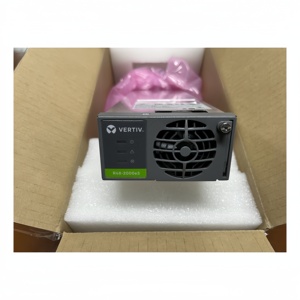
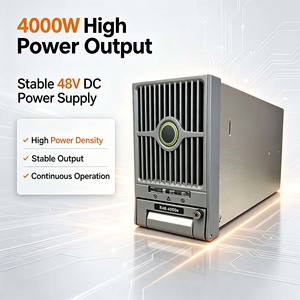
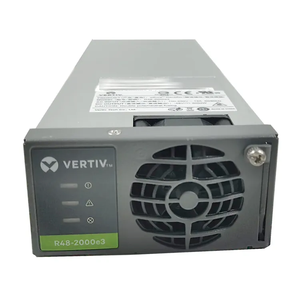
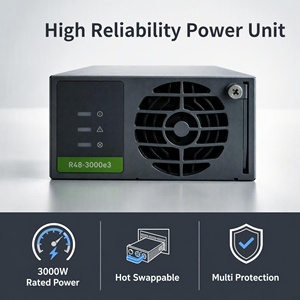
In mission-critical installations—such as telecom 5G macro sites, server farms, and high-kilowatt EV DC fast chargers—downtime is measured in thousands of dollars per minute. The trend toward N+1 and N+2 modular hot-swappable rectifiers (such as the 48V 50A and 3000W modules highlighted in our product showcase) allows maintenance technicians to replace faulty modules on-the-fly without interrupting grid service or system output.
Compare power topologies, efficiency metrics, and target application scenarios to streamline your engineering specification process.
| Topology / Product Category | Input Voltage Range | Efficiency (Max) | Thermal Management | Primary Application Scenario |
|---|---|---|---|---|
| Constant Current (CC) Outdoor LED Driver | 90 – 305V AC / 347 – 480V AC | 95.0% | IP67 Full Aluminum Potted Case | Highway, Stadium, High-Bay Lighting & Horticulture |
| Constant Voltage (CV) Smart LED Driver | 100 – 277V AC | 93.5% | Convection Cooled Metal Housing | Architectural Strips, Signage & Retail Illumination |
| Telecom Switch-Mode Rectifier Module | 85 – 300V AC (Wide Range) | 96.5% (Super-Efficiency) | Internal Intelligent Forced-Air Fan | 5G Base Stations, Telecom Power Systems, FTTH Racks |
| High-Power EV DC Fast Charging Module | 260 – 530V AC (3-Phase) | 96.0% | Independent Air-Duct Cooling | Public EV DC Charging Stations (20kW–40kW Modules) |
| Industrial Electroplating Rectifier Module | 220V AC ±15% 1-Phase / 3-Phase | 91.0% | Heavy-Duty Heatsink & Forced Air | Anodizing, Electroplating, Industrial Electrolysis |
At our manufacturing facilities in China, quality assurance is integrated into every stage of the manufacturing lifecycle rather than treated as a final inspection checkpoint. We adhere to stringent ISO 9001:2015 quality management systems, supplemented by advanced statistical process control (SPC) and Lean Six Sigma methodologies.
All active and passive electronic components undergo strict Incoming Quality Control (IQC). Electrolytic capacitors are selected from top-tier Japanese brands with 105°C temperature ratings. Power MOSFETs and diodes are derated to operate at no more than 70-80% of their maximum voltage and current limits under full thermal load, guaranteeing extended MTBF.
High-speed Yamaha SMT placement lines deliver sub-millimeter component positioning accuracy. Selective wave soldering and automated 3D AOI eliminate solder bridge defects. PCB assemblies subjected to moisture or corrosive atmospheres receive automated silicone or polyurethane conformal coatings.
Every manufactured LED driver and telecom rectifier module passes through our automated burn-in chambers. Units are subjected to 4 to 24 hours of continuous operation at 45°C–50°C ambient temperatures under full electrical load, with dynamic ON/OFF power cycling to induce thermal expansion stress and eliminate infant mortality failures.
Our in-house testing laboratory features darkrooms, integrating spheres, surge generators, and EMI receiver systems. Products are designed to comply with UL8750, EN61347-1, EN61347-2-13, EN55015, EN61000-3-2 Class C, and FCC Part 15 Subpart B, allowing seamless integration into European, North American, and Asia-Pacific markets.
Comprehensive engineering answers to common technical queries raised by electrical contractors, lighting OEMs, and industrial power importers.
Constant Current (CC) drivers maintain a steady electrical current (e.g., 350mA, 700mA, or 1050mA) while dynamically adjusting the output voltage according to the forward voltage drop of the connected LED array. CC drivers are ideal for high-power spotlights, streetlights, and industrial high-bays to prevent thermal runaway. Constant Voltage (CV) drivers supply a fixed DC voltage (typically 12V DC, 24V DC, or 48V DC) to parallel-connected LED strips or architectural fixtures with integrated onboard current-limiting resistors.
Power Factor (PF) measures how effectively electrical power is utilized. Non-corrected power supplies draw current in sharp pulses, causing voltage distortion and high reactive power loads on the electrical grid. A high Active PFC (> 0.95 to 0.99) ensures that the current waveform closely matches the voltage waveform, minimizing grid losses, lowering electricity billing demand charges, and fulfilling strict regulatory guidelines (such as Energy Star, DLC, and ErP directives).
Driver lifetime is primarily governed by the internal electrolytic capacitor temperature. According to Arrhenius' Law, every 10°C rise in capacitor operating temperature reduces its operational lifespan by 50%. Our industrial drivers are designed with aggressive thermal dissipation pathways and 105°C-rated long-life capacitors, achieving 50,000 to 100,000 operational hours when the TC (case temperature) point is maintained within specified limits (usually ≤ 75°C to 85°C).
Yes. High-efficiency telecom rectifiers deliver exceptionally regulated 48V–58V DC output with near-zero ripple noise and hot-swappable modular redundancy. They are frequently deployed as main DC bus power supplies powering decentralized 48V constant-voltage LED lighting networks, data centers, industrial automation PLCs, and battery backup topologies (DC-UPS systems).
We manufacture wholesale LED drivers supporting all major global dimming protocols: 0-10V / 1-10V analog sinking/sourcing, Mains Phase-Cut (Triac / Trailing Edge), DALI-2 (IEC 62386 compliance for bidirectional feedback), PWM, and wireless protocols including Bluetooth Mesh, Zigbee 3.0, and Matter. Smooth, flicker-free dimming down to 0.1% amplitude is standard across our high-end commercial driver families.
Standard catalog products (including featured telecom rectifiers and standard IP67 LED drivers) feature flexible MOQs starting at low batch quantities for trial evaluations. Custom OEM/ODM electrical modifications or custom housing designs typically require an initial prototype lead time of 2 to 4 weeks, with mass production scaling achieved in 3 to 5 weeks following specification sign-off.
Accelerate your product development cycle, reduce supply chain disruption, and secure competitive factory-direct wholesale pricing for high-reliability power supplies.
