Explore our export-ready power conversion and solid-state control modules, engineered for continuous operation in telecom base stations, EV chargers, and automated manufacturing platforms.
We bridge advanced semiconductor innovation with strict quality management systems to supply wearless switching solutions and power modules worldwide.
Every MOSFET relay and rectifier module is manufactured under audited ISO 9001 quality management workflows. Component selection uses top-tier wafer foundries to guarantee ultra-low ON-state resistance ($R_{DS(on)}$) and long operational life.
Unlike conventional electromechanical relays, our electronic DC MOSFET relays feature zero mechanical contact arcing, immune to vibration, chatter, and contact erosion. Ideal for high-frequency switching cycles in industrial automation.
Before export shipment, 100% of our high-voltage rectifiers and solid-state relay assemblies undergo automated multi-stage thermal burn-in, dielectric voltage withstand insulation testing, and transient surge suppression validation.
In modern power electronics, the transition from electromechanical switching devices to solid-state semiconductor switching—specifically Power MOSFET and Silicon Carbide (SiC) topologies—represents one of the most critical upgrades in industrial machine design, telecommunications energy management, and Electric Vehicle (EV) charging infrastructure. Procurement executives, component engineers, and system integrators sourcing from China wholesale MOSFET relay suppliers must understand the underlying electro-thermal mechanisms, insulation isolation standards, and long-term cost benefits that define superior switching hardware.
"Solid-state MOSFET relays eliminate mechanical contact bounce, optical signal contamination, and contact degradation. When integrated with advanced gate driver ICs and galvano-optic isolation, they offer unlimited switching cycles and near-zero electromagnetic noise (EMI)."
An industrial DC MOSFET relay operates by coupling an input-side light-emitting diode (LED) or capacitive driver across an isolation barrier to a photovoltaic generator array. This photodiode array turns on the gate of back-to-back N-channel Power MOSFET chips. By utilizing dual MOSFET dies connected in anti-series, the relay can control AC or bidirectional DC loads while suppressing reverse body-diode conduction when in the OFF state.
The primary metric defining a high-performance MOSFET relay is its ON-state drain-to-source resistance ($R_{DS(on)}$). Low $R_{DS(on)}$ minimizes conduction power loss ($P = I^2 \times R_{DS(on)}$), preventing excessive thermal accumulation inside enclosed control cabinets. Leading Chinese exporters utilize high-density TrenchMOS and Superjunction semiconductor wafer technologies to achieve sub-milliohm $R_{DS(on)}$ ratings in compact DIN-rail and PCB mount footprints.
To provide actionable information gain for global sourcing managers, the table below highlights key performance indices across different industrial switching technologies:
| Performance Characteristic | Industrial Power MOSFET Relay | Electromechanical Relay (EMR) | Silicon Controlled Rectifier (SCR / Thyristor) |
|---|---|---|---|
| Mechanical Lifespan | Unlimited (No Moving Parts) | 100k to 1M Operations | Unlimited (No Moving Parts) |
| Switching Response Speed | Microseconds (< 50 µs) | Milliseconds (10 - 25 ms) | Half-Cycle AC Dependence |
| Acoustic & EMI Noise | Zero Acoustic / Low EMI | Audible Click / High Contact Arc EMI | Moderate Electrical Phase-Cut Noise |
| Vibration & Shock Resistance | Extreme (Solid Encapsulation) | Poor (Contact Chatter Risk) | High |
| ON-State Power Dissipation | Very Low ($I^2 \times R_{DS(on)}$) | Negligible Contact Voltage Drop | Moderate ($V_F \approx 1.2\text{V} - 1.6\text{V}$) |
| Inrush Current Handling | High with Active Limiting | Moderate (Risk of Contact Welding) | Very High Surge Rating ($I_{FSM}$) |
| Galvanic Isolation | Up to 5000 VAC Optocoupled | Physical Air Gap (1500 - 3000 VAC) | Opto-Triac Driver Isolated |
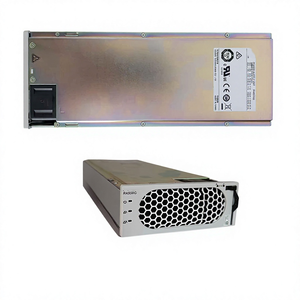
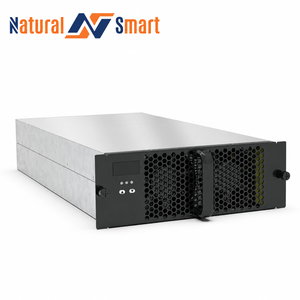
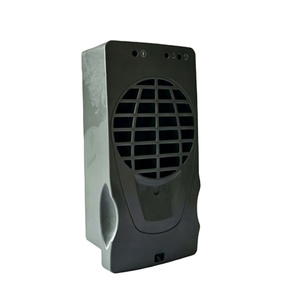
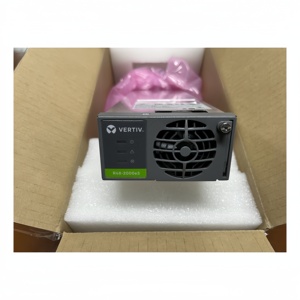
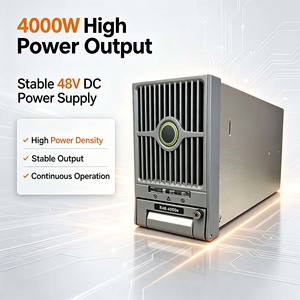
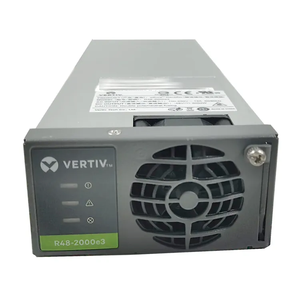
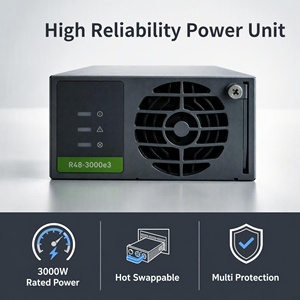
China's manufacturing ecosystem has achieved massive economies of scale in specialized high-power conversion modules. When evaluating products such as 48V telecom rectifiers (e.g., Emerson Vertiv R48 series, Zhiheng R4850G) or EV charging rectifiers (20kW–40kW 150-1000V modules), systemic integration with MOSFET protection relays is crucial:
Telecom Base Stations & FTTH Networks: Modular 48V DC power rectifiers require hot-swappable redundancy. Electronic MOSFET relays act as wearless active OR-ing switches at the DC output bus. They prevent short-circuit fault propagation from a defective power unit back to the main DC bus bar without incurring the heavy diode forward voltage drop ($V_F$) of traditional Schottky rectifiers.
EV DC Fast Charging Power Converters: High-power AC/DC EV charging modules operating up to 1000V DC require soft-start AC inrush current limiters and rapid output isolation. High-voltage power MOSFET switches ensure millisecond disconnect capabilities during emergency shutdown events (ESD) or insulation fault detection, protecting both the charging station cabinet and the vehicle battery management system (BMS).
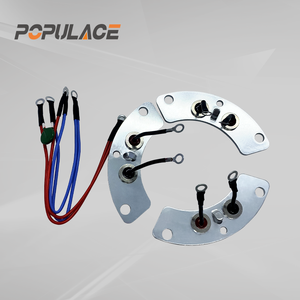
Electroplating & Heavy Industrial Electrolysis: High-current rectifier machines (such as POPULACE T30 electroplating modules) rely on heavy-duty bridge rectifiers combined with solid-state pulsing relays. Rapid MOSFET switching enables precise pulse-plating current waveforms, enhancing metal grain density during zinc, nickel, or gold electroplating processes.
Global B2B procurement of power electronics is experiencing structural shifts. Sourcing directors must align their supply chains with three key technical trends emerging from qualified Chinese manufacturers:
A. Migration to Wide-Bandgap (WBG) Semiconductors (SiC & GaN): Next-generation solid-state relays are transitioning from traditional Silicon MOSFETs to Silicon Carbide (SiC) and Gallium Nitride (GaN) devices. SiC MOSFETs allow higher breakdown voltages (>1200V), lower $R_{DS(on)}$ at elevated junction temperatures ($T_j > 175^\circ\text{C}$), and reduced heat sink volume, drastically shrinking DIN-rail module sizes.
B. Integration of Smart Diagnostic Telemetry (PMBus & CANbus): Intelligence is moving directly into the relay housing. Modern industrial MOSFET relays incorporate embedded current-sense shunt resistors and thermal sensors. Fault conditions such as over-current, over-temperature, and load open-circuit are reported instantly over digital buses to PLCs, enabling predictive maintenance before catastrophic downtime occurs.
C. Modular Architecture & Custom OEM/ODM Tailoring: Buyers increasingly demand modular form factors with flexible pin configurations, conformal coated PCBs for harsh environmental exposure (coastal telecom sites, chemical plating plants), and factory-preset current threshold limits. Direct partnership with Chinese exporters possessing in-house SMT lines allows rapid prototype turnaround within 14 business days.
"Supply chain resilience requires verifying both component provenance and testing rigor. Partnering with suppliers who provide full traceability, batch-level burn-in reports, and compliance certificates (UL, CE, RoHS, REACH) ensures flawless field performance."
Common inquiries from electrical engineers, procurement agents, and industrial equipment exporters.
Partner with an established China manufacturer for high-volume MOSFET relays, telecom rectifiers, and EV power modules. Get customized engineering drawings and bulk pricing within 24 hours.
