
Engineered for continuous heavy-duty service in telecom base stations, EV charging infrastructure, electroplating plants, and sub-station power grids.
The global energy transformation requires an unprecedented upgrade in power distribution grid stability, high-frequency AC/DC conversion, and decentralized microgrid architecture. As international utilities, data center operators, and telecom infrastructure OEMs seek high-reliability power grid suppliers in China, evaluating manufacturing compliance, power topology design, and total cost of ownership (TCO) has become paramount.
This technical whitepaper provides system integrators, procurement directors, and electrical engineers with an authoritative analysis of modern power grid module topologies—ranging from 48V telecom rectifiers (R48 series) to 1000V high-power EV charging modules and electroplating bridge rectifiers. By bridging German-engineered quality control protocols (such as DIN EN ISO 9001:2015 frameworks) with China’s advanced wholesale manufacturing capacity, buyers can achieve robust grid resilience with superior economic efficiency.
Key Takeaway for B2B Procurement: Modern wholesale power grid sourcing is no longer purely focused on cost per watt. Advanced buyers prioritize thermal derating curves, Active Power Factor Correction (PFC > 0.99), Silicon Carbide (SiC) switching topologies, and long-term modular hot-swappability.
Power conversion within modern power grids has shifted from bulky line-frequency transformers to high-frequency Switch Mode Power Supplies (SMPS) and resonant soft-switching rectifiers. In industrial microgrids, telecom central offices, and DC fast-charging hubs, rectifiers serve as the foundational interface converting unconditioned three-phase AC utility voltage into tightly regulated DC power.
Key architectural advances in top-tier Chinese wholesale power grid factories include:
Industrial applications present distinctly different electrical and ambient challenges. Selecting the right power module requires matching technical parameters against site environment constraints:
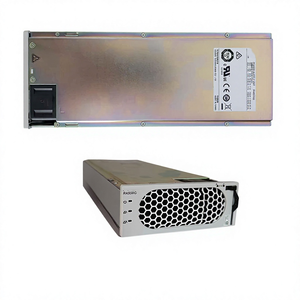
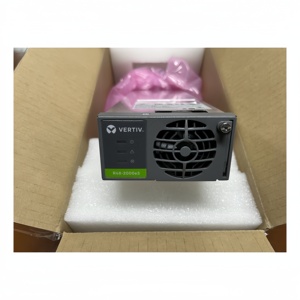
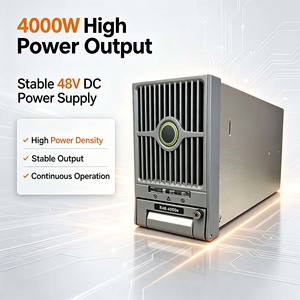
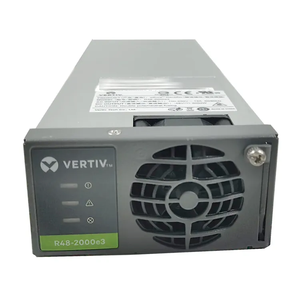
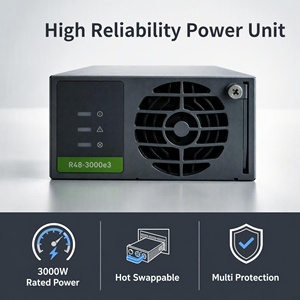
A. 48V DC Telecom Power Systems (R48 Series & Hot-Swap Modules): Telecom base stations (5G/FTTH) require uninterruptible DC power with battery backup compatibility. Rectifiers such as the R48-2000e3, R48-3000e3, R48-4000e, and R4850G feature ultra-wide AC input operating ranges (85V AC to 300V AC), constant power output characteristics, and hot-swappable backplane connectivity compatible with ETP48-200 subracks.
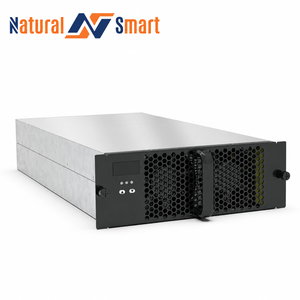
B. Ultra-Wide Voltage EV Fast-Charging Rectifiers (150V – 1000V DC): Electric vehicle DC fast chargers require modular 20kW, 30kW, and 40kW power units capable of delivering constant current over expansive voltage windows. Advanced units incorporate active air-duct isolation to shield sensitive power electronics from conductive dust, humidity, and atmospheric pollutants in roadside cabinets.
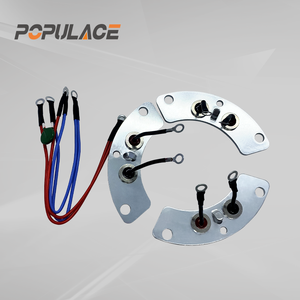
C. Electroplating & Heavy-Duty Industrial Bridge Rectifiers (T30 / High-Current Modules): Industrial electroplating, electrolysis, and alternator regulation demand extreme current stability, low output ripple (<1%), and robust thermal dissipation. Modules like the POPULACE T30 utilize heavy-duty diode bridges with reinforced ceramic isolation substrates to survive aggressive chemical vapor environments.
Combining German quality assurance philosophies with optimized supply chain integration to deliver uncompromised power electronics.
Every power module undergoes fully automated Surface Mount Technology (SMT) assembly, automated optical inspection (AOI), dual-stage In-Circuit Testing (ICT), and full-load high-temperature burn-in prior to dispatch.
Compliance with global EuP Eco-Design directives, CE standards, UL/CSA safety certifications, and RoHS/REACH material safety protocols. Achieve peak energy conservation across partial load profiles.
From customized DC output busbar configurations and conformal PCB coatings to proprietary CANbus monitoring firmware, our engineering team tailors standard platforms to exact OEM enclosure parameters.
Patented airflow isolation ducts, long-life ball-bearing intelligent cooling fans, and aluminum heat-sink extrusions guarantee continuous full-power operation at ambient temperatures up to 65°C with clean derating curves.
Integrated over-voltage protection (OVP), output short-circuit hiccup mode, over-temperature shutdown (OTP), and AC input surge withstand up to 4kV (IEC 61000-4-5 compliant).
Strategic warehousing of fast-moving replacement modules (Vertiv, Emerson, Zhiheng compatible series) ensures rapid dispatch for mission-critical infrastructure repairs and OEM manufacturing lines.
Compare performance specifications across leading commercial and industrial grid rectifier platforms.
| Module Series | Nominal Output | Input Voltage Range | Efficiency Rating | Primary Application | Cooling & Form Factor |
|---|---|---|---|---|---|
| R48-2000e3 / R4850G | 48V DC / 2000W (50A) | 85V – 300V AC (Wide) | > 96.2% | Telecom Base Stations, FTTH, Micro-Data Centers | Forced Air, 1U Hot-Swap Subrack |
| R48-3000e3 / R48-4000e | 48V DC / 3000W–4000W | 176V – 290V AC (Nominal) | > 96.5% | High-Density Telecom Hubs, Central Office Power Grid | Smart Fan, 1U/2U High-Density Rack |
| 20kW – 40kW EV Power Module | 150V – 1000V DC / Up to 133A | 260V – 456V AC (3-Phase) | > 95.5% | DC Fast Chargers, Commercial Fleet Depots | Isolated Air Duct, 3U Modular Drawer |
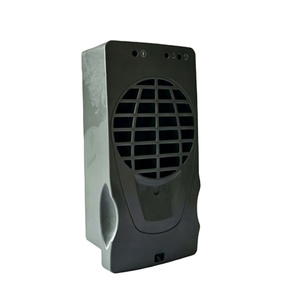
| APR48 Constant Voltage Module | 48V DC / 1500W–1800W | 90V – 275V AC | > 94.0% | Industrial Automation, Continuous DC Control Bus | Convection / Force Air, Compact Chassis |
| POPULACE T30 Bridge Rectifier | 220V AC / High-Current DC | Heavy-Duty Alternator Line | High Power Diode | Electroplating Machines, Alternator Rectification | Heavy Ceramic Stud Mount / Metal Plate |
The global power electronics market is experiencing a structural migration toward intelligence, modularity, and high energy density. Procurement decision-makers must align their vendor qualification criteria with five emerging technology shifts:
As solar photovoltaic (PV) generation and battery energy storage systems (BESS) integrate directly into commercial power networks, modern rectifiers are evolving into bidirectional DC/DC and AC/DC converters. Sourcing units with flexible firmware set-points permits seamless operation within direct high-voltage DC (HVDC) bus topologies (450V–820V DC), eliminating redundant inversion stages and boosting system-wide conversion efficiency by up to 4%.
Unplanned downtime in telecom base stations or data center power banks incurs severe SLA penalties. Tier-1 China factories now embed advanced ARM microcontrollers within rectifier modules, providing real-time telemetry over MODBUS-RTU, CAN 2.0B, and SNMP protocols. Parameters such as individual capacitor health, fan speed degradation, phase balance, and thermal hotspot estimates are transmitted directly to central cloud dashboards.
While basic legacy rectifiers offer lower upfront unit costs, high-efficiency models (>96.5%) dramatically decrease operational expenditure over a 10-year service lifecycle. In a 100kW telecom station operating continuously, a 3% efficiency gain saves tens of thousands of kilowatt-hours annually, while simultaneously reducing cooling system heat load requirements.
Factory Audit Checklist for Buyers: When evaluating a OEM power grid factory in China, verify: (1) Automated SMT line capacity and brand of component pick-and-place machinery, (2) Availability of burn-in test reports for 100% of production units, (3) Compliance with IEC/EN 62368-1 safety standards, and (4) Traceability of active semiconductors back to franchised distributors.
Direct technical answers to common queries raised by engineering specifiers and purchasing agents.
Telecom rectifiers are specifically designed for hot-swappable parallel operation within 19-inch subracks, supplying 48V DC float charge to lead-acid or lithium battery banks. They include active digital current-sharing buses, soft-start circuitry, and wide AC input tolerance (85V–300V AC). Standard industrial supplies typically lack hot-swap backplane connectors and dedicated battery temperature compensation management.
Modern 20kW–40kW EV charging rectifiers utilize an isolated dual-chamber thermal design. High-heat components (heat sinks, inductors) are located in an independent air duct, while sensitive microcontrollers and control circuits are sealed in an IP54 dust-proof and moisture-proof enclosure. This prevents atmospheric humidity, road dust, and salt spray from degrading component lifespan.
Yes. Chinese OEM power electronics factories offer structural and electrical modification services. This includes tailoring mechanical mounting brackets, altering output busbar placement, adding conformal coatings (HumiSeal) for corrosive environments, and flashing custom firmware set-points for programmable DC output range and CANbus messaging.
Active PFC ensures that the input current waveform matches the AC voltage phase, achieving power factor values above 0.99. This eliminates harmonic distortion (THD < 5%) back into the public utility grid, preventing nuisance tripping of upstream circuit breakers and complying with mandatory international standards such as IEC 61000-3-2.
Essential certifications include ISO 9001:2015 for quality system auditing, CE declarations of conformity (LVD 2014/35/EU and EMC 2014/30/EU), UL/CSA mark compliance for North American installations, and RoHS/REACH chemical compliance certificates. TÜV Rheinland or SGS audit reports further validate factory claims.
Standard replacement rectifier modules (such as R48-3000e3 or APR48) are routinely stocked for quick ship dispatch with MOQs as low as 1 to 5 units. Custom OEM power module developments typically require 4 to 6 weeks for engineering sample verification, followed by bulk batch production runs of 50 to 500 units depending on complexity.