Explore our certified line of high-frequency step-up modules, telecom rectifier units, and DC-DC power converter systems engineered for maximum electrical efficiency and extended lifespan.
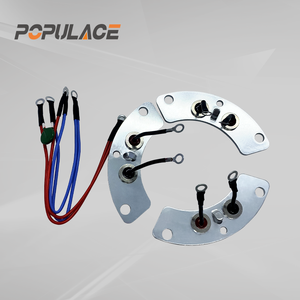
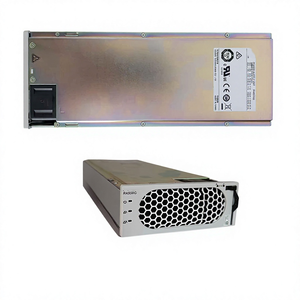
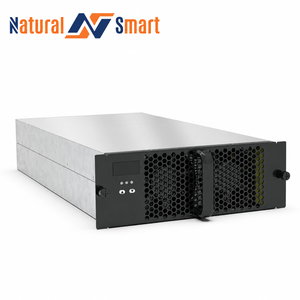
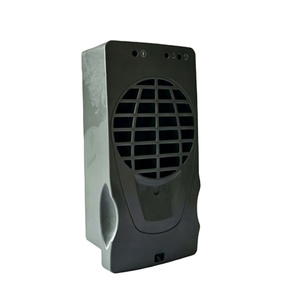
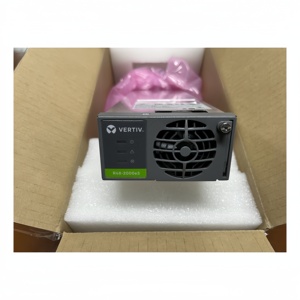
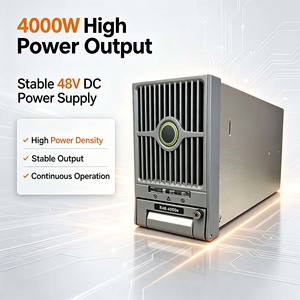
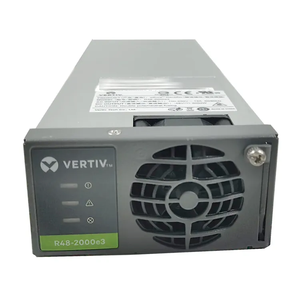
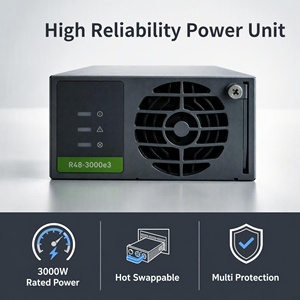
In modern power electronics, the demand for high-efficiency DC-DC step-up converters (Boost Converters) has surged across sectors including electric vehicle (EV) charging infrastructure, telecom base station micro-grids, industrial automation, and renewable energy storage system backbones. A DC-DC boost converter operates by temporarily storing electrical energy in an inductor during the active switching phase and releasing it to the load at a higher voltage potential during the off phase. When engineering custom OEM boost converter modules for global export, maintaining optimal thermal stability, minimal output ripple voltage, and peak electromagnetic compatibility (EMC) is vital.
Key Engineering Takeaway: Transitioning from conventional Silicon (Si) MOSFETs to Wide Bandgap (WBG) semiconductors—specifically Silicon Carbide (SiC) and Gallium Nitride (GaN)—enables switching frequencies exceeding 200 kHz, reducing physical inductor and capacitor size by up to 45% while achieving system efficiencies up to 98%.
Our customized boost converter topologies incorporate synchronous rectification, multi-phase interleaved switching paths, and advanced Digital Signal Processor (DSP) adaptive control loops. Interleaved boost topologies split the input current across multiple parallel power channels operating out of phase. This significantly reduces input and output ripple currents, lowers stress on passive components, and allows overall heat distribution across larger surface areas, facilitating passive fanless conduction cooling or high-reliability forced air cooling.
From initial circuit design to turnkey mass production, we provide customized power electronics tailored to precise mechanical, thermal, and electrical parameters.
Engineered for wide input range applications (12V–600V DC input) stepping up seamlessly to ultra-high DC bus levels (48V, 400V, up to 1000V DC) with low transient overshoot and fast dynamic load recovery response.
Custom aluminum alloy heat sink enclosures, cold-plate liquid cooling integration, or high-thermal-conductivity epoxy resin potting designed for vibration-prone rail and defense environments.
Full integration with PMBus, CANbus, Modbus RTU, and Ethernet/SNMP monitoring interfaces. Allows precise telemetry reading of output current, voltage, internal temperatures, and fault diagnostics.
Manufactured in ISO 9001:2015 certified facilities. Products meet rigorous UL 60950-1, UL 62368-1, CE mark, CSA, RoHS, REACH, and EN 55032 Class B EMC standards for smooth export compliance.
Available in DIN-Rail industrial mount, 1U/2U/3U 19-inch subrack mount, open-frame PCB designs, or IP67-rated sealed waterproof housings for outdoor infrastructure installations.
Use this technical matrix to evaluate standard OEM step-up power architectures against your application requirements.
| Converter Architecture | Typical Input Range | Output Voltage Range | Peak Efficiency | Primary Industrial Application | Cooling Options |
|---|---|---|---|---|---|
| Synchronous Single-Phase Boost | 9V – 36V DC | 24V – 48V DC | 95.2% | Automotive Telematics, Industrial Sensors | Convection / Aluminum Baseplate |
| Interleaved Multi-Phase Boost | 18V – 75V DC | 48V – 400V DC | 97.4% | Telecom Base Stations, Solar String Step-Up | Forced Air / Heatsink Shell |
| High-Voltage SiC DC-DC Step-Up | 150V – 450V DC | 600V – 1000V DC | 98.5% | EV DC Fast Chargers, Energy Storage Systems | Liquid Cold Plate / Controlled Fan |
| Isolated Step-Up Rectifier Module | 85V – 264V AC / 100V-350V DC | 48V / 133A Constant Voltage | 96.8% | FTTH Telecom Cabinets, Data Centers | Hot-Swappable Modular Chassis |
| Programmable Variable Output Boost | 90V – 305V AC | 0V – 300V Adjustable DC | 96.0% | Electroplating, Laboratory Test Automation | Integrated Smart Fan Control |
As global industrial automation scales up and the transition to renewable electrification accelerates, the international power supply procurement market is undergoing a rapid technological evolution. Global procurement managers and original equipment manufacturers must account for four major trends over the coming decade:
Silicon Carbide (SiC) and Gallium Nitride (GaN) switching devices are rapidly displacing legacy Silicon MOSFETs. Their higher breakdown voltage, negligible reverse recovery losses, and superior thermal conductivity allow engineering teams to build boost converters that operate at substantially higher switching frequencies. This drastically reduces passive inductor and capacitor footprints, delivering ultra-compact power density without compromising power output capability.
Modern industrial facilities, telecom infrastructure sites, and data centers are shifting away from centralized AC power distribution toward high-voltage DC (HVDC) micro-grids operating between 380V DC and 800V DC. OEM boost converters serve as vital bridge modules, stepping up localized battery storage levels or solar photovoltaic array outputs to match high-voltage DC buses while minimizing line transmission losses.
Unplanned downtime in critical infrastructure (such as 5G telecom base stations or EV charging hubs) incurs severe financial penalties. Modern B2B buyers mandate modular power solutions featuring active current-sharing buses and hot-swap backplane capability. This allows faulty modules to be replaced during live operation without interrupting power downstream.
Smart power modules now come standard with embedded microcontrollers providing real-time data on internal temperatures, input/output voltage fluctuations, and capacitor health indicators. Via PMBus or CANbus interfaces, system operators can predict component aging and perform scheduled maintenance prior to catastrophic failure.
Procuring custom power supplies is a long-term strategic decision that impacts machine uptime, field reliability, brand reputation, and international compliance. Our production standard adheres strictly to the highest global manufacturing metrics:
Get fast answers to standard engineering and sourcing inquiries regarding custom step-up power supplies.
Connect directly with our senior application engineers to discuss technical specifications, sample requests, thermal modeling, or high-volume export pricing.
