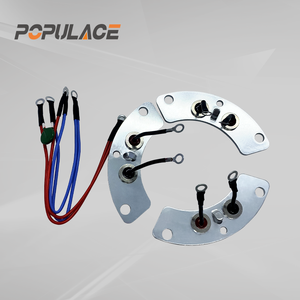
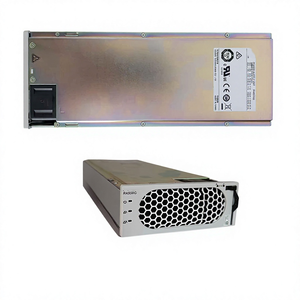
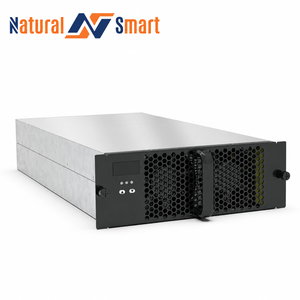
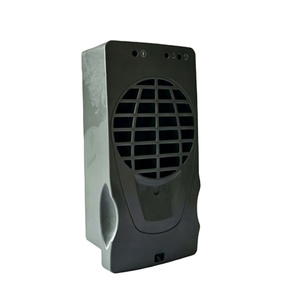
High-density rectifier modules, switch-mode power systems, and hot-swappable DC-UPS architectures engineered for 24/7 continuous duty in telecom, automation, and energy sectors.
In automated industrial processing, telecommunications networks, power grid control systems, and mission-critical data infrastructure, power interruption is not an option. As a premier original equipment manufacturer (OEM) and high-precision DC power supply factory, our operations bridge advanced power electronics R&D with rigorous German quality control frameworks. Every custom OEM DC UPS system, switch-mode power supply (SMPS), and high-density rectifier module is designed, assembled, and systematically validated to withstand the world’s most hostile electrical and thermal environments.
Operating under certified DIN EN ISO 9001:2015 quality management processes audited regularly by German TÜV authorities, our facility ensures full component-level traceability, zero-defect production workflows, and long-term design longevity for equipment builders. Unlike commercial off-the-shelf consumer supplies, industrial OEM DC UPS topology demands tailored voltage curves, custom physical form-factors (DIN-Rail, 19-inch rack-mount, embedded chassis, or wall-mount), specialized conformal coating, and strict regulatory alignment with international safety standards including UL, CSA, CE, RoHS, and REACH protocols.
From custom output voltages (12V, 24V, 48V up to 820V DC micro-grids) to bespoke firmware set-points and modified connector layouts, our R&D team builds solutions adapted to your exact machine powertrain.
100% automated optical inspection (AOI), full-load thermal burn-in under elevated ambient temperatures, and complete functional dielectric isolation testing guarantee zero-failure deployment.
We guarantee decade-long product availability, standardized revision control, and form-fit-function component replacement guarantees essential for long-life industrial OEM machine platforms.
Conventional AC Uninterruptible Power Supplies (AC UPS) suffer from inherent inefficiencies due to double power conversion stages (AC to DC, then DC back to AC) and complex internal inverter topologies. In contrast, modern industrial power engineering heavily favors direct DC UPS architectures. By eliminating intermediate AC transformation steps and feeding the DC bus directly, plant operators achieve higher energy conversion efficiency, vastly improved thermal management, and superior system reliability.
In critical programmable logic controller (PLC) automation, robotic cells, and telecommunications base stations (FTTH/5G), even a microsecond voltage sag can trigger system resets, corrupted data logging, or hazardous process shut-downs. OEM DC UPS systems utilize active diode-ORing or ultra-fast MOSFET static switching logic. When the primary AC grid collapses, the battery storage or ultracapacitor module takes over the supply of the DC bus with zero millisecond transfer latency, ensuring unperturbed operation of sensitive microprocessor electronics.
A resilient DC UPS factory engineering process must account for varied energy storage chemistries. Modern industrial deployments transition rapidly from traditional Valve-Regulated Lead-Acid (VRLA) batteries toward advanced Lithium Iron Phosphate (LiFePO4) and Electric Double-Layer Capacitors (EDLC Supercapacitors). OEM DC UPS systems integrate smart micro-controllers running multi-stage charging algorithms (Constant Current / Constant Voltage with Float and Temperature Compensation). This dynamically prevents overcharging, mitigates thermal runaway risk, and extends battery service life up to 300% in demanding thermal environments (-25°C to +70°C ambient operation).
Large inductive motors, high-power DC/DC converters, and extensive capacitive input banks draw enormous peak inrush currents upon initial system energization. Without active mitigation, this tripping of upstream thermal-magnetic breakers halts production lines. Integrating dedicated AC/DC inrush current limiters (ESB series technology) with wearless electronic switch-mode DC MOSFET relays (UMS technology) eliminates arc erosion, suppresses transient voltage spikes, and permits safe multi-unit parallel scaling on standard circuit breakers.
Selecting the optimal power conversion and backup module requires balancing input voltage windows, output regulation capabilities, form factor requirements, and target application dynamics. The following engineering matrix provides technical guidelines for system integrators and procurement engineers:
| Platform Category | Typical Voltage Range | Power Spectrum | Efficiency Class | Core Application Profile |
|---|---|---|---|---|
| 1-Phase AC/DC DIN-Rail UPS | 85–264V AC / 24V DC Out | 10 W – 2,000 W | 90.0% – 94.5% | Control Cabinets, Small PLCs, Industrial Sensors |
| 3-Phase Industrial Power Units | 3x 340–550V AC / 24V, 48V DC | 480 W – 1,000 W | 93.5% – 95.8% | Heavy Machine Tools, Automated Conveyors, Drives |
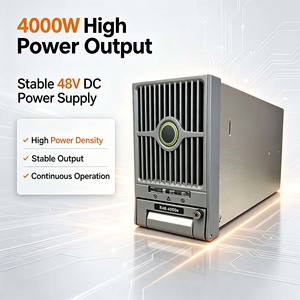
| Telecom Rectifier Modules | 185–300V AC / 48V DC Out | 2,000 W – 4,000 W | 96.0% – 97.2% | 5G Telecom Base Stations, FTTH Nodes, Network Hubs |
| High-Voltage EV Charger Rectifiers | 260–485V AC / 150–1000V DC | 20 kW – 40 kW | 95.5% – 96.8% | Commercial DC Fast Charging (EVSE), Depot Chargers |
| DC/DC Mini-Grid Converters | 450–820V DC Input | Custom Modular | >97.0% | Solar PV Storage, Hybrid Micro-Grids, Battery Energy Systems |
| Wearless MOSFET DC Relays | 12–48V DC Controlled | Up to 100A Switching | Solid-State (<0.5W loss) | High-Frequency Load Switching, Hazardous Environments |
Strategic procurement directors and system design leads must anticipate technological shifts shaping power supply manufacturing over the next decade. As industrial electrification accelerates globally, five core trends dominate the future purchasing environment:
The transition from silicon MOSFETs to Gallium Nitride (GaN) and Silicon Carbide (SiC) power semiconductors allows OEM factories to increase switching frequencies exponentially. This dramatically reduces the volumetric size of passive magnetic components (transformers and inductors), producing ultra-compact DC UPS modules with power densities exceeding 40W per cubic inch while lowering operational heat waste.
Modern factories are ditching multiple AC-to-DC transformation stages in favor of unified high-voltage DC (HVDC) bus architectures (typically operating between 450V and 820V DC). Connecting renewable solar arrays, battery storage banks, variable frequency drives (VFDs), and emergency DC UPS units directly to a common DC bus slashes facility-wide energy losses by up to 15%.
Smart procurement requirements now dictate integrated digital communication interfaces. Next-gen DC UPS rectifiers feature native CANbus, Modbus-RTU, or SNMP v3 protocol suites. Combined with cloud AI telemetry, these supplies report real-time internal capacitor degradation, battery internal resistance changes, and thermal stress metrics, moving maintenance strategies from reactive replacement to zero-downtime predictive servicing.
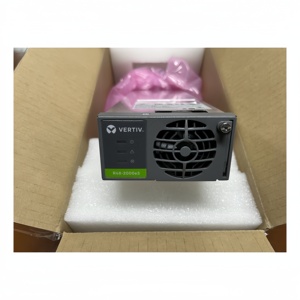
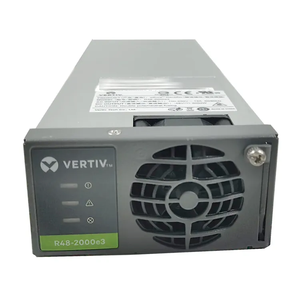
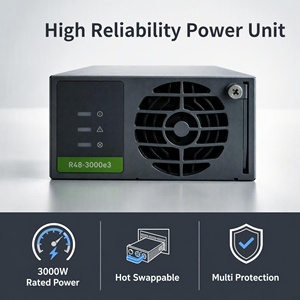
To optimize Capital Expenditure (CapEx) and operational agility, machine builders demand N+1 redundant modular power shelves. Hot-swappable rectifier systems (such as the R48 series telecom modules) allow maintenance staff to replace or scale power modules live during machine operation without interrupting output DC power to connected control systems.
Key technical and commercial considerations for purchasing managers, electrical engineers, and OEM platform specifiers.
An AC UPS converts incoming AC grid power to internal DC to charge batteries, and then utilizes an inverter to convert DC back to AC output. This continuous double conversion introduces thermal losses and additional failure points. An Industrial DC UPS rectifies AC grid power directly to a regulated DC output (e.g., 24V or 48V DC) while charging an connected DC energy storage device. In a grid outage, the battery supplies the DC bus directly without any inverter stage, delivering superior energy efficiency, smaller physical footprint, zero transfer delay, and significantly higher MTBF.
Because engineering, PCB assembly, thermal modeling, and final validation are integrated under one quality-controlled facility, we deliver fully customized OEM modifications. These include specialized output voltages (e.g., tailored charging profiles for custom battery packs), conformal PCB coating for tropical or chemical environments, custom metalwork and mounting brackets, specific wiring harness connectors, and custom-programmed firmware set-points for digital status reporting.
Our core product platforms are designed and certified to comply with international industrial electronics standards. This includes UL 61010-1 / UL 508 for industrial control equipment, CSA C22.2, CE compliance under the Low Voltage Directive (LVD) and Electromagnetic Compatibility (EMC) Directive (EN 61000-6-2 immunity, EN 61000-6-4 emission), along with strict environmental compliance including RoHS, REACH, and European EuP Eco-Design directives.
When powering on large switch-mode power supply systems or capacitive load banks, cold start-up inrush current can spike up to 20 to 50 times the steady-state nominal current for several milliseconds. This high current surge frequently trips upstream circuit breakers (nuisance tripping) and degrades switch contactors. Implementing integrated active limiting (such as ESB inrush current limiters) limits peak charging current smoothly, permitting multiple power modules to run on standard distribution breakers without tripping.
Our smart battery charging rectifiers feature adaptable microcontroller charge profiles capable of supporting standard Sealed Lead-Acid (SLA/VRLA), Gel batteries, Lithium Iron Phosphate (LiFePO4), Nickel-Cadmium (NiCd), and maintenance-free Supercapacitor (UltraCap) buffer modules. Temperature sensors continuously feed data to the charger to adjust float and absorption voltage thresholds dynamically based on ambient conditions.
We support both low-volume specialized industrial projects and high-volume mass production OEM platforms. Standard product evaluation samples are typically dispatched within 3 to 5 business days. For customized OEM modifications or proprietary metalwork enclosures, prototype engineering samples are delivered within 4 to 6 weeks following joint technical specification approval.
Industrial installations present severe operational hazards that quickly destroy consumer-grade or low-cost commercial power units. High ambient temperatures inside unventilated control cabinets, conductive dust accumulation, electrical fast transients (EFT/burst), and line voltage sags require specialized design strategies:
Heat is the primary cause of premature power supply failure, particularly affecting electrolytic smoothing capacitors. Our custom OEM designs prioritize fanless convection cooling up to 500W output power using heavy-gauge aluminum heat-sink extrusions and high thermal-conductivity interface materials. When forced-air cooling is necessary, intelligent PWM fan speed control operates fans only when internal heat thresholds are crossed, extending fan bearing life while keeping dust intake minimal.
For deployment in harsh environments—such as wastewater treatment plants, offshore marine platforms, electroplating facilities, or chemical processing plants—standard printed circuit boards are vulnerable to atmospheric corrosion and short circuits caused by moisture or chemical fumes. We offer military-grade acrylic or silicone conformal coatings that seal sensitive surface-mount components, preserving dielectric isolation and preventing dendrite growth.
Request comprehensive technical datasheets, CAD 3D step files, or consult directly with our senior power electronics engineering team for custom OEM/ODM platform development.