Tier-1 OEM / ODM Energy Storage Solutions

Custom OEM Energy Storage Factory & Exporter

Engineering Next-Generation BESS Architectures, High-Efficiency Rectifier Modules & Precision DC Power Conversion Systems for Global Infrastructure

Enterprise Hardware Lineup

Industrial Power & Rectifier Conversion Modules

Modular, high-density AC/DC power conversion hardware engineered for telecommunications, electric vehicle infrastructure, electroplating, and microgrid BESS applications.
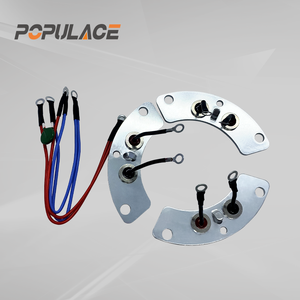
POPULACE 220V Voltage T30 Alternator Rectifier Module
Heavy Industrial / Electroplating

POPULACE 220V Voltage T30 Alternator Electroplating Rectifier Machine Module Bridge Rectifiers Diode T30

Contact Us
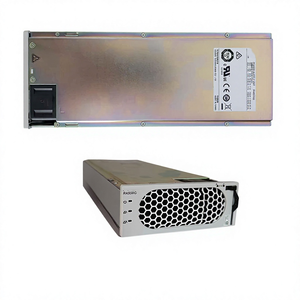
ZHIHENG R4850G 48V 50A Silver Telecom Rectifier Module
Telecom & FTTH Hot-Swap

ZHIHENG R4850G G2/G6/N2/N6 48V 50A Silver Rectifier Module for Telecom Base Station FTTH Hot-Swappable Compatible with ETP48-200

Contact Us
20kw 30kw 40kw DC EV Charging Power Module
EV Fast Charger / CE TUV

20kw 30kw 40kw DC EV Charging Power Module AC/DC Rectifier 150-1000V 133A for EV DC Charger CE TUV Certificate

Contact Us
APR48 Constant Voltage Power Module
Continuous Operation

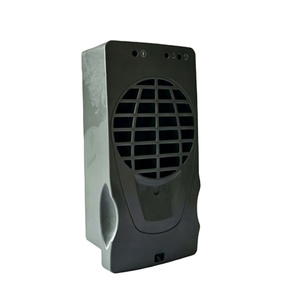
APR48 Rectifier Module 48V Constant Voltage Fast Heat Dissipation Power Module For Long-Term Continuous Operation

Contact Us
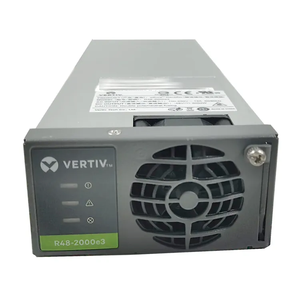
Emerson Vertiv R48-2000e3 Telecom Rectifier Module
High Efficiency Telecom

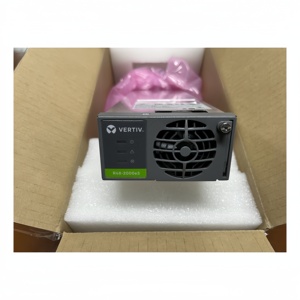
EMERSON VERTIY R48-2000e3 Rectifier Module New and Original 48V 2000W Telecom Power

Contact Us
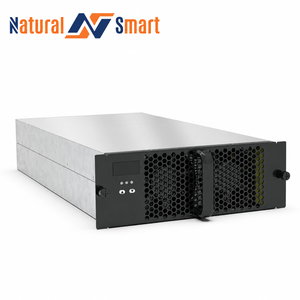
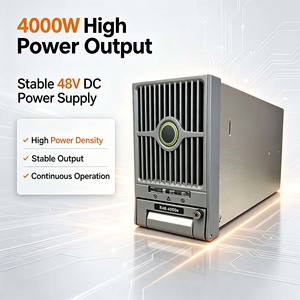
R48-4000e Telecom Power Rectifier Module 4000W
4000W High Power Density

R48-4000e Rectifier Module High Power 4000W 48Volt DC Telecom Rectifier Module For Base Station Cabinet Power System

Contact Us
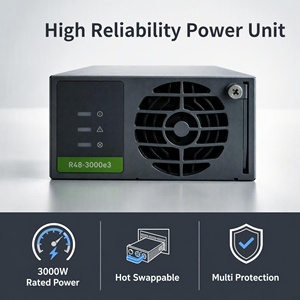
Vertiv R48-3000e3 Telecom Rectifier Module
High Frequency Network

Vertiv R48-3000e3 Telecom Power Rectifier Module High Frequency Network Power 48V 3000W

Contact Us
R48-3000e3 AC DC Rectifier Module for Data Center
Data Center Grade

R48-3000e3 Telecom Rectifier Module 3000W 48V Output High Reliability AC DC Power Rectifier Module For Data Center

Contact Us
96.8%
Peak Energy Efficiency
500,000+
Modules Deployed Globally
< 0.02%
Field Failure Rate (RMA)
ISO 9001
TÜV Audited Manufacturing
Industry Whitepaper

Architectural Foundations of Modern Industrial Energy Storage Systems (BESS) & Power Rectifiers

As the global energy landscape transitions toward decentralized grid topologies, renewable integration, and high-density electrification, the role of custom OEM/ODM energy storage factories has evolved from mere battery assembly to full-stack power electronics co-engineering. Modern Battery Energy Storage Systems (BESS) require seamless convergence between high-capacity Lithium Iron Phosphate (LiFePO4) cell chemistry, intelligent Battery Management Systems (BMS), and ultra-high-efficiency Power Conversion Systems (PCS).

Key Technical Insight: The efficiency of an energy storage architecture is fundamentally constrained by its power conversion rectifiers. Transitioning from legacy silicon MOSFETs to Wide-Bandgap (WBG) Silicon Carbide (SiC) and Gallium Nitride (GaN) switching topologies reduces thermal losses by up to 42%, yielding a measurable increase in total Round-Trip Efficiency (RTE).

1. Wide-Input Voltage Ranges & High Power Density Rectification

Industrial applications—ranging from telecommunications base stations (FTTH/5G micro-cells) to ultra-fast EV DC fast-charging stations—demand AC/DC rectifier modules capable of handling dynamic input voltage fluctuations without compromising output regulation. Units like the 48V 50A and 3000W/4000W enterprise rectifiers utilize advanced Power Factor Correction (PFC) circuitry to maintain a Power Factor >0.99 across load profiles spanning 20% to 100% of full capacity.

This wide-input capability (typically 85V AC to 300V AC nominal) protects downstream energy storage banks against brownouts, high-voltage surges, and harmonic distortions. Furthermore, high-frequency transformer coupling ensures galvanic isolation, shielding sensitive control logic and data center electronics from grid-side transients.

2. Advanced Thermal Dissipation and Zero-Wear Solid-State Switching

Thermal stress remains the primary cause of premature component degradation in power electronics. Modern OEM power modules incorporate forced-air convection with intelligent, variable-speed brushless DC fans, aligned with custom aluminum extrusions and vapor-chamber heat sinks. This design ensures operating junction temperatures remain well below critical thresholds even under continuous +65°C ambient operation.

To eliminate mechanical fatigue in high-duty-cycle industrial switching, wearless electronic DC MosFET relays and dynamic bridge rectifiers are integrated. By replacing traditional electromechanical contactors with solid-state semiconductors, system designers eliminate contact arcing, contact oxidation, and mechanical wear—boosting mean time between failures (MTBF) beyond 500,000 hours according to Telcordia SR-332 standards.

3. N+1 Hot-Swappable Redundancy in Telecom & Data Center Storage

For critical infrastructure where downtime translates directly into financial losses, modern OEM rectifier racks utilize active current sharing algorithms. In an N+1 hot-swappable configuration, multiple power modules operate in parallel across a common DC bus bar. Should an individual module encounter a thermal overload or input phase fault, internal isolation diodes (or active OR-ing MOSFETs) instantly disconnect the unit without inducing voltage sags on the main DC rail, allowing hot-swap replacement without interrupting live system operations.

Market Intelligence & Sourcing Strategy

Future Procurement Trends in Global Energy Storage (2025–2035)

Strategic purchasing directors and OEM procurement managers must navigate critical technological and regulatory shifts when evaluating foreign manufacturing partners.

Shift Toward High-Voltage (1500V DC) BESS Architectures

Procurement is rapidly migrating from traditional 600V/1000V DC system topologies toward 1500V DC platforms. Higher system voltages reduce balance-of-plant (BOP) cabling costs, lower I²R conductive resistive losses, and significantly boost power conversion density in utility-scale energy storage containers.

Mandatory Cyber-Physical Security & Smart Protocols

Modern procurement tenders now mandate encrypted industrial communication protocols. OEM power modules must support Modbus-RTU, CANbus 2.0B, and SNMP v3 interfaces to communicate seamlessly with centralized BMS microcontrollers and cloud-based energy management systems (EMS) for real-time telemetry.

Demand for Bidirectional Power Conversion (V2G & Microgrids)

The boundary between power rectifiers (AC to DC) and solar inverters (DC to AC) is dissolving. Future-proof procurement favors OEM manufacturers capable of producing bidirectional power conversion hardware that enables Vehicle-to-Grid (V2G) and dynamic microgrid peak-shaving applications.

R&D Roadmap

Key Technological Innovations Shaping Energy Storage Rectifiers

To stay competitive, OEM energy storage factories are integrating next-generation electronic components and proprietary firmware algorithms into their production lines:

  • Silicon Carbide (SiC) Power Switches: SiC MOSFETs enable switching frequencies in excess of 100 kHz. Higher frequencies allow engineers to reduce the physical volume of magnetic components (inductors and transformers) by up to 50%, resulting in ultra-compact 3U/4U rack-mount form factors.
  • Digital Zero-Voltage Switching (ZVS) Control: Soft-switching resonant LLC topologies minimize switching losses during turn-on and turn-off transitions, allowing continuous operational efficiencies exceeding 96.5%.
  • Dynamic Thermal Derating Algorithms: Rather than hard-shutting down during extreme thermal spikes, intelligent power modules dynamically throttle output current to preserve system continuity while protecting internal power semiconductors.
  • Modular Plug-and-Play Connectors: Blind-mate rear connectors carrying both high-current DC power rails and low-voltage control signals streamline factory assembly, reduce wiring harnesses, and speed up field maintenance.
Technical Reference

Industrial Power & Rectifier Module Specification Matrix

Direct engineering comparison across our core OEM rectifier lines for BESS, Telecom, and EV Charger applications.

Module Family Nominal Input Voltage DC Output Voltage Range Max Current / Power Peak Efficiency Primary Application Segment
ZHIHENG R4850G Series 85V – 300V AC (1-Phase) 42V – 58V DC (48V Nom.) 50A / 3000W 96.2% Telecom Base Stations, FTTH, Remote Cabinets
Vertiv / Emerson R48-3000e3 176V – 290V AC (Full Load) 42V – 58V DC (48V Nom.) 62.5A / 3000W 96.5% Data Center Power Trays, Enterprise Microgrids
High-Power R48-4000e 180V – 305V AC (1-Phase) 42V – 58V DC (48V Nom.) 83.3A / 4000W 96.8% Heavy Telecom Hubs, Industrial DC Bus Systems
DC EV Charger Power Module 260V – 485V AC (3-Phase) 150V – 1000V DC (Wide) 133A / 20kW – 40kW 95.8% Commercial DC Fast Charging, Bus Depots
POPULACE T30 Bridge Rectifier 220V AC Input Custom Regulated DC High-Ampere Continuous 94.5% Electroplating, Galvanic Processing, Heavy Anodizing
Why Partner With Us

Enterprise Manufacturing & Quality Engineering Advantages

Combining German-inspired power electronic design principles with agile, high-capacity OEM fabrication facilities.

Rigorous Quality Assurance & ISO 9001:2015

Every power module produced undergoes automated optical inspection (AOI), high-potential (Hi-Pot) safety testing, and 100% full-load thermal burn-in under elevated ambient temperatures prior to export packaging.

Complete OEM / ODM Customization Workflow

From custom DC output voltage set-points, conformal PCB coatings (for humid or maritime environments), and specialized wire harnesses to private-label branding and custom firmware tuning, our engineering team tailors solutions to your exact specs.

Global Regulatory Compliance (UL, CSA, CE, TUV)

Our standardized power module platforms are pre-certified or designed in compliance with international safety and environmental directives including UL 1741, UL 1973, UL 9540, CE, TUV, RoHS, and REACH.

Clear Procurement Guidance

Frequently Asked Questions for B2B Buyers & System Integrators

Get immediate answers regarding technical specifications, minimum order quantities, customization options, and global export procedures.

What is the typical Minimum Order Quantity (MOQ) for custom OEM energy storage modules?
For standard off-the-shelf rectifier modules (such as 48V 50A or 3000W units), our MOQ starts as low as 10 units for evaluation. For full OEM/ODM projects requiring custom PCB layouts, modified mechanical enclosures, or proprietary firmware, our standard MOQ is typically 100 to 500 units depending on hardware complexity.
Can your factory modify the output voltage profiles to match custom battery chemistry requirements?
Yes. We specialize in tailoring constant-voltage and constant-current (CV/CC) charging curves. Whether your energy storage system utilizes Lithium Iron Phosphate (LFP), Nickel Manganese Cobalt (NMC), Sodium-ion, or specialized Lead-Carbon batteries, our engineering team configures precise float, absorption, and equalization voltage set-points.
How are thermal derating and harsh environment protection handled in high-temperature regions?
Our industrial rectifiers feature active temperature compensation. Full power output is guaranteed up to +50°C ambient temperature. Beyond +50°C, units implement intelligent, linear derating up to +75°C. For aggressive environments (e.g., coastal solar plants or mining sites), we offer optional Class II conformal PCB coating to protect against salt fog, high humidity, and airborne dust.
What reliability testing and MTBF documentation are provided with export shipments?
Every batch shipped is accompanied by a Certificate of Analysis (CoA) and a factory test report. Our products undergo rigorous reliability testing according to Telcordia SR-332 standards, achieving an MTBF exceeding 500,000 hours at 25°C. Full burn-in test data (spanning 4 to 24 hours under 100% load) is available upon request for quality audit files.
How do you ensure compatibility when replacing legacy telecom rectifiers (e.g., Emerson or Vertiv units)?
Our hot-swappable telecom rectifier modules are engineered with pin-to-pin mechanical and electrical compatibility. They interface directly with existing 19-inch subracks (such as ETP48-200 systems) and communicate seamlessly with standard controller units via identical pinouts and CANbus protocol structures.
What lead times can buyers expect for large-scale export orders?
Standard power modules maintained in stock ship within 3 to 7 business days. For volume OEM production orders (1,000+ units requiring custom assembly and packaging), standard production lead time is 4 to 6 weeks from sample sign-off and PO confirmation. Accelerated air-freight and ocean-freight logistics support are fully managed by our international export desk.

Accelerate Your Energy Storage Project Today

Partner with an established OEM/ODM factory equipped to deliver high-density, highly reliable power conversion systems tailored to your technical specifications.

Contact Us