Explore our core OEM-grade power supply modules engineered for ultra-high conversion efficiency, extreme thermal stability, and continuous 24/7 industrial operational readiness.
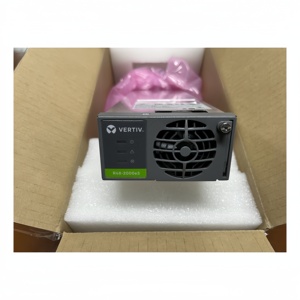
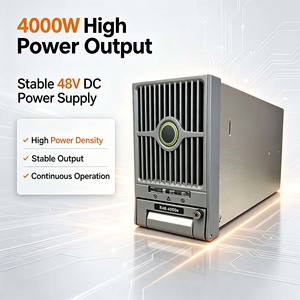
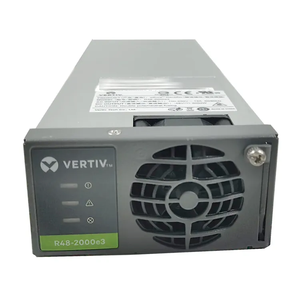
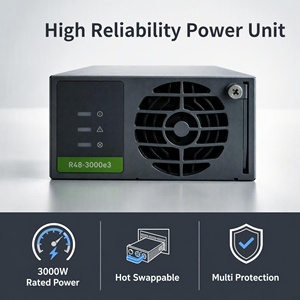
As a leading OEM custom industrial power manufacturer, our production infrastructure integrates German-inspired precision engineering with rigorous ISO 9001:2015 quality control management systems.
From automated Surface Mount Technology (SMT) component placement to high-voltage transformer winding, all primary assembly stages are maintained within our dedicated manufacturing facility in Pfinztal, Germany. This vertically integrated control ensures absolute traceability and component integrity across every single batch.
Every single manufactured unit undergoes rigorous 100% dynamic load testing and high-temperature environmental burn-in screening. We eliminate early-life semiconductor failures, verifying that our AC/DC rectifiers and DC-UPS converters operate flawlessly under harsh operational stress profiles.
Our OEM products are fully compliant with worldwide regulatory frameworks including UL, CSA, CE, RoHS, and REACH standards. We adhere strictly to the European EuP Eco-Design directives, delivering power supplies that minimize operational harmonic distortion (THD) and optimize standby power draw.
We understand that standard off-the-shelf power supplies often fall short of meeting specialized mechanical footprints, thermal constraints, or custom communication protocols. Our engineering unit partners directly with original equipment manufacturers to deliver bespoke modifications:
Navigating the global energy transition requires system architects and procurement leaders to select modular power conversion hardware capable of adapting to next-generation operational demands.
The rapid shift from traditional silicon MOSFETs to Silicon Carbide (SiC) and Gallium Nitride (GaN) switches is reshaping industrial power density metrics. Next-generation rectifiers operate at switching frequencies exceeding 500 kHz, allowing engineers to reduce magnetic transformer volumes by up to 40% while achieving conversion efficiencies above 97.5%. Procurement strategies must prioritize SiC/GaN topologies to lower operational thermal loads and reduce overall enclosure dimensions in automation cabinets.
Modern industrial facilities are progressively moving away from central AC distribution toward localized 380V to 820V DC mini-grids. By eliminating intermediate AC-to-DC and DC-to-AC conversion steps, factory microgrids directly link rooftop photovoltaic arrays, battery energy storage systems (BESS), and variable frequency motor drives. OEM buyers must source bidirectional DC/DC converters and high-voltage DC rectifiers that integrate seamlessly into shared DC bus topologies.
Unplanned downtime in telecommunications, datacenter infrastructure, and continuous-process manufacturing carries immense financial risk. Sourcing trends favor modular, hot-swappable rectifier shelves featuring active current sharing (droop or forced bus sharing). This architecture allows maintenance teams to hot-swap faulted power modules in under 60 seconds without interrupting downstream load supply, guaranteeing 99.999% ("five nines") system availability.
Supply chain managers and plant operators are insisting on embedded smart telemetry within power modules. Real-time reporting of internal capacitor temperature, output current ripple, input voltage transients, and operational hours enables predictive maintenance algorithms to flag impending component wear prior to hardware failure. Integrating digital PMBus 1.3 protocol standards into custom OEM rectifiers is now a primary procurement requirement.
A rigorous comparative breakdown of industrial power supply topologies engineered to assist system design engineers in making informed specification choices.
| Topology / Architecture | Typical Input Range | Peak Efficiency | Primary Industrial Application | Key Engineering Advantage |
|---|---|---|---|---|
| Single-Phase AC/DC DIN-Rail | 85 – 264 V AC | 92% – 95% | Machine Tool Control Panels, PLCs | Ultra-compact footprint, universal worldwide AC line compatibility. |
| Three-Phase Active PFC Rectifier | 3x 340 – 520 V AC | 95% – 97.5% | Robotics, Heavy Automation, Drives | Balanced phase load, low harmonic distortion (THD < 5%), zero neutral current. |
| Modular Telecom Rectifier (N+1) | 185 – 300 V AC | 96% – 98% | 5G Base Stations, FTTH, Telecom Racks | Hot-swappable design, extremely high power density (>40 W/in³), wide DC output tuning. |
| High-Voltage DC/DC Mini-Grid | 450 – 820 V DC | 97% – 98.5% | PV Integration, BESS, DC Bus Networks | Direct connection to high-voltage DC link, eliminating redundant AC conversion losses. |
| Programmable Variable DC Supply | Wide AC 1PH / 3PH | 93% – 96% | End-of-Line Automated Testing, Burn-in | Fully remote control of voltage & current profiles via digital interface (RS485/CAN). |
| Ultra-Fast EV DC Charger Module | 260 – 530 V AC 3PH | 96% – 97.8% | Public & Fleet EV Fast Charging Stations | 150V – 1000V DC dynamic output range, dual resonant LLC converter topology. |
Comprehensive answers to critical technical and sourcing questions raised by electrical engineers, system integrators, and OEM procurement directors.
Mean Time Between Failures (MTBF) is calculated in accordance with Telcordia SR-332 or MIL-HDBK-217F standards. Key factors influencing MTBF include electrolyte capacitor thermal rating (we utilize 105°C long-life Japanese capacitors), switching MOSFET junction thermal resistance, derating margins (typically operating components at <60% of rated voltage and current stress), and circuit board solder joint integrity tested via thermal cycling.
Active PFC forces the input current waveform to track the sinusoidal AC voltage waveform, raising the power factor to >0.99 while reducing Total Harmonic Distortion (THD) to under 5%. In industrial environments with hundreds of distributed power supplies, active PFC prevents neutral conductor overheating, avoids utility harmonic penalty surcharges, and eliminates false tripping of upstream circuit breakers caused by high peak inrush currents.
A standard industrial battery charger is optimized for continuous, temperature-compensated charging of stationary lead-acid or LiFePO4 battery banks over long autonomous discharge cycles. A modular DC-UPS, conversely, includes an ultra-fast solid-state transfer relay that switches the 24V/48V system control bus to battery backup within milliseconds during a mains failure. This seamless buffer prevents PLC memory loss and keeps critical fieldbus sensors energized until a controlled plant shutdown can be executed.
When large switch-mode power supplies or transformers are connected to the AC grid, the uncharged internal input bulk capacitors act as a temporary short circuit, drawing massive transient inrush currents (often 80A to 200A for several milliseconds). An active ESB inrush current limiter uses integrated power resistors paired with bypass relays to gently ramp up charging current, allowing multiple power units to be installed on a single circuit breaker without nuisance tripping.
For modified standard units (e.g., non-standard DC output voltages, custom wiring harnesses, or special conformal coating specifications), prototype samples are typically delivered in 2 to 4 weeks with minimal Non-Recurring Engineering (NRE) fees. Full custom ground-up OEM power electronics designs involving custom magnetic tooling, specialized thermal extrusions, and full UL/CE safety agency certification runs usually require 12 to 16 weeks from schematic sign-off to pre-production validation.
Our industrial rectifiers feature advanced thermal management designs utilizing heavy-gauge aluminum heat sinks, thermal conduction pads, and optimized component layout spacing. Units operate without derating up to +60°C ambient temperatures, with controlled linear thermal derating up to +70°C. For fully sealed IP65/IP67 enclosures, we engineer cold-plate baseplate-cooled power modules that dump internal heat directly into external machine frames.
Choosing an industrial power manufacturing partner requires evaluating long-term operational stability, engineering responsiveness, and supply chain transparency.
We guarantee long-term availability for our OEM power platforms, maintaining form-fit-function product availability for 10 to 15 years. OEMs can deploy our power modules into machine designs without fearing premature component obsolescence or costly redesign cycles.
When you consult with our facility, you communicate directly with senior power electronics design engineers based in Germany—not an offshore call center. We assist with custom loop compensation calculations, system-level EMC filter design, and thermal modeling.
To insulate our tier-1 OEM partners against global supply chain volatility, we maintain strategic buffer inventories of raw semiconductor wafers, custom core transformers, and finished sub-assemblies, enabling flexible releases under framework agreements.
Partner with an established manufacturer capable of delivering high-efficiency AC/DC rectifiers, custom DC/DC converters, and modular power infrastructure tailored to your exact technical specifications.
Get a Quote