
Architectural Whitepaper: Engineering Custom OEM Power Inverters for Heavy Industrial Applications
In modern industrial automation, telecommunications infrastructure, electric vehicle (EV) charging micro-grids, and process electrochemistry, electrical energy conversion systems form the operational heart of critical facilities. Selecting qualified Custom OEM Power Inverter Suppliers & Exporters is no longer merely a purchasing decision—it is an architectural imperative that dictates system total cost of ownership (TCO), Mean Time Between Failures (MTBF), Electromagnetic Compatibility (EMC), and operational resilience under harsh grid conditions.
As electrical grids incorporate higher ratios of intermittent renewable energy sources and high-power pulse loads, power inverters and AC/DC rectifiers must deliver exceptional dynamic response, ultra-low Total Harmonic Distortion (THD), high galvanic isolation, and maximum power conversion efficiency. This whitepaper analyzes critical technical considerations, topological evolution, and procurement procurement frameworks for custom power conversion hardware.
Technical Definition: Power Conversion Architecture
A power inverter converts Direct Current (DC) to Alternating Current (AC) using solid-state semiconductor switching devices (such as IGBTs or SiC MosFETs), controlled by sophisticated digital signal processors (DSPs) employing Pulse Width Modulation (PWM). Conversely, rectifiers convert AC to DC, establishing regulated voltage rails for telecom racks, battery energy storage systems (BESS), and electro-chemical processing.
Topological Comparison: High-Frequency Switching vs. Low-Frequency Transformer Architectures
When engineering an OEM power conversion platform, choice of topology profoundly impacts physical dimensions, thermal dissipation profiles, electrical isolation, and acoustic noise emissions:
| Topological Parameter | High-Frequency Resonant (LLC/Phase-Shifted) | Low-Frequency Line Isolation Transformer | Bi-Directional Wide Bandgap (SiC/GaN) |
|---|---|---|---|
| Peak Efficiency | 94.5% – 96.5% | 86.0% – 90.0% | 97.5% – 98.8% |
| Power Density (W/in³) | 35 – 65 W/in³ | 5 – 12 W/in³ | 70 – 110 W/in³ |
| Inrush Current Profile | Requires active limiting (ESB technology) | High inductive peak spike | Controlled soft-start digital ramp |
| Dynamic Response (0-100% Load Step) | < 1.5 milliseconds | > 20 milliseconds | < 0.5 milliseconds |
| Custom OEM Scalability | Modular N+1 parallel hot-swap cards | Bulky chassis mount required | Ultra-compact high-density DIN-Rail / Rack |
Future Procurement Trends in OEM Power Inverter Sourcing (2025–2035)
Procurement directors and chief technology officers evaluating global OEM power supply partners must position their supply chains to accommodate major industry transformations over the next decade:
1. Rapid Integration of Wide Bandgap (WBG) Semiconductors
Silicon (Si) MOSFETs and IGBTs are quickly reaching their physical thermodynamic limits. The industry shift toward Silicon Carbide (SiC) and Gallium Nitride (GaN) power switches enables dramatically higher switching frequencies (>500 kHz), reduced magnetics size, and near-zero switching losses. OEM buyers must select suppliers with established surface-mount technology (SMT) lines capable of handling WBG packaging and high thermal dissipation substrates.
2. Bi-Directional Power Flow for Smart Micro-Grids and V2G Ecosystems
Traditional unidirectional inverters and rectifiers are being replaced by bi-directional power conversion modules. These advanced systems allow continuous power exchange between DC energy storage batteries, solar photovoltaic (PV) arrays, vehicle-to-grid (V2G) EV chargers, and the main AC grid. Procurement specifications now routinely mandate bi-directional CANbus or EtherCAT telemetry protocols.
3. Transition to Modular N+1 Hot-Swappable Sub-Racks
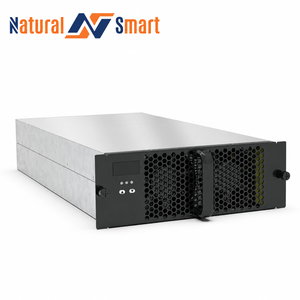
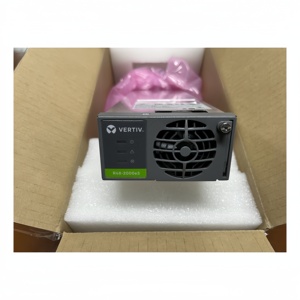
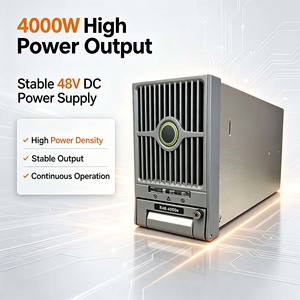
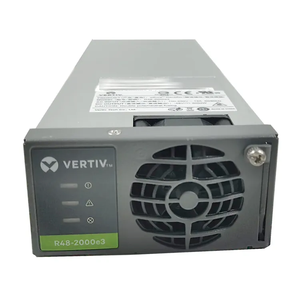
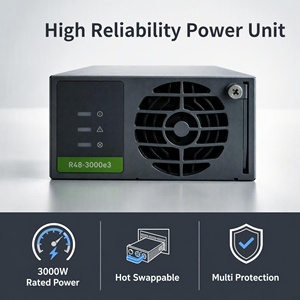
Unplanned downtime in telecommunications base stations, data centers, and continuous chemical processing plants carries massive financial penalties. Industrial buyers are shifting away from monolithic power supplies toward standardized 19-inch 3U/5U rack-mount chassis housing hot-swappable 2kW, 3kW, or 4kW rectifier/inverter modules. This N+1 redundancy allows maintenance technicians to replace faulty modules under live operating conditions without disrupting downstream loads.
4. Stringent Eco-Design (EuP) and Carbon Neutrality Mandates
Global environmental regulations, including the European Union's Eco-Design Directive (EuP) and revised ENERGY STAR industrial specifications, demand strict efficiency curves across the entire load spectrum (10% to 100% load). OEM exporters are required to furnish verifiable Life Cycle Assessments (LCA) and RoHS/REACH compliance documentation alongside raw electrical test logs.
Key Technological Development Trends in Power Electronics
To deliver competitive differentiation for OEM machinery, power electronics manufacturers are pioneering critical design breakthroughs:
- Digital Twin Predictive Thermal Management: Embedded microcontrollers utilize internal sensor arrays to continuously measure junction temperatures, electrolytic capacitor equivalent series resistance (ESR), and cooling fan tachometer signals, projecting remaining component operational lifespan in real time.
- Planar Magnetics and Direct Bonded Copper (DBC) Substrates: Replacing traditional wire-wound transformers with multi-layer printed circuit board (PCB) planar magnetics drastically lowers parasitic inductance, reduces electromagnetic interference (EMI) emissions, and lowers module height profile.
- Solid-State Wearless Switching Relays: Transitioning from electromechanical relays to DC MosFET semiconductor relays eliminates contact arcing, contact erosion, and mechanical failure points, enabling millions of silent switching cycles in high-vibration railway and heavy equipment environments.