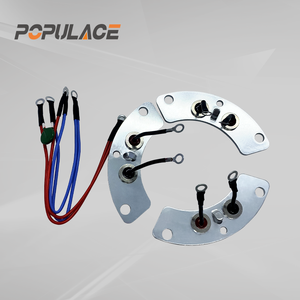
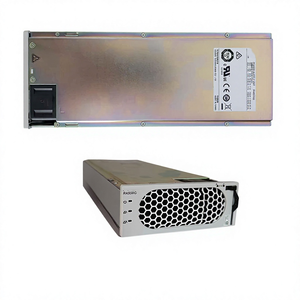
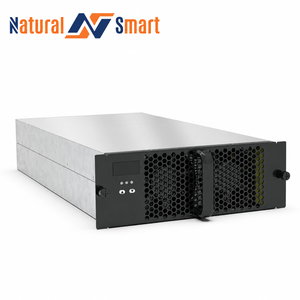
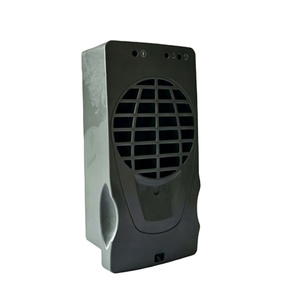
Explore our engineered range of high-frequency rectifiers, modular telecom switch-mode supplies, and heavy-duty DC-DC converters designed for rolling stock, trackside signaling, base stations, and industrial automation networks.
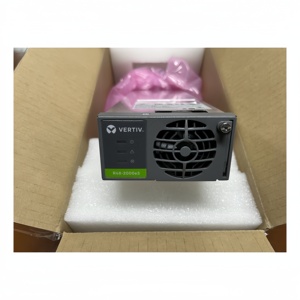
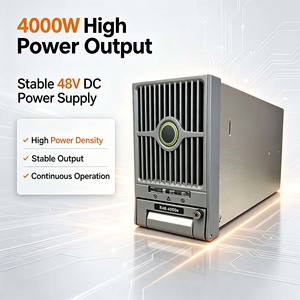
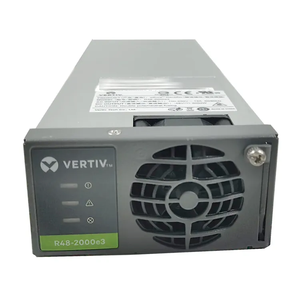
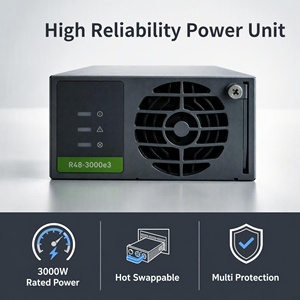
An Executive Technical Analysis of Custom OEM Railway Power Manufacturing, Compliance Frameworks, and Modular Conversion Architecture for Modern Transportation Networks.
Railway electronics operate under extreme thermal shocks, wide input voltage fluctuations, severe mechanical vibration (Category 1 Class B), and aggressive electromagnetic interference. Standard off-the-shelf industrial power supplies fail prematurely in these environments. Custom OEM manufacturing tailored to EN 50155, RIA 12, and IEEE 1478 standards ensures minimum maintenance downtime, extended mean-time-between-failures (MTBF > 500,000 hours), and seamless integration into train control systems (TCMS) and trackside signaling networks.
Rail power systems experience severe voltage dips and surges. OEM power supplies engineered for rolling stock handle nominal battery voltages from 24VDC to 110VDC, tolerating continuous fluctuations from 0.7 to 1.25 times nominal voltage, with transient withstand capabilities meeting RIA 12 standard (up to 3.5 times nominal for 20 ms).
High dielectric isolation (up to 3000VAC / 4242VDC) between primary input, secondary output, and chassis ground prevents ground loops and safeguards delicate microprocessors in automatic train control (ATC) modules and communication nodes against high-voltage traction surges.
Using active fanless aluminum heat sink chassis, vacuum-encapsulated potting, and thick acrylic or silicone conformal coatings, OEM railway units operate reliably across Class OT4 temperature profiles (-40°C to +85°C), resisting dust, moisture, salt mist, and chemical contaminants.
Custom power conversion units engineered and produced at our ISO 9001 certified manufacturing facilities conform strictly to international railway safety and electromagnetic compatibility standards.
| Standard / Regulation | Technical Scope | OEM Engineering Compliance Level | Target Railway Application |
|---|---|---|---|
| EN 50155 / IEC 60571 | Railway applications - Rolling stock electronic equipment | Full Compliance (Temperature, Shock, Vibration, Power Dips) | On-board Auxiliary Power, Driver Cab Displays, TCMS |
| EN 50121-3-2 / IEC 62236-3-2 | Electromagnetic Compatibility (EMC) for rolling stock | Strict CISPR 11 Class B radiated & conducted emission limits | Radio Communication, Passenger Information Systems (PIS) |
| RIA 12 / Surge Withstand | Protection against high-energy surges in DC control systems | Overvoltage protection withstand up to 3.5x Un for 20ms | Heavy Electric Locomotives, Mainline High-Speed Trains |
| EN 45545-2 (HL1 - HL3) | Fire testing to railway components (Smoke & Toxicity) | Hazard Level HL3 compliant materials and halogen-free wire | Subway / Metro Systems, Underground Passenger Cars |
| EN 61373 (Category 1 Class B) | Shock and vibration testing for body-mounted equipment | Reinforced SMT soldering, potted transformers, anti-vibration glue | Bogie-mounted sensors, Under-frame converters |
When standard rack-mount or DIN-rail supplies do not meet your footprint or electrical set-point demands, our engineering team provides end-to-end OEM modifications:
Every custom rectifier and power converter leaving our OEM assembly lines undergoes exhaustive testing protocol to guarantee zero-defect deployment:
As global rail networks modernize toward decarbonization, high-speed automation, and intelligent maintenance, OEM power supply manufacturers are adopting next-generation power semiconductor architectures.
Transitioning from legacy Silicon MOSFETs to Silicon Carbide (SiC) power devices enables switching frequencies up to 5 times higher. This significantly reduces passive component sizes (transformers and inductors), cuts power converter weight by up to 40%, and achieves peak power efficiencies exceeding 97%.
The rapid deployment of Hydrogen Fuel Cell Multiple Units (HMUs) and battery-powered regional trains demands bi-directional DC/DC converters. OEM factories are developing high-power DC mini-grid buck-boost systems capable of managing energy recovery during regenerative braking directly into onboard battery arrays.
Modern rail procurement contracts increasingly mandate condition-based monitoring. OEM railway power supplies now integrate embedded microcontrollers that log capacitor ESR degradation, total operating hours, thermal stress cycles, and transient events, communicating status directly to maintenance depots via RS485 or CANbus.
For railway system integrators and train operators, initial hardware acquisition costs represent less than 15% of total operational expenditure over a typical 25-year service life. Choosing low-cost, uncertified commercial power units results in frequent trackside service interventions, unplanned rolling stock downtime, and expensive replacement labor. High-reliability OEM railway power supplies engineered with high-temperature 105°C long-life electrolytic capacitors, solid polymer capacitors, and robust surge protection drastically lower TCO by guaranteeing operational lifespans matching train overhaul cycles (15 to 20 years).
Navigating the complex sourcing process for custom OEM power conversion modules requires clear technical alignment between railway engineers and power supply factories.
Before requesting a quote from OEM factories, ensure the following parameters are fully defined in your technical payload document:
Validate the manufacturing partner's engineering maturity and production capabilities:
Engineering and purchasing guidance for OEM custom railway power converters, rectifiers, and industrial supplies.
Need a specialized power supply engineering review, custom prototype quotation, or technical compliance verification for your upcoming railway or heavy industrial project? Our application engineers are ready to assist.
