Customizable single-phase, three-phase, hybrid, and off-grid solar power solutions tested for global grid compliance.
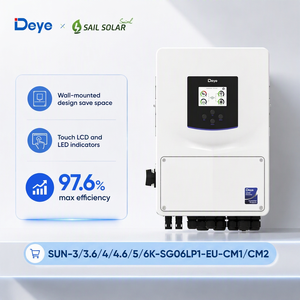
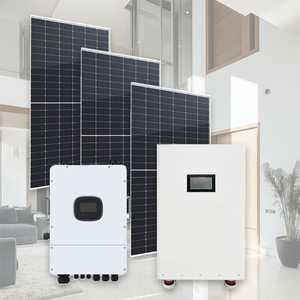
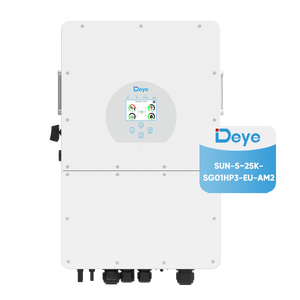
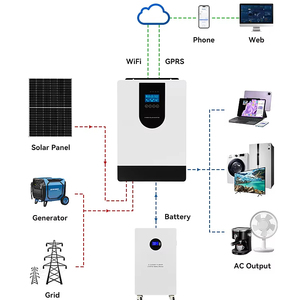
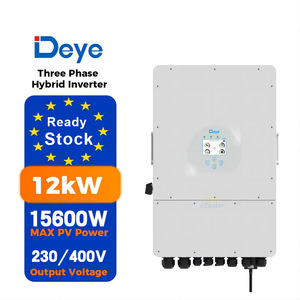
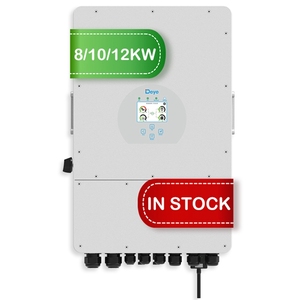
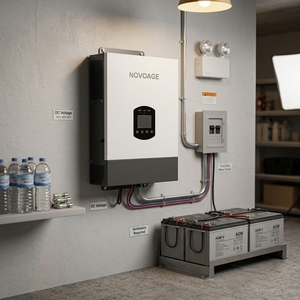
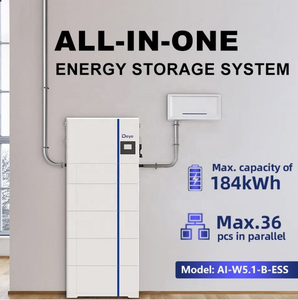
As the global renewable energy landscape transitions toward decentralized microgrids, high-voltage battery storage, and dynamic grid support, selecting a highly capable custom OEM solar inverter factory is a critical decision for brands, EPC contractors, and distributors. A modern solar inverter is no longer merely a direct-current to alternating-current (DC/AC) conversion bridge; it serves as the intelligent central brain of residential, commercial, and industrial (C&I) energy ecosystems.
Our manufacturing philosophy leverages advanced power electronics design, stringent quality assurance protocols inspired by top-tier European manufacturing standards, and extensive ODM customization capabilities. From multi-MPPT single-phase residential hybrid units to high-power three-phase low-voltage and high-voltage energy storage topologies, our production facility delivers high-yield, durable solar hardware built to perform under extreme ambient conditions.
Information Gain Insight: Modern OEM solar procurement requires moving beyond static datasheet parameters. Key differentiators lie in thermal management derating curves, wide-bandgap (SiC/GaN) switching efficiencies, electromagnetic compatibility (EMC) margins, and firmware-level grid code compliance adaptability across international power grids.
Our state-of-the-art manufacturing facility combines fully automated SMT (Surface Mount Technology) assembly, robotic optical inspection (AOI), conformal coating processes, and rigorous environmental stress screening (ESS). We provide global OEM partners with end-to-end customization options tailored to target market regulatory frameworks and branding mandates.
Flexible engineering of DC input ranges, MPPT channels, split-phase outputs (120V/240V North America), and custom low-voltage (48V) or high-voltage (200V-800V) battery interfaces.
ISO 9001:2015 certified assembly lines, 100% full-load thermal burn-in testing, IP65/NEMA 4X weatherproofing, and selective conformal coating against humidity and salt mist.
White-label mobile applications (iOS/Android), custom EMS integration, Modbus/CAN bus protocol tailoring, dynamic peak-shaving algorithms, and remote OTA update infrastructures.
To withstand 25+ years of continuous field operation, our solar inverter architectures incorporate premium semiconductor components, film capacitors, and advanced thermal dissipation concepts:
The following selection matrix highlights the key technical characteristics across our primary OEM production platforms, aiding procurement engineering teams in specifying the exact topology for their target markets:
| Inverter Series / Topology | Phase Configuration | Battery Voltage Range | Peak Efficiency | Enclosure / Thermal Rating | Primary Target Market |
|---|---|---|---|---|---|
| Low-Voltage Hybrid (3kW–6kW) | Single Phase (220V/230V) | 40V – 60V (48V LiFePO4) | 97.6% | IP65 Wall-Mount / Natural Convection | Residential Solar & Storage (EU/LATAM) |
| High-Power Off-Grid (5kW–12kW) | Single / Split Phase | 48V DC Low Voltage | 95.5% | IP21/IP65 Forced Smart Fan Cooling | Off-Grid Residential & Remote Backup |
| High-Voltage Hybrid (5kW–25kW) | Three Phase (380V/400V) | 160V – 800V HV Battery | 98.4% | IP65 Sealed Die-Cast Aluminum | Commercial & High-End Residential |
| All-In-One BESS Inverter (3.6kW–12kW) | Single & Three Phase | Integrated (5kWh–30kWh) | 97.8% | IP65 Modular Stackable Tower | Plug-and-Play Home Energy Storage |
As utility providers enforce stricter grid interaction mandates and localized energy storage rules, solar inverter procurement strategies are evolving rapidly. B2B buyers must align with OEM manufacturing partners capable of navigating the following industry shifts:
While 48V low-voltage systems remain cost-effective for residential applications under 6kW, commercial installations and residential systems above 8kW are rapidly pivoting toward High-Voltage (150V-600V) architectures. HV systems reduce cable copper losses, increase round-trip efficiency by 2-3%, and enable faster charge/discharge rates demanded by EV fast-charging integration.
Global regulatory updates—such as EN 303 645 in Europe and IEEE 1547-2018 / UL 1741 SB in North America—demand that OEM solar inverters feature hardware-level root-of-trust encryption, secure boot capability, and standardized SunSpec Modbus communication protocols for remote utility management.
Next-generation OEM inverters integrate edge computing chips running real-time machine learning models. These systems dynamically forecast PV generation based on localized weather API feeds, evaluate dynamic grid electricity tariffs, and optimize battery charge/discharge cycles to maximize customer ROI.
The convergence of Electric Vehicles (EVs) and stationary energy storage is driving demand for bi-directional DC-coupled architectures. Modern OEM platforms are designed to bridge rooftop solar, stationary storage, and EV traction batteries through unified high-efficiency DC-DC converter stages.
To stay ahead of global competition, our R&D engineering departments continuously drive technological advancements across several core power electronics domains:
Traditional off-grid switchovers often cause sensitive IT hardware, servers, and modern home appliances to reset. Our modern hybrid inverters feature hardware-level phase-locked loop (PLL) synchronization and fast AC transfer switches, achieving uninterrupted power supply (UPS) class transfer times under 4 milliseconds.
Reliability in harsh outdoor environments (such as high ambient heat in desert regions or high humidity in tropical zones) is achieved through optimized die-cast aluminum heat sinks, heat-pipe thermal transfer mechanisms, and intelligent variable-speed cooling fans rated for IP65/IP66 enclosures. Our systems exhibit minimal derating even at ambient temperatures reaching +45°C to +50°C.
Battery bank degradation is a key driver of warranty costs for energy system installers. Our smart inverters incorporate proprietary multi-stage charging algorithms, active battery voltage balancing control, and dynamic state-of-charge (SOC) calculation to extend LiFePO4 and lead-acid battery lifetimes by up to 20%.
Below are detailed responses to common technical, compliance, and commercial questions raised by international distributors, EPC contractors, and OEM brand partners during factory audits.
Contact our engineering and commercial sales department today to request detailed datasheets, factory audit reports, product samples, or custom OEM price quotes.
Get a Quote