Explore our OEM/ODM modular power supply platforms, engineered for high reliability in telecommunications, EV charging infrastructure, electroplating, and critical industrial automation.
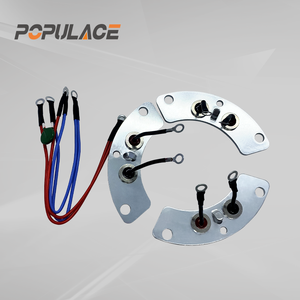
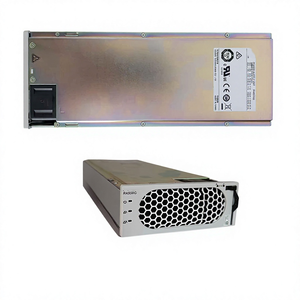
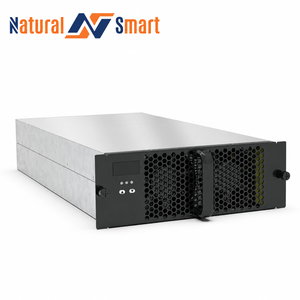
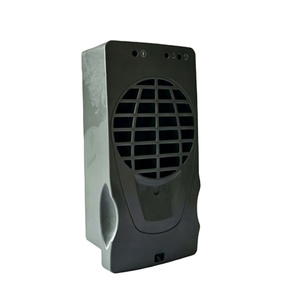
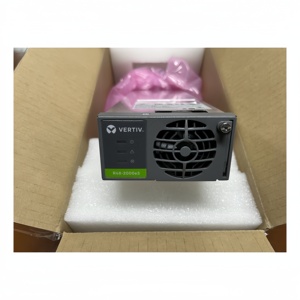
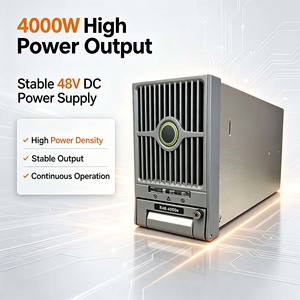
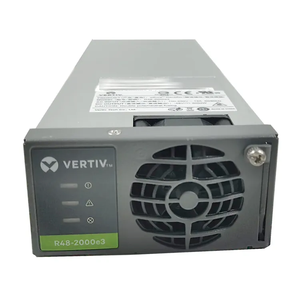
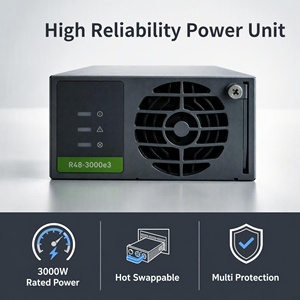
As a leading custom converter module factory and high-reliability power supplier, we bridge the gap between rigorous German engineering standards and agile global contract manufacturing. Operating out of state-of-the-art facilities equipped with fully automated Surface Mount Technology (SMT) lines, automated optical inspection (AOI), and full-load burn-in testing chambers, we ensure zero-defect production for critical power platforms.
Whether your application demands ultra-compact DIN-Rail AC/DC power supplies, high-power telecom rectifiers (48V 50A/3000W), wide-input DC/DC mini-grid converters (450V–820V), or ultra-fast EV charging modules (150V–1000V DC), our end-to-end OEM/ODM framework guarantees comprehensive customization—from topology design to final enclosure branding.
We provide full-turnkey electronic and mechanical modifications tailored precisely to your application environment:
Choosing the optimal power converter topology directly dictates operational thermal stress, electromagnetic compatibility (EMC), component lifecycle, and total cost of ownership (TCO).
Resonant LLC topologies leverage Zero Voltage Switching (ZVS) across the primary power switches, dramatically eliminating switching losses. This is the gold standard for high-density 48V telecom rectifiers and server power modules requiring efficiency upwards of 96.5%.
Active Power Factor Correction (PFC) utilizing interleaved multi-phase boosting redistributes input ripple current. This topology reduces bulk capacitor stress and enforces power factor values > 0.99 with Total Harmonic Distortion (THD) below 3%.
Next-generation DC mini-grid and EV charger converters utilize Silicon Carbide (SiC) dual active bridge (DAB) topologies, allowing bi-directional power flow between energy storage systems (ESS) and high-voltage DC buses (150V-1000V DC).
| Topology Type | Typical Input Range | Peak Efficiency | Power Density | Primary Application Target |
|---|---|---|---|---|
| Phase-Shift Full-Bridge (PSFB) | 380V - 800V DC | 94.5% - 95.8% | 25 - 35 W/in³ | Industrial DC Motor Drives, Heavy Battery Chargers |
| LLC Resonant Converter | 350V - 420V DC (post-PFC) | 96.0% - 97.2% | 45 - 65 W/in³ | Telecom Base Stations, Data Center Rectifiers |
| Interleaved Buck/Boost (SiC) | 150V - 1000V DC | 97.5% - 98.6% | 70 - 90 W/in³ | Fast EV DC Chargers, Solar PV Microgrids |
| Flyback / Forward (Auxiliary) | 85V - 264V AC | 85.0% - 90.0% | 10 - 20 W/in³ | Auxiliary Control Logic, PLC DIN-Rail Power |
As global power infrastructure transitions toward electrification, renewable integration, and high-density AI data centers, the procurement landscape for OEM/ODM converter modules is experiencing a fundamental paradigm shift.
The historical reliance on legacy Silicon MOSFETs is rapidly declining. Procurement managers are prioritizing suppliers with mature Silicon Carbide (SiC) and Gallium Nitride (GaN) manufacturing lines. WBG devices operate at significantly higher switching frequencies with lower switching losses, allowing magnetic components (chokes and transformers) to shrink by up to 50%. Future-proof procurement requires selecting factories capable of handling WBG thermal dissipation and fast dV/dt EMI containment.
Modern factories and commercial facilities are moving away from traditional AC distribution in favor of centralized 380V to 800V DC mini-grids. This direct DC coupling reduces round-trip conversion losses between solar arrays, battery storage, and variable frequency drives (VFDs). Consequently, demand for wide-input DC/DC DIN-rail converters capable of operating directly from high-voltage DC buses (450V–820V DC) is projected to grow exponentially over the next decade.
Passive power supplies are being replaced by intelligent, software-defined converter modules. Modern B2B buyers mandate smart communications via PMBus 1.3, CANbus, or industrial Ethernet. Integrated Digital Signal Processors (DSPs) continuously monitor internal capacitor ESR (Equivalent Series Resistance), temperature thresholds, and real-time current degradation, allowing central AI diagnostics to predict power module failure weeks before it occurs, drastically reducing unscheduled downtime.
Sustainability and repairability have entered core procurement SLAs. Modular rectifiers (such as the standard 48V 50A and 3000W formats) allow hot-swappable N+1 redundancy. In the event of a module degradation, maintenance teams can hot-swap the unit without interrupting system operation. OEM buyers are demanding backward-compatible mechanical form factors with standardized pinouts to prevent vendor lock-in and simplify long-term inventory replacement.
Evaluating a potential converter module factory requires auditing technical competencies beyond basic unit cost. Use this 4-step framework during technical procurement evaluations.
Verify full-load operation curves. High-quality industrial converters operate at 100% rated capacity up to 50°C or 60°C ambient before linear derating begins, whereas lower-tier modules derate significantly at 40°C.
Inspect Bill of Materials (BOM) sourcing. Ensure the factory uses tier-1 Japanese electrolytic capacitors (Nippon Chemi-Con, Nichicon) rated for 105°C and long lifespans to guarantee calculated MTBF.
Ensure native compliance with EN 55032 (CISPR32) Class B radiated/conducted emissions and EN 61000-4 series surge protection, eliminating the need for costly external line filters.
Assess Non-Recurring Engineering (NRE) terms for custom enclosure tooling, firmware set-points, connector harness changes, and PCB conformal coating options for harsh environments.
Clear, definitive technical answers addressing procurement, compliance, and custom manufacturing inquiries.
From initial concept to volume mass production, our structured product development gate system guarantees fast time-to-market with zero compromise on engineering reliability.
Joint engineering review of electrical input/output specifications, thermal envelope, mechanical dimensions, and compliance targets.
3D CAD thermal modeling, finite element magnetics design, high-frequency PCB layout routing, and worst-case component stress analysis.
Rapid SMT prototype assembly, full-load thermal imaging, HALT (Highly Accelerated Life Testing), and pre-compliance EMC scans.
Pilot batch qualification, automated ATE test fixture setup, full-load chamber burn-in, and scheduled buffer stock deployment.
Need a custom DC/DC converter, high-efficiency telecom rectifier, fast EV charging power module, or heavy-duty industrial power supply? Connect directly with our power electronics engineering team for immediate technical feedback, design recommendations, and competitive OEM pricing.
Send an Inquiry