Explore our high-performance line-up of customizable AC/DC isolation rectifiers, hot-swappable telecom modules, and wide-range EV charging power assemblies engineered for continuous operation.
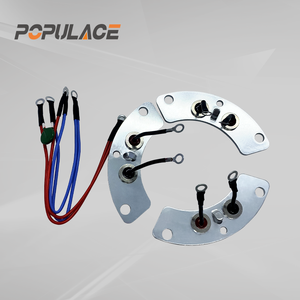
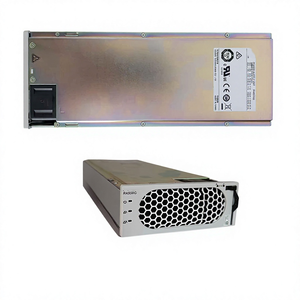
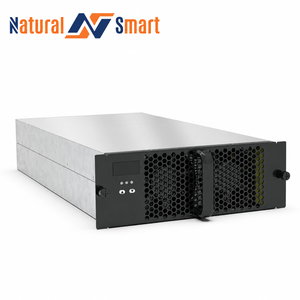
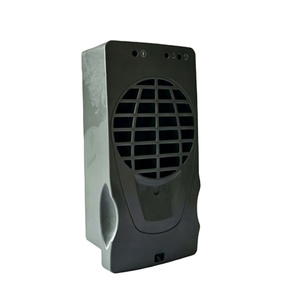
In modern industrial power electronics, a high-performance isolation module serves as the critical line of defense between volatile primary AC grids or high-voltage DC buses and sensitive secondary control circuits. Galvanic isolation prevents ground loops, suppresses high-voltage common-mode transients, and safeguards programmable logic controllers (PLCs), microcontrollers, and telecommunications transceivers from catastrophic electrical stress.
As a leading OEM/ODM Isolation Module Supplier & Exporter, our manufacturing baseline is established upon proven German engineering standards. Every custom rectifying assembly, DC/DC converter block, and embedded isolation transformer is designed in accordance with rigorous dielectric insulation standards including IEC 62368-1, IEC 60601-1 (medical-grade isolation), and UL 60950-1. By integrating planar transformers, zero-voltage switching (ZVS) topologies, and active power factor correction (PFC > 0.99), our isolation modules deliver maximum power density within compact DIN-rail, rack-mount, or open-frame form factors.
Employs double-insulated magnetic barriers and optoelectronic feedback circuits capable of enduring pulse withstand voltages up to 6kV peak without dielectric breakdown.
Universal AC wide-range input (85V–300V AC) integrated with active boost PFC to eliminate line harmonics and deliver compliance with EN 61000-3-2 Class D.
Native support for PMBus, CANopen, and RS485 Modbus RTU communication protocols, allowing real-time monitoring of thermal margins, load current, and voltage degradation.
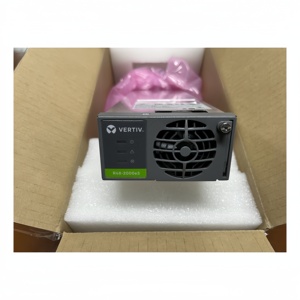
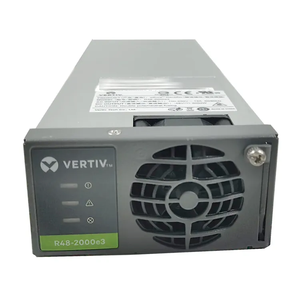
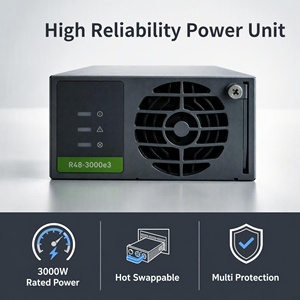
Whether deploying 48V high-frequency rectifier modules for 5G telecom base stations (such as the Vertiv R48-3000e3 and ZHIHENG R4850G platforms) or high-voltage ultra-fast DC charging power blocks for EV infrastructure (ranging from 20kW to 40kW with output ranges up to 1000V DC), isolated circuit design demands low inter-winding capacitance to prevent electromagnetic interference (EMI) from coupling across the isolation barrier.
Global procurement teams and system integrators face escalating demands for energy efficiency, modular redundancy, and supply chain transparency. As industrial networks migrate toward automated smart factories and decentralized renewable grids, procurement strategies for isolation modules and rectifiers are shifting dramatically:
Wide-bandgap (WBG) semiconductors are rapidly replacing traditional silicon MOSFETs and IGBTs in high-density isolation modules. SiC power stages permit switching frequencies above 100kHz with negligible switching losses, shrinking physical inductor size by over 40% while raising energy efficiency beyond 96.5%. Procurement specialists prioritizing SiC-based isolation converters achieve significant operational expenditure (OPEX) savings through reduced cabinet cooling requirements.
System downtime in telecom base stations, data centers, and automated manufacturing lines carries severe financial penalties. Modern RF and power isolation systems favor hot-swappable sub-rack configurations (e.g., standard 19-inch 3U/4U shelves housing modular units like the R48-4000e and APR48 series). N+1 active current sharing enables live maintenance and module replacement without interrupting system load.
Industrial facility power distribution is shifting toward centralized 450V–820V DC microgrids fed directly by solar PV arrays and battery energy storage systems (BESS). Consequently, demand is surging for dual-input OEM DC/DC isolation modules capable of stepping down high bus voltages directly to 24V or 48V control levels, bypassing wasteful double AC-to-DC conversion stages.
The following technical comparison outlines standard isolation module architectures engineered at our fabrication facilities to assist purchasing managers and hardware engineers in component selection:
| Module Platform Type | Input Voltage Range | Nominal Output | Isolation Breakdown | Primary Application Area |
|---|---|---|---|---|
| Telecom High-Freq Rectifier | 85V – 300V AC (1PH) | 48V DC / 50A – 83A | 3.0kV AC / 1 min | 5G FTTH Base Stations, Central Telecom Hubs |
| EV Ultra-Fast Charger Module | 260V – 485V AC (3PH) | 150V – 1000V DC / 133A | 4.2kV AC / 1 min | Commercial EV DC Fast Charging Stations |
| Electroplating Heavy Rectifier | 220V AC ± 15% | Custom Low V / High Current | 2.5kV AC / 1 min | Industrial Anodizing & Electroplating Cells |
| DC Mini-Grid Step-Down Module | 450V – 820V DC | 24V DC / 48V DC | 3.75kV AC / 1 min | BESS, Solar Microgrids, Automation Bus |
| Precision DIN-Rail Isolation Unit | 90V – 264V AC | 12V / 24V / 48V DC (10-2000W) | 3.0kV AC / 1 min | PLC Panels, Robotics, Machine Tooling |
The engineering trajectory of OEM/ODM isolation power supplies centers on overcoming three physical constraints: continuous thermal dissipation, dielectric creepage/clearance distance, and electromagnetic compliance (EMC) in harsh industrial environments.
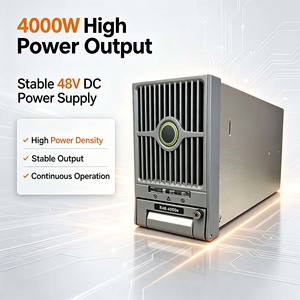
Compact module footprints require sophisticated thermal pathing. Our custom ODM engineering incorporates aluminum nitride (AlN) substrates, insulated metal substrates (IMS), and direct-bonded copper (DBC) technology. In high-power modules like the 4000W R48-4000e series, intelligent variable-speed fan controllers adjust airflow dynamically based on internal temperature sensors, prolonging electrolytic capacitor service life and preventing dust ingress in harsh desert or maritime environments.
Standard power supplies certified for altitudes up to 2000 meters often experience insulation degradation when installed in high-altitude renewable energy installations (e.g., wind or solar farms at 4000+ meters above sea level). Our engineered isolation modules incorporate extended creepage paths (>8.0 mm) and conformal PCB potting (using UL 94V-0 silicone compounds) to ensure zero arc-over risk under low atmospheric pressure conditions.
Traditional mechanical relays and contactors used in power isolation networks suffer from contact erosion, arc wear, and limited duty cycles. Modern ODM designs integrate semiconductor MosFET electronic relays (such as wearless UMS series relays) paired with active inrush current limiters (ESB series). This prevents nuisance tripping of upstream circuit breakers during cold-start capacitive charging, extending overall equipment lifespan.
Selecting an OEM/ODM supplier for power electronics requires evaluating far more than initial piece-part pricing. Reliability in the field dictates total system profitability. Our manufacturing and export operations provide distinct operational guarantees:
Every fabrication process—from raw component incoming inspection to automated SMD placement, robotic soldering, and 100% full-load burn-in testing—takes place under certified German quality management guidelines.
Because hardware design, PCB routing, and firmware programming reside in-house, we offer tailored output voltages, custom connector interfaces, specialized conformal coatings, and proprietary firmware telemetry within accelerated 4-6 week prototyping windows.
We guarantee long-term component lifecycle support and revision stability for OEM equipment platforms, preventing costly machine redesigns caused by premature component obsolescence.
Our global distribution and technical support infrastructure ensures that engineering teams across Europe, North America, and the Asia-Pacific region receive direct access to senior power supply design experts rather than automated sales scripts.
Direct answers to critical questions asked by procurement officers, hardware design engineers, and quality assurance leads during vendor evaluation.
Standard industrial AC/DC isolation modules feature a minimum galvanic isolation rating of 3.0kV AC (3000V AC) between primary input and secondary output for 60 seconds. High-voltage series engineered for EV charging infrastructure or medical equipment offer isolation options up to 4.2kV AC or 6.0kV DC peak withstand capability.
Yes. Our complete OEM/ODM engineering workflow supports modified secondary voltage windings, customized busbar configurations, terminal blocks (screw, push-in, or multi-pin industrial connectors), specialized PCB conformal coating (acrylic or silicone), and custom firmware set-points for programmable units.
Every isolation module undergoes rigorous quality control under ISO 9001:2015 processes. This includes automated optical inspection (AOI) after SMD assembly, high-potential (Hi-Pot) dielectric testing, full electrical parameter verification, and mandatory extended full-load burn-in under elevated ambient temperatures before final packaging.
Our telecom-grade rectifier modules utilize active analog droop or digital CANbus current-sharing controls. When connected in parallel inside a standard shelf, each module auto-adjusts its output current to ensure balanced load distribution within ±5%, allowing true N+1 redundancy and zero-interruption live swapping.
Our primary module families carry UL, CSA, and CE marks. They are fully compliant with EU RoHS and REACH directives, as well as the European EuP Eco-Design Directive for standby and operational energy efficiency. Full test reports and declarations of conformity are provided with sample shipments.
Large internal bulk capacitor banks in power supplies draw substantial transient surge currents during initial grid connection. An active inrush limiter (such as our ESB series) smoothly ramps up charging current, preventing upstream circuit breakers from nuisance tripping and protecting mechanical switch contacts from contact welding.
Share your electrical specifications, input/output isolation parameters, thermal constraints, or estimated production volumes. Our senior power systems engineers respond with detailed technical evaluations and direct quotations.
