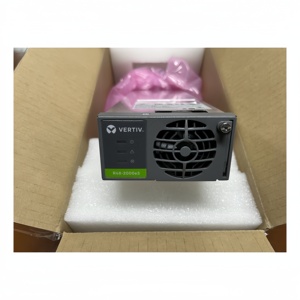
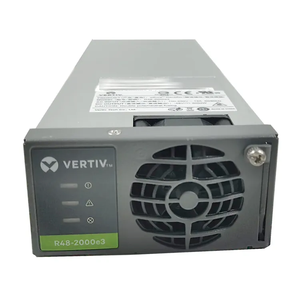
High-reliability industrial telecom power units, EV charging modules, and medical-grade rectification systems customized for OEM/ODM global exporters.
In modern medical device engineering and high-precision critical infrastructure, power supply units (PSUs) serve as the primary defensive boundary between raw, unpredictable mains electricity and sensitive diagnostic components. As a premier OEM/ODM Medical Power Factory & Exporter, our engineering philosophy inherits the rigorous design principles established by elite European power electronics labs—integrating total component traceability, advanced planar magnetics, and multi-tier galvanic isolation to guarantee operational longevity under unforgiving industrial and clinical environments.
Medical power electronics demand far more than standard commercial-grade switch-mode power supply (SMPS) design. Compliance with international safety standard IEC 60601-1 (3rd and 4th Editions) necessitates stringent insulation parameters: 2x MOPP (Means of Patient Protection) isolation barriers, earth leakage currents under 100 µA, and extreme electromagnetic immunity (EMC Class B compliance under EN 55011 / CISPR 11). Whether supplying low-noise DC rails for MRI imaging systems, surgical robotics, laboratory analytics, or uninterruptible hospital telemetry networks, our tailored manufacturing lines deliver power supplies built to perform continuously without degradation.
Deploying state-of-the-art power conversion topologies for demanding industrial, telecom, and medical applications worldwide.
Built with dual-isolation barriers achieving up to 4000VAC / 5600VDC isolation ratings. Engineered specifically to comply with 2x MOPP patient safety criteria with ultra-low creepage and clearance metrics for patient-contact medical instrumentation.
Utilizing Wide Bandgap (WBG) semiconductors including Gallium Nitride (GaN) and Silicon Carbide (SiC) switches to achieve peak efficiencies exceeding 96.5%, dramatically reducing thermals and physical volume for compact OEM equipment enclosures.
Advanced LC filtering architectures reduce ripple and high-frequency noise to under 1% mV p-p. Patient leakage current is strictly held to microampere thresholds (<100µA NC, <500µA SFC), ideal for sensitive physiological sensors.
As global healthcare procurement teams and medical equipment OEMs navigate evolving regulatory landscapes and supply chain shifts, key strategic purchasing trends have emerged that redefine how power conversion systems are specified, procured, and maintained over multi-decade product lifecycles.
Modern medical equipment manufacturers are moving away from purely passive power bricks toward intelligent, software-defined power supplies equipped with PMBus or I2C communication protocols. Procurement managers prioritizing OEM vendors offering real-time telemetry—monitoring internal thermal dynamics, output ripple variation, component degradation markers, and voltage line sag—can enable predictive maintenance alerts in clinical environments long before operational system failure occurs.
To optimize global supply chain inventories, OEM developers are increasingly standardizing on medical-certified power supplies for premium industrial applications (such as automated semiconductor inspection, automated chemical analysis, and critical telecommunication hubs). A power supply certified to 2x MOPP IEC 60601-1 effortlessly satisfies the less stringent industrial IEC 62368-1 standard, allowing global exporters to streamline single-component procurement across diverse product lines.
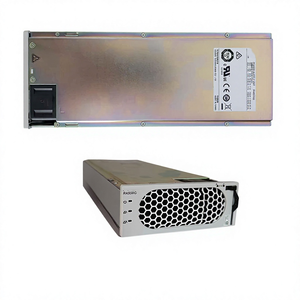
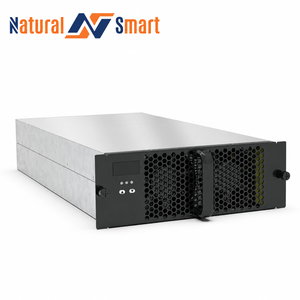
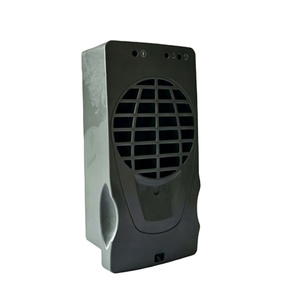
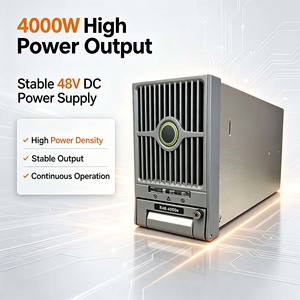
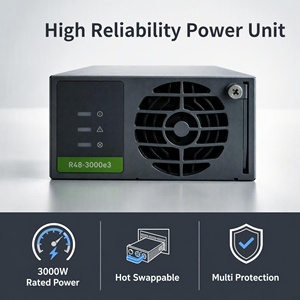
Hot-swappable modular rectifiers—historically dominant in telecom base station systems like the 48V 50A and 3000W power modules featured in our core catalog—are now being adapted for high-power medical suites (e.g., proton therapy devices and high-intensity surgical lasers). Procurement officers prioritize modular topologies that support active current sharing and N+1 redundant hot-plug capabilities, enabling zero-downtime maintenance operations.
A detailed comparison matrix illustrating regulatory, structural, and performance boundaries between baseline power architectures.
| Technical Parameter | Standard Industrial (IEC 62368-1) | Medical Operator (1x MOPP / 2x MOOP) | Medical Patient Contact (2x MOPP IEC 60601-1) |
|---|---|---|---|
| Isolation Voltage (Primary to Secondary) | 1500 VAC / 2121 VDC | 3000 VAC / 4242 VDC | 4000 VAC / 5656 VDC |
| Creepage & Clearance Distances | ≥ 3.0 mm / 2.5 mm | ≥ 5.0 mm / 4.0 mm | ≥ 8.0 mm / 5.0 mm |
| Earth Leakage Current (Normal State) | < 3.5 mA | < 300 µA | < 100 µA (B/BF Type) / < 10 µA (CF Type) |
| EMC Immunity (EN 55011 / CISPR 11) | Class A or Class B | Class B Standard | Class B Strict (IEC 60601-1-2 4th Ed.) |
| Primary Application Scope | Factory Automation, Telecom, Network Racks | Laboratory Instrumentation, Clinical Monitors | Patient-Contact Devices, Surgical Lasers, Dialysis |
| OEM/ODM Customization Capability | Standard Housing, Fixed Voltages | Modular Enclosure, Adjustable V/I | Custom Potted PCB, Dual-Fuse, Firmware Telemetry |
The global power electronics sector is experiencing a monumental transition toward ultra-high power density and extreme thermodynamic efficiency. Our R&D engineering teams focus on four major technology pillars to maintain competitive advantages for our international OEM/ODM clientele:
By replacing traditional silicon MOSFETs with Gallium Nitride (GaN) and Silicon Carbide (SiC) switching devices, switching frequencies are elevated from conventional 65kHz–100kHz bands up to 500kHz–1MHz. High switching frequencies drastically reduce the physical footprint of magnetic components (transformers and inductors), yielding volumetric power densities exceeding 40 Watts per cubic inch while retaining low surface thermals.
In modern medical facilities and critical infrastructure micro-grids, energy storage integration (via lithium-ion or solid-state battery banks) is expanding rapidly. Next-generation OEM power supplies incorporate bi-directional AC/DC and DC/DC conversion stages, allowing power modules to function as battery chargers during grid availability and smoothly transition to grid-tied inverter stages during peak-load or mains outage events.
Thermal stress remains the primary cause of electrolytic capacitor degradation and semiconductor failure. Our OEM design frameworks implement conductive baseplate cooling, vacuum-impregnated planar transformers, and phase-change material potting. This ensures silent, fanless operation for clinical room noise sensitivity compliance while sustaining full-load power output up to 60°C ambient temperatures without derating.
End-to-end engineering integrity, certified compliance, and tailored manufacturing workflows built for high-reliability OEM platforms.
Our production facilities operate under audited ISO 13485 (Medical Devices) and ISO 9001:2015 quality protocols. Every single power unit undergoes automatic optical inspection (AOI), automated functional testing (ATE), and high-voltage dielectric withstand verification.
We eliminate regulatory friction for OEM exporters by providing full documentation packs: CB scheme test reports, CE declarations, UL/CSA safety certificates, RoHS/REACH compliance files, and 4th Edition IEC 60601-1 EMC test logs ready for submission.
From micro-adjustments in PCB trace routing to total ground-up custom mechanical design, our engineering team collaborates directly with your R&D department to customize form factors, thermal dissipation profiles, pinouts, and custom output rail configurations.
Direct technical and operational answers to common questions raised by procurement officers and design engineers.
MOPP stands for Means of Patient Protection, while MOOP stands for Means of Operator Protection. 2x MOPP is the most stringent safety classification under IEC 60601-1, requiring 4000 VAC isolation, 8.0 mm creepage distance, and double insulation layers. It is mandatory for medical equipment where internal electrical components come into direct physical or indirect contact with the patient. 2x MOOP requires lower isolation metrics (3000 VAC) and is intended solely for laboratory equipment operated exclusively by trained clinical personnel.
Medical and industrial capital equipment often maintain product lifecycles spanning 10 to 15 years. We ensure supply chain stability by establishing long-term master service agreements with top-tier semiconductor and component manufacturers. Furthermore, we maintain strict revision control, providing clients with advance Product Change Notifications (PCN) and guaranteeing pin-to-pin drop-in replacement compatibility for legacy power modules.
Yes. Many high-reliability diagnostic systems require dense 48V DC power backbones. We customize high-efficiency telecom rectifier modules by adding supplementary isolation transformers, modifying EMC filter stages to meet Class B medical limits, and adding customized firmware set-points for specialized continuous-duty laboratory applications.
For standard modified OEM models, sample evaluation units are typically delivered within 2 to 4 weeks. Fully ground-up custom ODM projects (including toolmaking, prototype iteration, and preliminary safety testing) require 8 to 12 weeks. We offer flexible NRE (Non-Recurring Engineering) arrangements and tiered MOQ structures tailored to support emerging medical technology startups up to large-scale global equipment exporters.
Our fanless power units feature conduction-cooled aluminum baseplates engineered to transfer heat directly to the host equipment's metal chassis. We utilize premium 105°C and 125°C rated long-life solid electrolytic capacitors, ceramic magnetic cores, and high-conductivity thermal gap pads. These components allow our units to maintain 100% continuous duty rating up to 50°C ambient temperatures without requiring forced-air ventilation.
Absolutely. Every OEM shipment is accompanied by complete batch test reports. For customized power platforms, we supply full CB Scheme test reports, UL/CSA file numbers, CE declarations of conformity, RoHS/REACH material safety data sheets (MSDS), and IEC 60601-1 4th Edition EMC laboratory test logs to streamline your final system-level certification process.
Partner with a certified exporter dedicated to precision engineering, zero-defect quality standards, and rapid regulatory clearance. Connect with our senior application engineers to discuss your custom specifications today.