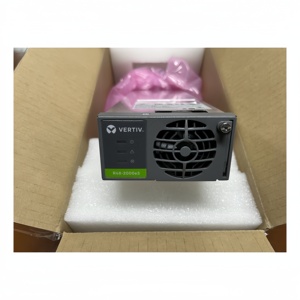
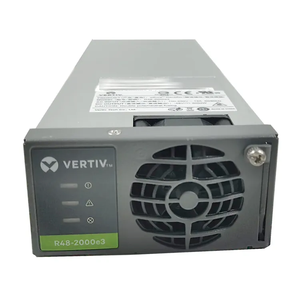
Hot-swappable, high-frequency, and industrial-grade power rectifiers engineered for telecom base stations, EV chargers, and data centers.
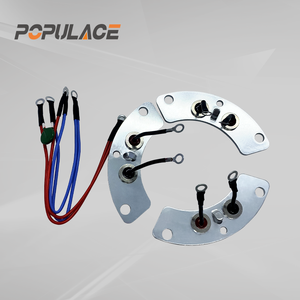
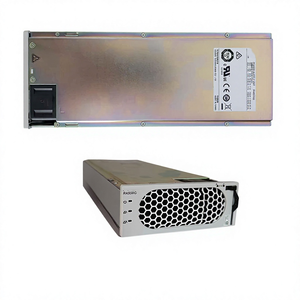
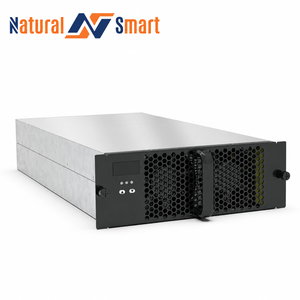
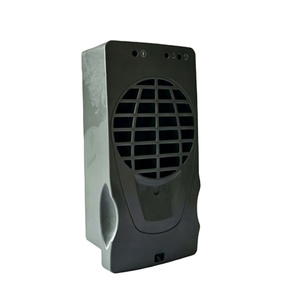
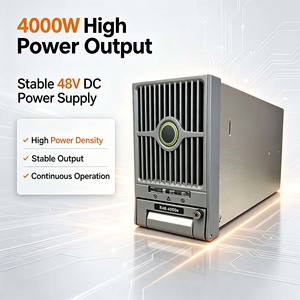
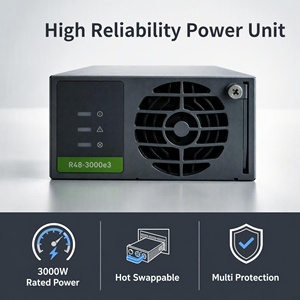
An in-depth technical analysis on optimizing power density, thermal dissipation, and fault-tolerant topology for industrial and mission-critical applications.
Modern industrial infrastructures, automated manufacturing cells, telecommunication networks, and electric vehicle (EV) charging facilities operate under increasingly stringent power quality parameters. As power density requirement per unit volume (W/in³) escalates, system architects can no longer rely on standardized off-the-shelf power supply topologies. Choosing the right OEM/ODM rack mount supplier has become a vital strategic procurement decision for enterprise system integrators, electrical engineers, and global equipment OEMs.
Information Gain Insight: True operational longevity in rack mount rectifiers requires active power factor correction (APFC > 0.99), wide thermal operating windows without aggressive linear derating, and digital bus integration (CANbus / PMBus / Modbus-RTU) for continuous telemetry and predictive failure analysis.
Industrial power requirements demand conversion systems that minimize thermal dissipation while maintaining tight voltage output regulation under sudden step-load changes. High-frequency switch-mode power supplies (SMPS) operating with Zero-Voltage Switching (ZVS) and Zero-Current Switching (ZCS) topologies allow power converters to reach conversion efficiencies exceeding 97%. In continuous 24/7 operating environments—such as 48V DC telecom base stations and electroplating pulse processing—every 1% gain in power efficiency translates into a drastic reduction in total cost of ownership (TCO) and cooling overhead.
By leveraging active resonant LLC converters paired with Silicon Carbide (SiC) Schottky diodes and Gallium Nitride (GaN) power switches, our OEM/ODM custom rack mount modules reduce electromagnetic radiation (EMC) while increasing power density. This mechanical design optimization allows systems engineers to stack 3kW to 40kW modules into standard 19-inch 1U, 2U, or 3U subracks with minimal air-flow restriction.
In data center rack architectures and uninterrupted mission-critical automation systems, single-point power failures are unacceptable. Custom OEM/ODM rack mount rectifiers incorporate internal ORing MosFETs and active current-sharing control lines. Rather than passive droop sharing, active current sharing guarantees that each module in a multi-unit rack chassis shares the load within a tight tolerance of ±3% across the entire 20% to 100% load curve.
This hot-swappable architecture permits seamless module hot-insertion and hot-extraction without disturbing the regulated DC bus. If an individual module encounters an over-temperature condition or input line surge, the remaining units autonomously ramp up current output to maintain system stability without voltage dropouts.
Integrated APFC circuits deliver input power factors >0.99 with Total Harmonic Distortion (THD) <3%, protecting upstream distribution transformers and avoiding utility penalty fees.
High-dielectric isolation barriers exceeding 3000VAC combined with conformal-coated PCBs protect sensitive control logic against corrosive ambient gases and moisture.
Integrated PMBus, CAN 2.0B, or Modbus interfaces allow remote programming of output voltage setpoints, current limits, and real-time telemetry diagnostics.
From custom circuit topology design to fully certified turn-key manufacturing, we deliver rigorous quality assurance validated by international regulatory bodies.
Our manufacturing facilities operate under strict ISO 9001:2015 quality management procedures with full batch component traceability and automated SMT placement.
Every single manufactured unit undergoes extended dynamic full-load burn-in testing under elevated ambient temperatures to eradicate early component mortality.
We modify physical chassis dimensions, pinout assignments, thermal heatsinks, input voltage ranges (110V/220V/380V/480V AC), and output voltage profiles.
Pre-certified product architectures complying with UL 62368-1, CSA, CE, RoHS, REACH, and European EuP Eco-Design directives for seamless worldwide export.
Key technological shifts shaping power electronics procurement strategy over the next decade.
The global shift toward renewable energy integration and local energy storage systems has accelerated the adoption of High-Voltage DC (HVDC) micro-grids within manufacturing facilities and data centers. Traditional AC distribution introduces multiple conversion losses (AC-DC-AC-DC). Modern procurement trends show an exponential rise in demand for DC/DC converter modules capable of operating from wide high-voltage DC buses (ranging from 450V DC to 820V DC) directly stepping down to standard 24V or 48V DC instrument control voltages. OEM/ODM suppliers capable of engineering dual-input AC/DC and wide-range DC/DC platforms are positioning themselves as critical long-term supply chain partners.
As semiconductor physics reaches silicon's theoretical efficiency limits, Wide Bandgap (WBG) materials like Silicon Carbide (SiC) and Gallium Nitride (GaN) are redefining power converter metrics. SiC MosFETs allow switching frequencies 5x to 10x higher than standard silicon, dramatically shrinking magnetic component sizes (inductors and transformers). For system procurement directors, this means 30% smaller chassis footprints and significantly lighter module weights without sacrificing continuous kilowatt output.
Unplanned downtime in process industries (such as chemical processing, semiconductor fabrication, and automated sorting centers) can cost tens of thousands of dollars per minute. Future-proof rack mount power systems are evolving beyond basic relay alarm outputs. Next-generation ODM rectifiers incorporate embedded microcontrollers that continuously evaluate internal capacitor equivalent series resistance (ESR), fan RPM degradation, thermal cycles, and total operational hours. By broadcasting telemetry over industrial Internet of Things (IIoT) protocols, plant operators can perform scheduled maintenance long before catastrophic power unit failures occur.
Use the following engineering guide to match your system requirements with optimal power conversion parameters:
| Module Platform | Typical Output Power | Input Voltage Range | Peak Efficiency | Primary Target Application |
|---|---|---|---|---|
| Standard Telecom Rectifier (48V) | 2000W – 4000W per module | 85V – 300V AC (Wide Range) | 96.5% – 97.8% | 5G Base Stations, FTTH Access Cabinets, Telecom Racks |
| High-Power DC EV Charging Module | 20kW – 40kW per module | 260V – 530V AC (3-Phase) | 95.5% – 96.5% | EV Fast Charging Stations, Depot Chargers, Fleet Infra |
| Programmable Variable DC System | 480W – 100kW (Scalable) | 1-Phase 230V / 3-Phase 400V | 94.0% – 96.0% | Test Automation Benches, Burn-in Racks, Electroplating |
| Industrial Modular DC-UPS / Charger | 480W – 105kW (Buffered) | 110V / 230V / 400V AC | 93.5% – 95.5% | PLC Backup, Critical Drive Protection, Substation Control |
| HVDC Micro-Grid DC/DC Converter | 1kW – 10kW per unit | 450V – 820V DC Input | 97.0% – 98.1% | PV Storage Bus, Industrial DC Networks, Hybrid Micro-Grids |
Contact our senior power engineering team to discuss custom voltage setpoints, enclosure modifications, or high-volume export quotes.
Answers to technical, operational, and commercial inquiries regarding custom rack mount supplier capabilities.