Engineered for continuous heavy-duty deployment in telecommunications, EV charging infrastructure, electroplating, and data center automation environments.
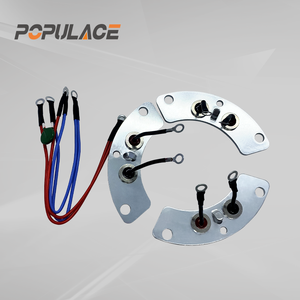
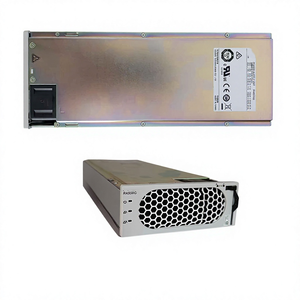
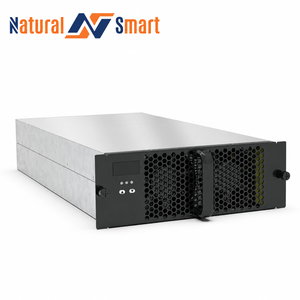
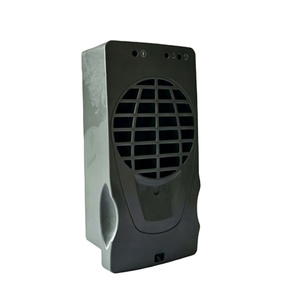
As a global leader in high-density switch-mode power supply (SMPS) design and custom rectifier manufacturing, our facilities bridges German-engineered precision with scalable, high-volume production. We specialize in custom OEM/ODM solutions tailored for automation, mission-critical infrastructure, electric vehicle charging stations, and telecom micro-grids.
Every single power unit—from 10W DIN-rail auxiliary supplies to 105kW scalable modular rectifiers—is engineered under strict ISO 9001:2015 quality management systems. Our fully integrated production footprint combines SMT surface-mount lines, automated optical inspection (AOI), environmental stress screening (ESS), and 100% full-load burn-in testing to guarantee absolute field reliability.

Incorporating soft-switching LLC resonant converters, active power factor correction (PFC > 0.99), and wide-bandgap SiC/GaN semiconductors for maximum energy density.
Fully compliant with UL62368-1, CSA, CE, RoHS, REACH, and European EuP Eco-Design directives. Built to survive harsh industrial EMC environments (EN 61000-6-2).
From custom mechanical enclosures, modified output voltages, and conformal thermal coatings to proprietary firmware telemetry (CANbus, RS485, PMBus).
Modern industrial automation, telecom 5G rollouts, and fast-charging EV infrastructures demand power conversion architectures capable of operating reliably under demanding thermal and electrical stresses. Selecting between standard off-the-shelf power modules and bespoke OEM/ODM engineered units is a operational decision affecting lifecycle cost (TCO) and system uptime.
The matrix below outlines the critical performance differentiators between off-the-shelf power supplies and factory-customized OEM/ODM solutions engineered by our industrial R&D team:
| Electrical Parameter | Standard Commercial SMPS | Industrial OEM/ODM Module Solutions |
|---|---|---|
| Input Voltage Range | Narrow Range (110V/230V AC ±10%) | Ultra-Wide Range (85V–305V AC, 450V–820V DC Mini-Grid) |
| Conversion Efficiency | 85% – 90% Peak | 95% – 97.5% (SiC/GaN Topology Enabled) |
| Power Factor (PFC) | Passive or Active > 0.90 | Active Interleaved PFC > 0.99 at Full Load |
| Operating Temperature | -10°C to +50°C (Standard Derating) | -40°C to +75°C (100% Load sans forced air up to 60°C) |
| Telemetry & Control | Analog Relay Contacts Only | Digital PMBus, CANbus 2.0B, RS485 Modbus, SNMP |
| Inrush Current Protection | Standard NTC Resistor | Active Electronic Limiting (ESB Technology, 3.6kW–46kW) |
| Protection Features | Basic OVP, OCP, SCP | Redundant OVP, Smart Over-Thermal, Latch-off / Auto-recovery |
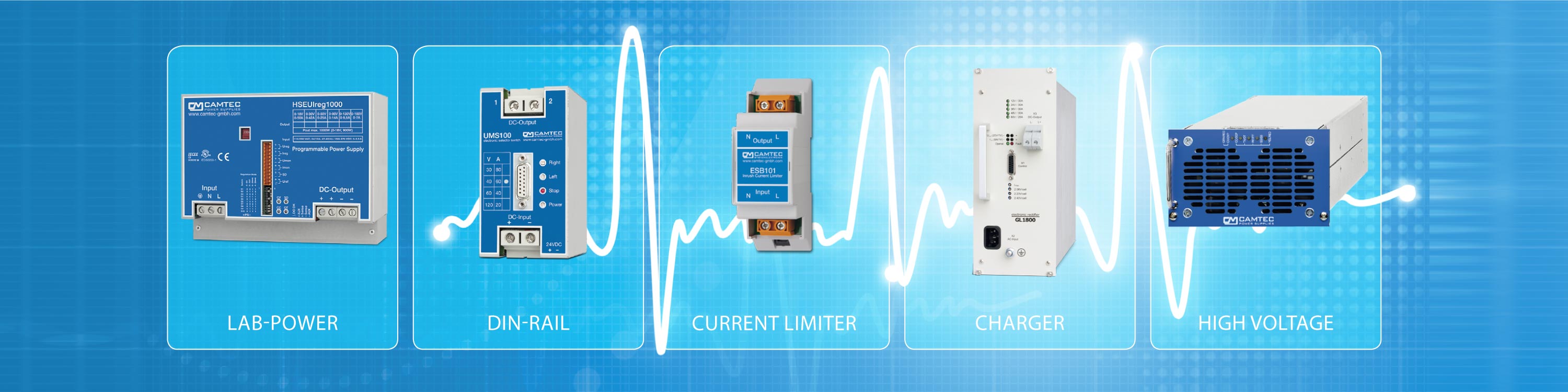
Beyond traditional AC/DC conversion, modern industrial cabinets require specialized auxiliary protection devices. Large capacitor banks within high-power rectifiers cause massive current spikes at initial power-on, frequently tripping upstream circuit breakers. Our integrated ESB Series AC Inrush Current Limiters solve this by dynamically ramping charging currents without wasteful thermal resistance losses.
Furthermore, for applications requiring high-frequency load switching—such as electroplating pulse control or DC battery bank disconnects—traditional mechanical relays suffer from severe contact erosion and arc damage. Our UMS Solid-State DC MosFET Relays provide wearless, arc-free switching across millions of cycles, ensuring uninterrupted operation in critical environments.
Analyzing key technology shifts, supply chain resilience factors, and architectural developments shaping power supply procurement over the next decade.
Silicon Carbide (SiC) and Gallium Nitride (GaN) field-effect transistors are rapidly replacing silicon MOSFETs. Procurement teams are prioritizing suppliers with native SiC/GaN manufacturing capabilities to achieve higher power density, smaller passive component footprints, and energy conversion efficiencies exceeding 97%.
Industrial facilities are increasingly abandoning traditional AC distribution in favor of centralized 450V–820V DC mini-grids. Direct DC-to-DC conversion modules eliminate multiple inefficient inversion stages when integrating solar PV array storage, energy storage systems (ESS), and variable frequency drives.
EV charging infrastructure demands scalable, matrixed power rectifiers. Modern modular rectifiers (20kW–40kW) with wide output voltage ranges (150V–1000V DC) allow seamless power sharing, hot-swappable redundancy, and Vehicle-to-Grid (V2G) bidirectional power flow management.
When selecting a power supply manufacturing partner, evaluate their total extended capability matrix beyond baseline unit pricing. Key indicators of long-term reliability include:
Speak directly with our senior power electronics application engineering team. We assist with custom voltage specs, mechanical design integration, and thermal profiling.
Inquire NowOur OEM/ODM engineering capabilities cover complete hardware and software customization. This includes modifying AC/DC input voltage ranges (e.g., 400V 3-phase or 450-820V DC mini-grid), configuring non-standard output voltages (12V to 1000V DC), custom connector pinouts, conformal PCB coatings for harsh environments, customized thermal heatsinks, and proprietary firmware set-points for PMBus, CANbus, or RS485 communication.
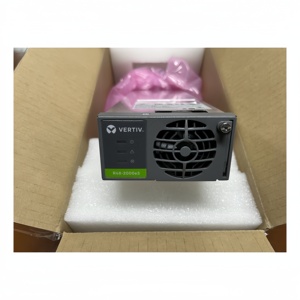
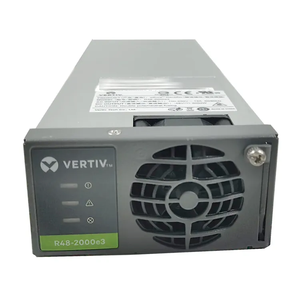
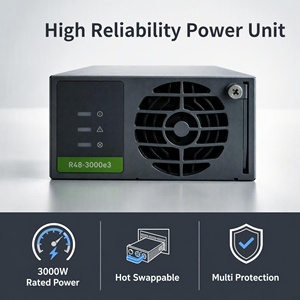
Modules such as the Vertiv R48-3000e3 and ZHIHENG R4850G incorporate internal active ORing MOSFETs and digital load-sharing logic. When installed in parallel inside subrack systems, modules balance output current evenly. If a single unit experiences a fault, it instantly decouples from the DC bus without voltage dip, allowing hot-swap replacement while the system remains online.
A standard industrial battery charger provides continuous, temperature-compensated charging current to maintain stationary battery banks. A DC-UPS system integrates dynamic charge management with ultra-fast solid-state transfer switching (<1ms). Upon AC mains failure, the DC-UPS directly connects the battery or supercapacitor bank to the 24V/48V control bus, maintaining PLC, drive memory, and sensor power uninterrupted for controlled system shutdown.
Industrial power supplies contain large electrolytic capacitor banks on their DC bus. Upon energization, these empty capacitors draw massive peak inrush currents (often 50A to 150A for milliseconds), causing nuisance tripping of upstream MCBs and degradation of relay contactors. Our ESB series inrush limiters use active electronic circuits to safely ramp charging current, allowing multiple power units to operate off a single circuit breaker.
Our manufacturing operations are certified to DIN EN ISO 9001:2015 for quality control and ISO 14001 for environmental management. Standard and OEM products are designed to meet UL 62368-1 (Information Technology and Audio/Video Equipment), UL 508 (Industrial Control Equipment), IEC/EN 61000-6-2/6-4 (EMC Immunity & Emissions), CE, RoHS 3, and REACH material compliance.
Custom modification of existing standard platforms (such as voltage adjustment, connector changes, or custom enclosure colors) typically carries minimal NRE fees with sample prototypes delivered within 4 to 6 weeks. Ground-up bespoke ODM developments involve detailed DFM reviews, thermal modeling, safety testing, and pre-compliance testing, with full prototyping completed in 12 to 16 weeks.
Whether you require a single high-efficiency telecom replacement rectifier module or are engineering a complete 100kW industrial automation power distribution architecture, our engineering team is equipped to deliver uncompromising reliability and optimized cost structures.
Contact our global application center today to request CAD models, sample units, or a comprehensive commercial RFQ for your upcoming project pipeline.
