
Explore high-efficiency telecom rectifiers, modular EV charging power blocks, electroplating power modules, and hot-swappable AC/DC power supplies built for continuous industrial duty cycles.
The global industrial power electronics market is undergoing a seismic structural transition driven by electrification, high-density data center expansion, wide-bandgap (WBG) semiconductors, and smart grid automation. AC/DC power supplies and switch-mode rectifiers (SMPS) are no longer isolated peripheral components; they serve as critical infrastructure nodes that directly dictate operational uptime, thermal dissipation overhead, total cost of ownership (TCO), and system-level energy compliance.
Modern power conversion platforms must contend with increasingly unpredictable grid quality, transient line surges, high Total Harmonic Distortion (THD) constraints under EN 61000-3-2 standards, and stringent safety directives including IEC/EN/UL 62368-1 and UL 61010-2-201. To achieve competitive technical advantage, enterprise procurement teams and electrical architecture leads must look beyond basic wattage ratings and evaluate manufacturers based on power density ($W/in^3$), advanced thermal derating resistance, active power factor correction (PFC), digital control telemetry (PMBus/CANbus), and modular N+1 redundancy options.
Key Engineering Insight: Transitioning from legacy silicon MOSFET topologies to Silicon Carbide (SiC) and Gallium Nitride (GaN) active switching components elevates peak system efficiency beyond 96.5%, while reducing physical enclosure footprints by up to 40%. OEMs specifying high-frequency switch-mode AC/DC power modules achieve substantial reduction in parasitic thermal loads and magnetics sizing.
An independent engineering evaluation of the world's leading AC/DC power supply manufacturers, analyzing technical core competencies, product scalability, certification rigor, and application adaptability.
Headquarters: Pfinztal, Germany | Specialization: Industrial DIN-Rail, Programmable Power, Wearless DC MOSFET Relays.
Camtec stands out as a high-end German manufacturer engineering robust switch-mode power supplies (10W to 100kW), DC-UPS buffering platforms, and ESB inrush current limiters. With 100% of fabrication and TÜV-audited testing conducted in-house, Camtec delivers unmatched reliability for rail infrastructure, automation handling, and extreme environment applications.
Headquarters: USA | Specialization: Telecom Rectifiers, Data Center Power Systems, High-Power DC Modules.
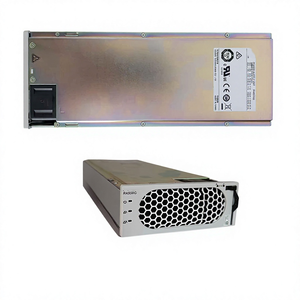
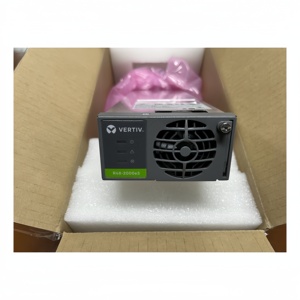
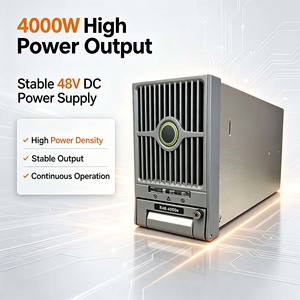
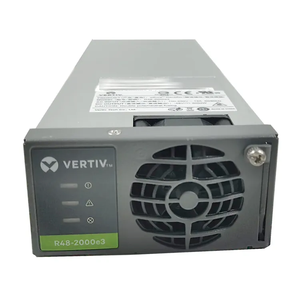
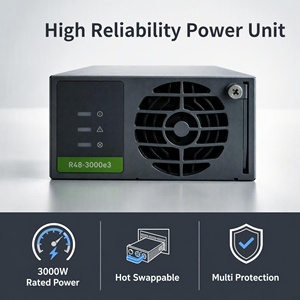
Vertiv dominates the critical telecommunication and data center infrastructure markets. Products like the Vertiv R48-3000e3 and R48-4000e rectifiers offer industry-standard 48V output with ultra-high power density, hot-swappable architectures, and advanced energy-saving operational modes designed for 24/7/365 continuous uptime.
Headquarters: Taiwan | Specialization: Standardized COTS Power Supplies, LED Drivers, Industrial Enclosed Units.
Mean Well leads the global standard commercial-off-the-shelf (COTS) market. Known for an extensive SKU catalog ranging from enclosed switching supplies to DIN-rail units, Mean Well delivers economical, broadly certified AC/DC solutions for general industrial automation and lighting applications.
Headquarters: Taiwan | Specialization: OEM/ODM Custom Power Converters, EV Fast Charging Rectifiers.
Delta is one of the largest power electronics OEMs globally, providing thermal management and high-efficiency AC/DC power conversion for automotive, telecommunications, and cloud computing. Their megawatt-scale charger power modules serve as prime components in fast EV charging infrastructure.
Headquarters: Japan / Global | Specialization: Programmable Test Power, Medical & Industrial AC/DC Modules.
TDK-Lambda excels in medical-grade power isolation, programmable laboratory power supplies (Genesys series), and ruggedized industrial power supplies. Their focus on high MTBF numbers and broad compliance certifications makes them a staple in laboratory test equipment and healthcare electronics.
Headquarters: Germany | Specialization: Control Cabinet Power Supplies, QUINT Power, Selective Circuit Protection.
Phoenix Contact delivers intelligent power solutions tailored specifically for cabinet automation. Their flagship QUINT POWER series features Dynamic Boost power reserves and SFB (Selective Fuse Breaking) technology to instantly trip downstream circuit breakers without dropping the 24V bus voltage.
Headquarters: Germany | Specialization: Integrated Automation Power, DC-UPS, Totally Integrated Automation (TIA).
Siemens SITOP power supplies are purpose-built to integrate directly into SIMATIC PLC setups and TIA Portal software frameworks. Offering complete system redundancy, diagnostics over PROFINET, and integrated DC-UPS units, Siemens is a mainstay in heavy manufacturing process lines.
Headquarters: Ireland / USA | Specialization: Enterprise UPS, APR48 Rectifier Modules, Energy Storage Conversion.
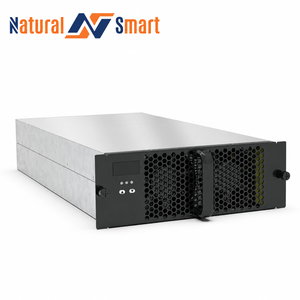
Eaton’s acquisition of telecommunication power lines (including legacy Access Solutions) established them as a key supplier of 48V enterprise power. Their APR48 modules are renowned for rapid thermal dissipation, long-term continuous duty, and high reliability in harsh environmental cabinets.
Headquarters: China | Specialization: Hot-Swappable Base Station Rectifiers, ETP48 Compatible Power Modules.
Zhiheng and specialized modular manufacturers produce high-density telecom rectifiers like the R4850G series. Providing direct plug-and-play compatibility with ETP48-200 frames, these suppliers deliver cost-effective 48V 50A rectifiers featuring silver contact hot-swappable connectivity for 5G micro sites and FTTH nodes.
Headquarters: Global Regional / China | Specialization: High-Current Electroplating Rectifiers, Bridge Diode Modules, Alternator Power Units.
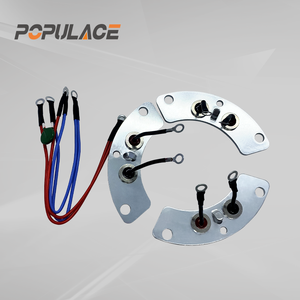
Specialized heavy industrial manufacturers like Populace supply high-current AC/DC rectifiers configured for surface finishing, electroplating tanks, and motor excitation systems. Products such as the T30 Alternator Rectifier Module feature high-surge diode bridges capable of withstanding harsh chemical environments and inductive back-EMF spikes.
When selecting an AC/DC manufacturing partner, procurement executives must balance raw component costs against long-term operational resilience. The table below outlines technical criteria across critical operating parameters.
| Manufacturer Tier | Primary Target Topology | Efficiency Range | Protection & Control Features | Optimal Industry Application |
|---|---|---|---|---|
| Camtec Power Supplies | 1PH/3PH DIN-Rail, Programmable, DC-UPS | 93.5% – 96.5% | ESB Inrush Limiting, Wearless MosFET, Coated PCBs | Rail, Automation, Heavy Machinery, Test Cells |
| Vertiv / Emerson | 19-Inch Hot-Swap Rack Rectifiers | 94.0% – 96.8% | Active PFC, CANbus Telemetry, Temperature Compensation | 5G Base Stations, Telecom Central Offices, Data Centers |
| Mean Well | Enclosed COTS, DIN-Rail, Open Frame | 88.0% – 94.5% | Standard OVP/OLP/OTP, Passive/Active PFC options | General Commercial Automation, Signage, Lighting |
| EV Power OEMs (20-40kW) | High-Voltage DC Fast Charging Rectifiers | 95.0% – 97.2% | Wide Output (150-1000V), SiC MOSFETs, Liquid/Air Cooling | Commercial DC Fast Chargers, Fleet Charging Hubs |
| Zhiheng / Telecom OEMs | Modular Hot-Swappable 48V Modules | 92.0% – 96.0% | N+1 Redundancy, Hot-plug silver contacts, ETP frame fit | FTTH Cabinets, Micro-cell Towers, Edge Compute |
As industrial automation shifts toward smart factories, Industry 4.0 connectivity, and localized micro-grids, purchasing engineers must account for five pivotal engineering trends when finalizing vendor supply agreements:
Silicon Carbide and Gallium Nitride power stages reduce switching losses by up to 60%, enabling higher switching frequencies (>200 kHz). This significantly shrinks passive magnetic components (transformers and chokes), yielding ultra-compact DIN-rail footprints.
Modern manufacturing plants are transitioning to direct DC bus backbones (450V–820V DC). Direct DC/DC and AC/DC hybrid converters eliminate unnecessary AC-to-DC conversion cycles, allowing solar PV and battery storage systems to power variable frequency drives (VFDs) directly.
Analog status relays are rapidly being replaced by IO-Link, PMBus, and CANbus digital interfaces. Real-time logging of internal operating temperature, input voltage ripple, output current degradation, and capacitor health enables predictive maintenance before system failures occur.
Large capacitive loads drawing massive initial switch-on inrush current cause nuisance tripping of upstream circuit breakers. Modern power architectures integrate active electronic inrush limiters (ESB series) to allow seamless startup of multi-axis drive systems without over-sizing line breakers.
In critical industrial applications—ranging from continuous automated manufacturing lines to remote telecom base stations and electroplating tanks—the failure of a $200 power module can cause tens of thousands of dollars per hour in production downtime. Evaluating power suppliers requires a thorough examination of manufacturing standards, thermal engineering, and quality control protocols.
Tier-1 industrial manufacturers maintain complete control over raw material sourcing, automated SMT component placement, robotic conformal coating, dynamic burn-in procedures, and automated optical inspections (AOI). TÜV-audited ISO 9001:2015 processes guarantee batch-to-batch repeatability and long-term part availability for OEM machine platforms.
Industrial power supplies destined for global deployment must hold full safety and electromagnetic compatibility (EMC) accreditations. Key baselines include UL/CSA 62368-1 for IT/telecom equipment, UL 61010-2-201 for industrial control panels, EN 55032 Class B for low EMI emissions, and compliance with EU RoHS/REACH environmental directives.
Standard off-the-shelf power supplies often fail to meet exact mechanical or electrical constraints. Leading suppliers offer technical modification services—including custom output voltage factory set-points, conformal PCB coating against humidity and dust, custom terminal blocks, and modified thermal derating profiles.
Whether you require custom output voltage profiles, wide-range telecom rectifiers, modular EV charger blocks, or high-current electroplating power modules, our application engineers provide complete technical consultation.
Inquire Now