Explore top-tier electroplating power modules, telecom base station rectifiers, EV charging converters, and continuous-duty AC/DC switch-mode power supplies built for mission-critical operations.
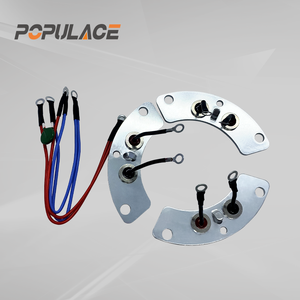
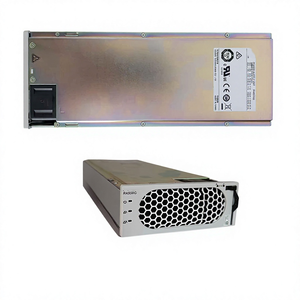
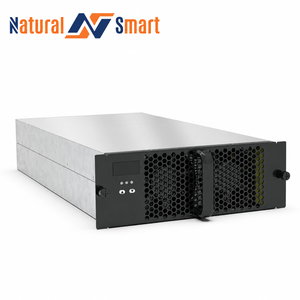
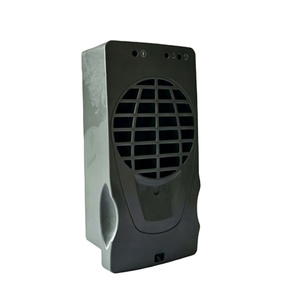
In modern industrial manufacturing, telecommunications networks, EV charging infrastructure, and high-density data centers, electrical power quality is directly linked to operational efficiency and equipment longevity. Unconditioned raw AC power from utility grids frequently contains harmful anomalies, including voltage sags, high-voltage spikes, frequency fluctuations, total harmonic distortion (THD), and electromagnetic interference (EMI). Left unmitigated, these power disturbances cause premature component fatigue, micro-controller latch-ups, processing errors, and catastrophic machine downtime.
Industrial power conditioners, AC/DC switch-mode rectifiers, and isolated DC power modules serve as the essential shield between unpredictable utility grids and sensitive industrial loads. By utilizing advanced active power factor correction (PFC), high-frequency pulse-width modulation (PWM), and zero-voltage soft switching topologies, modern power conditioning equipment delivers tightly regulated, low-noise DC output voltages essential for continuous 24/7 mission-critical applications.
Selecting an enterprise-grade power conditioning system requires a comprehensive evaluation of electrical parameters that affect system efficiency, thermal dissipation, and electrical noise rejection:
Modern switch-mode power rectifiers achieve power factors exceeding 0.99 across wide load ranges. This minimizes reactive power penalties from utility suppliers and optimizes thermal performance inside switchgear enclosures.
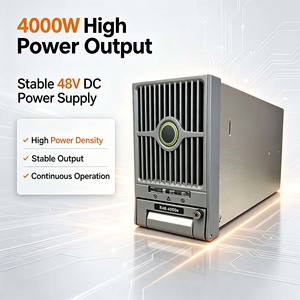
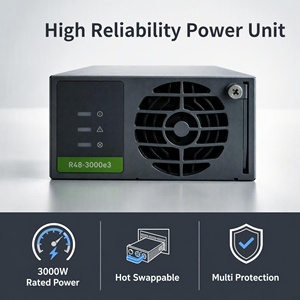
Hot-swappable 19-inch subrack modules (such as 48V/3000W telecom rectifiers) enable scalable power distribution. Built-in N+1 redundancy guarantees zero system downtime during live component maintenance.
Industrial isolation transformers and MOV surge suppression arrays shield sensitive microprocessors and Programmable Logic Controllers (PLCs) against grid transients up to 6kV (8/20 µs waveform).
An objective evaluation of global power conditioning leaders, high-voltage rectifier fabricators, and industrial power supply exporters serving international automation and energy infrastructure markets.
Core Focus: Industrial DIN-Rail, Programmable Power & ESB Inrush Limiters
Camtec is a premier German manufacturer engineering robust switch-mode power supplies, AC inrush current limiters (ESB series), DC-UPS systems, and wearless electronic DC MosFET relays. Operating from its TÜV-audited fabrication site in Pfinztal, Germany, Camtec specializes in ISO 9001:2015 certified units designed for extreme ambient temperatures (-40°C to +70°C) and heavy automation, railway, and energy applications.
Core Focus: Enterprise Power Conditioning & Data Center UPS Systems
Eaton is a global leader in power management solutions. Its industrial power conditioning lineup includes isolation transformers, line-interactive UPS platforms, and voltage regulators designed to suppress power transients across commercial, healthcare, and enterprise data center environments.
Core Focus: High-Power Rectifiers & Utility Power Quality Equipment
ABB provides industrial-scale power conditioning solutions, active voltage conditioners (AVC), and megawatt-class rectifiers for chemical electroplating, metal smelting, and heavy industrial automation. ABB equipment focuses on grid resilience and compliance with global grid codes.
Core Focus: Precision Power Filters & Voltage Regulators
Schneider Electric manufactures comprehensive power conditioning equipment, harmonic filters, and automated voltage regulators (AVR). Their system architecture integrates seamlessly with EcoStruxure IoT monitoring for facility-wide power tracking.
Core Focus: SITOP Power Supply Units & Industrial Conditioning
Siemens' SITOP power supply product line is widely adopted across factory automation platforms. Featuring tight line regulation, diagnostic interfaces, and buffer modules, Siemens offers robust power conditioning for continuous processing plants.
Core Focus: Telecom Rectifiers & High-Density Data Center Power
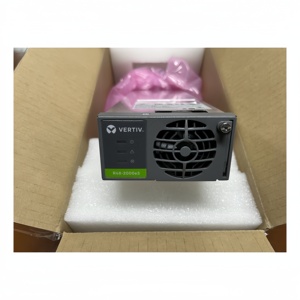
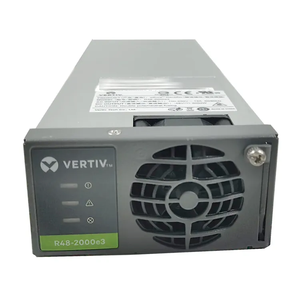
Vertiv (formerly Emerson Network Power) is globally recognized for high-efficiency switch-mode telecom rectifiers (such as the NetSure R48 series). Their 48V DC power systems offer peak efficiency, hot-swappable installation, and remote IP telemetry.
Core Focus: EV Charger Rectifiers & OEM Power Modules
Delta Electronics is one of the world's largest exporters of power switching supplies, DC fast-charging power modules, and custom electroplating converters, featuring high efficiency and compact form factors.
Core Focus: Commercial Line Conditioners & Rack Power
Tripp Lite specializes in line-interactive power conditioners, isolated transformer systems, and surge suppressors tailored for laboratory equipment, AV installations, and IT server racks.
Core Focus: Automatic Voltage Regulators (AVR) & Small UPS
CyberPower manufactures budget-friendly automatic voltage regulation units and power conditioning strips for edge compute nodes, telecom cabinets, and small office networks.
Core Focus: High-Precision Process Power & Semiconductor Converters
Advanced Energy designs ultra-precise power conditioning systems and DC converters tailored for semiconductor manufacturing, thin-film deposition, and medical diagnostic equipment.
A side-by-side engineering evaluation comparing traditional tap-changing transformers, ferroresonant regulators, active double-conversion systems, and modern high-frequency switch-mode rectifiers.
| Conditioning Topology | Response Time | Efficiency | THD Mitigation | Typical Applications |
|---|---|---|---|---|
| Solid-State Switch-Mode Rectifier | < 1 millisecond | 94.5% - 97.0% | Active PFC (< 3% THD) | Telecom base stations, EV DC chargers, electroplating, server infrastructure |
| Active Double Conversion (IGBT) | Zero transfer time | 91.0% - 94.5% | Full Isolation (< 2% THD) | Mission-critical data centers, semiconductor labs, healthcare imaging |
| Ferroresonant Transformer (CVT) | Half-cycle (8-10 ms) | 85.0% - 89.0% | Harmonic Attenuation | Heavy industrial automation, oil & gas refineries, high-noise environments |
| Servo-Motorized Voltage Regulator | 10 - 50 ms / Volt | 97.0% - 98.5% | Pass-through (No THD fix) | Whole-building mains stabilization, printing presses, textile factories |
| Electronic Inrush Limiter (ESB) | Instantaneous Active Control | > 99.2% | Inrush Peak Suppression | Transformer priming, heavy capacitive motor drives, machine building |
Key technological shifts reshaping the power electronics procurement landscape over the next decade.
Silicon Carbide (SiC) and Gallium Nitride (GaN) power switches are replacing traditional Silicon MOSFETs and IGBTs. WBG semiconductors allow switching frequencies up to 5x higher, reducing internal magnetic transformer sizing and elevating conversion efficiencies beyond 97.5%.
Modern industrial facilities are bypassing redundant AC-to-DC and DC-to-AC conversion steps by adopting localized 380V to 800V DC micro-grids. High-voltage DC/DC DIN-rail converters enable direct power coupling between solar PV arrays, battery storage, and variable frequency drives (VFDs).
Procurement teams are prioritizing intelligent power modules equipped with CANbus, RS485 Modbus, or SNMP interfaces. Live telemetry monitors electrolytic capacitor health, operating temperatures, and ripple voltages, transitioning facility maintenance from reactive to predictive failure prevention.
Engineering robust power electronics requires strict process control, raw component vetting, and relentless quality assurance. Our manufacturing and engineering philosophy guarantees zero-defect power solutions for critical equipment platforms.
Direct answers to essential technical queries regarding industrial power supply selection, harmonics, UPS buffering, and custom modifications.
Need assistance specifying high-reliability power rectifiers, DIN-rail power supplies, or inrush limiters for your machinery platform? Contact our engineering team for immediate technical support and volume pricing.
