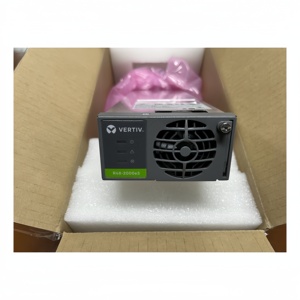
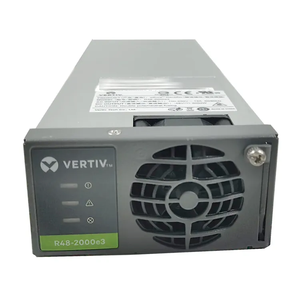
High-reliability, hot-swappable, and high-frequency power solutions engineered for telecom basestations, EV fast charging, electroplating, and critical industrial automation infrastructure.
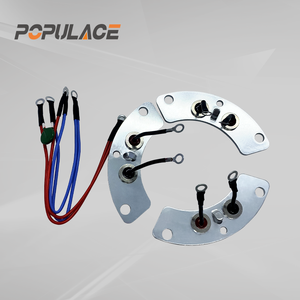
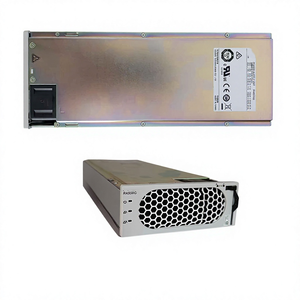
From component-level topology optimization to automated surface-mount technology (SMT) lines, China's power supply manufacturing ecosystem delivers unparalleled scalability, speed-to-market, and technical rigour.
Utilizing state-of-the-art LLC resonant converters, Active Power Factor Correction (PFC), and wide-bandgap (GaN/SiC) semiconductors to reach conversion efficiency ratings exceeding 96.5% under variable load profiles.
All power modules, chargers, and industrial rectifiers conform to global standard safety mandates including IEC/EN/UL 62368-1, CE, TUV, RoHS, and REACH, ensuring seamless market entry across North America, Europe, and Asia-Pacific.
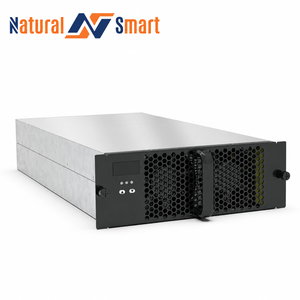
Designed for mission-critical infrastructure such as 5G telecom basestations and data center cabinets. Featuring N+1 or N+N redundant hot-swappable architecture for zero-downtime maintenance and rapid field replacement.
Engineered with forced air-cooling tunnels, aluminum heatsink extrusions, and optional conformal coating for long-term continuous operation under extreme temperature conditions (-40°C to +75°C derating).
As global demand for electrical energy conversion scales across telecommunications, electric vehicle (EV) charging infrastructure, automation, and renewable energy mini-grids, selecting the right China Power Adapter Supplier & Exporter has evolved from a simple unit-cost decision to a strategic engineering evaluation. Modern switch-mode power supplies (SMPS) and industrial rectifiers are expected to deliver higher power density (W/in³), superior thermal stability, and prolonged Mean Time Between Failures (MTBF) while operating in challenging environments.
The transition from traditional silicon MOSFETs to Wide-Bandgap (WBG) materials like Gallium Nitride (GaN) and Silicon Carbide (SiC) has transformed the power electronics landscape. High-power switching modules, such as 3kW telecom rectifiers and 20kW–40kW EV charging units, utilize bridgeless Totem-Pole PFC combined with isolated LLC resonant DC-DC converter stages.
Key technical benchmarks achieved in top-tier Chinese manufacturing facilities include:
When sourcing power conversion assemblies, OEM procurement managers and electrical systems architects must compare core operating specifications against application requirements. The matrix below outlines standard specifications across dominant application categories:
| Application Category | Nominal Output Voltage | Power Output Range | Peak Efficiency | Cooling / Form Factor | Key Standard Compliance |
|---|---|---|---|---|---|
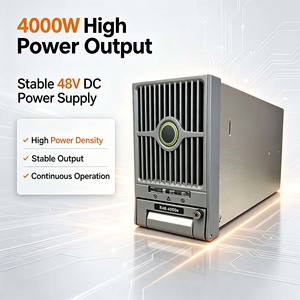
| Telecom Base Station (FTTH/5G) | 48V DC (-44V to -58V adjustable) | 1000W – 4000W per module | 96.0% – 97.5% | Forced Air / 1U-3U Hot-Swap Cassette | EN 300 132-2, IEC 62368-1, CE |
| EV DC Fast Charging Stations | 150V – 1000V DC wide range | 20kW / 30kW / 40kW modules | 95.5% – 96.8% | Smart Fan Speed Control / 3U Subrack | TUV CE, IEC 61851-23, EN 61000-6-4 |
| Industrial Electroplating / Anodizing | 12V / 24V / 220V DC high current | 5kW – 50kW industrial skid | 90.0% – 94.0% | Heavy-Duty Heatsink / Liquid Cooled Option | CE, ISO 9001:2015, IP54 enclosure |
| DIN-Rail Control Cabinet SMPS | 12V / 24V / 48V DC constant voltage | 10W – 2000W single/three phase | 89.0% – 95.0% | Natural Convection / Slim Metal Chassis | UL 508, CSA C22.2, EN 55032 Class B |
Reliability in field deployments stems directly from rigorous testing protocols during component qualification and batch assembly. World-class Chinese power supply exporters implement multi-stage quality gates:
A. Component-Level Stress Screening: High-grade electrolytic capacitors (rated for 105°C, 10,000-hour operational life), automotive-grade power MOSFETs, and ferrite cores undergo incoming quality control (IQC) using automated X-ray fluorescence (XRF) and parameter analyzers.
B. Automated Test Equipment (ATE): Every populated PCB assembly (PCBA) undergoes 100% automated optical inspection (AOI) followed by in-circuit testing (ICT) to check for solder bridging, part orientation, and passive values.
C. Environmental Stress Screening (ESS) & Full Burn-In: Completed power supply units are subjected to elevated temperature burn-in testing (e.g., 4 to 24 hours under 100% rated thermal and electrical load at 50°C) with continuous dynamic power cycling. This eliminates early-life component failures ("infant mortality") prior to packaging and ocean/air freight dispatch.
Navigating the evolving supply chain requires strategic foresight into technological shifts, smart grid integration, and sustainability regulations shaping power conversion manufacturing.
Chinese factories are rapidly scaling production lines dedicated to Silicon Carbide (SiC) modules for high-voltage DC systems. SiC enables thermal thresholds above 175°C and switching speeds that drastically reduce magnetics size, cutting overall power supply volume by up to 40%.
Analog feedback loops are increasingly replaced by high-speed Digital Signal Processors (DSPs). Modern rectifiers feature standardized PMBus or CAN bus protocols, empowering system operators to remotely monitor real-time output current, thermal telemetry, efficiency curves, and fault logs.
Next-generation EV power rectifiers are abandoning narrow voltage bands in favor of ultra-wide output ranges (150V to 1000V DC). This architecture accommodates both legacy 400V passenger vehicles and modern 800V/1000V commercial truck platforms without performance compromise.
In response to the EU's ErP Tier 2 guidelines and global ESG mandates, Chinese power adapter exporters are enforcing zero-lead soldering processes, recyclable structural aluminum designs, and high stand-by efficiency (<0.1W idle consumption).
Direct technical and commercial answers to clarify design modification, international shipping, quality assurance, and custom OEM requests.
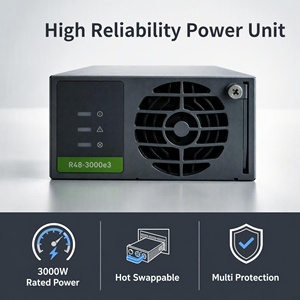
A: Standard telecom rectifiers (like 48V R48-3000e3 series) supply a fixed, tightly regulated constant DC voltage intended to charge lead-acid or lithium battery banks while feeding steady DC loads. EV charging power modules operate with broad constant-power curves across dynamic output voltages (150V–1000V DC) controlled in real-time via digital communications (CAN bus) according to the vehicle's Battery Management System (BMS).
A: Yes. Engineering teams routinely offer OEM/ODM modification services. This includes modifying PCB layouts for custom footprint requirements, adjusting output voltage trim ranges, adding conformal coatings for marine/humid environments, specifying custom terminal blocks, and burning tailored customer firmware for digital control interfaces.
A: Mean Time Between Failures (MTBF) is calculated using recognized industry standards such as Telcordia SR-332 Issue 4 or MIL-HDBK-217F at specified ambient temperatures (typically 25°C or 40°C). Values for top-grade modules routinely exceed 500,000 hours, supported by thermal imaging analysis and real-world Accelerated Life Testing (ALT).
A: For North America, UL/cUL certifications (e.g., UL 62368-1 for IT/Telecom, UL 508 for industrial control) are standard. For the European Union, CE marking backed by CB Scheme test reports covering Safety (EN 62368-1) and Electromagnetic Compatibility (EMC EN 55032 / EN 55035 / EN 61000 series) is mandatory, along with RoHS and REACH compliance documentation.
A: N+1 redundancy involves connecting an additional power module beyond the system's baseline power requirement. Internal active OR-ing MosFETs or diodes prevent a short-circuit failure in one module from pulling down the main DC bus bar. Hot-swappable backplanes allow technicians to pull out a failed unit and plug in a fresh replacement without interrupting power to critical equipment.
A: Standard prototype sample evaluation units are typically dispatched within 5 to 7 working days. Mass production batch orders range from 3 to 5 weeks depending on component lead times and custom tooling requirements. Express air cargo and sea freight logistics management are provided directly by export logistics specialists.
Need assistance matching part numbers, specifying custom DC bus voltages, or evaluating bulk factory pricing? Speak directly with our power supply application engineers today.
Get a Quote