Explore our certified range of MPPT and PWM charge management solutions designed for extreme operating conditions, maximum yield performance, and extended battery lifecycle protection.
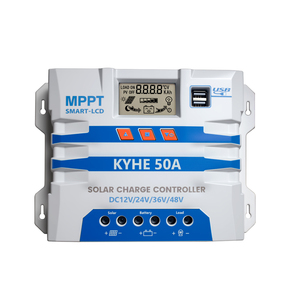
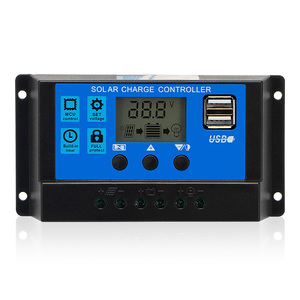
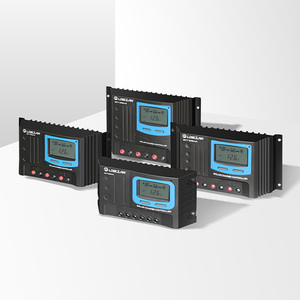
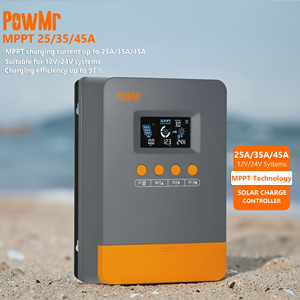
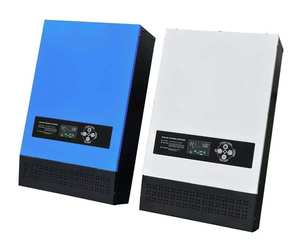
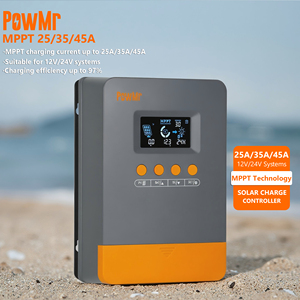
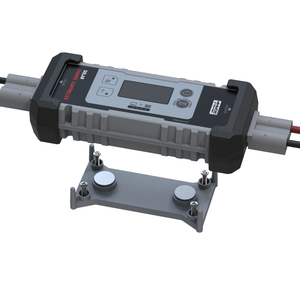
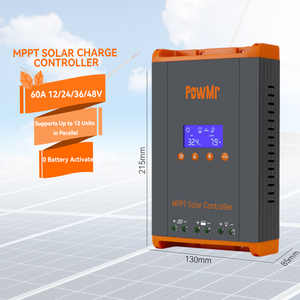
In off-grid photovoltaic (PV) power infrastructure, industrial automation, and microgrid applications, the solar charge controller serves as the vital power-conditioning hub. Positioned directly between the solar array and the battery energy storage system (BESS), the charge controller regulates incoming voltage and current, preventing catastrophic battery overcharging, deep discharge cycles, thermal runaway, and reverse current leakage during non-radiant periods.
As global decarbonization mandates accelerate demand for robust off-grid electrification, selecting top-tier, trusted charge controller manufacturers becomes a mission-critical procurement decision. A failure rate in power regulation electronics directly correlates to system downtime, premature battery degradation, expensive site interventions, and compromised Levelized Cost of Energy (LCOE).
Technical Information Gain Insight: Modern high-power MPPT charge controllers leverage ultra-fast multiphase synchronous rectification and advanced digital signal processing (DSP) algorithms. This enables maximum power tracking accuracy exceeding 99.5% even during rapid cloud transients, recovering up to 30% more power than conventional Pulse Width Modulation (PWM) top-end topology.
Understanding the fundamental power electronics distinguishing Maximum Power Point Tracking (MPPT) from Pulse Width Modulation (PWM) is vital for project procurement officers, system integrators, and EPC contractors:
1. Pulse Width Modulation (PWM) Topology: PWM controllers act as direct electronic switches between the PV array and the battery bank. When the switch closes, the solar panel array is pulled down to match the battery voltage. While highly cost-effective, compact, and reliable for small-scale applications (such as solar street lighting and low-power telemetry stations), PWM forces the PV module to operate below its natural maximum power voltage ($V_{mp}$), incurring power conversion losses when panel operating voltage significantly exceeds battery terminal voltage.
2. Maximum Power Point Tracking (MPPT) Topology: MPPT controllers integrate sophisticated DC-to-DC step-down converter stages controlled by high-frequency microprocessors. The controller continuously scans the P-V curve of the solar array to identify the exact operating point where Current ($I$) multiplied by Voltage ($V$) yields peak output wattage. By dynamically transforming high-voltage/low-current input into low-voltage/high-current charging output, MPPT units allow system designers to utilize high-voltage PV strings (up to 150V–500V DC input), dramatically reducing copper cable cross-sections and line transmission losses ($I^2R$).
Built on rigorous power electronics standards, our controllers integrate industrial-grade components designed for continuous 24/7/365 operational uptime.
High-speed digital signal processor monitors dynamic sunshine intensity changes in real-time, executing continuous P-V sweep scans within milliseconds to lock onto true peak power points under partial shading conditions.
Pre-programmed, customizable multi-stage charge profiles for Lithium Iron Phosphate ($\text{LiFePO}_4$), Ternary Lithium (NMC), Sealed Lead-Acid (AGM/Gel), and Flooded batteries with dedicated active BMS communications.
Comprehensive hardware protection suite: PV short-circuit, reverse polarity protection, TVS surge suppression, over-temperature power derating, and automated load disconnect safeguards.
As global energy storage deployments shift from small off-grid setups toward utility-scale microgrids, telecom power backhaul, and industrial automation networks, the procurement landscape for solar charge controllers is undergoing structural shifts. Procurement managers must evaluate future-proof features to avoid technological obsolescence.
Traditional off-grid architecture relied on 12V, 24V, or 48V DC battery banks. Modern industrial deployments are rapidly adopting high-voltage DC microgrid standards (450V to 820V DC). High-voltage array strings reduce copper requirements by up to 75% and eliminate bulky step-down transformers. Top manufacturers are pioneering wide-range input MPPT units capable of accepting PV string voltages up to 500V DC while efficiently stepping down to localized energy storage banks.
To scale system power without replacing existing balance-of-system (BOS) equipment, next-generation charge controllers feature high-speed CANbus or RS485 parallel communication channels. Units (such as our 60A–100A MPPT models) support up to 12 units operating in synchronized parallel clusters. Master-slave control loops distribute thermal load evenly across units, providing $N+1$ modular redundancy: if one unit requires servicing, the remaining array continues operation without system shutdown.
With Lithium Iron Phosphate ($\text{LiFePO}_4$) becoming the dominant energy storage chemistry, open-loop charging based solely on voltage thresholds is no longer sufficient. Modern charge controllers establish active RS485/CANbus communications with the Battery Management System (BMS). The BMS dynamically commands the controller's charge current based on real-time cell balancing status, internal state-of-charge (SoC), and temperature metrics, preventing cell overcharging and dramatically extending BESS warranty periods.
Industrial buyers increasingly demand cloud-connected power electronics. Integrated Modbus-RTU, Wi-Fi, 4G-LTE, and Bluetooth low-energy interfaces allow plant operators to monitor real-time yield, track historical generation curves, adjust charging parameters remotely, and receive automated fault notifications before system outages occur.
Select the appropriate topology based on array capacity, environmental conditions, and system integration complexity.
| Technical Parameter | Standard Industrial PWM | Commercial Compact MPPT | Heavy-Duty Parallelable MPPT |
|---|---|---|---|
| System Nominal Voltages | 12V / 24V Auto-Select | 12V / 24V / 48V Auto | 12V / 24V / 36V / 48V (Up to 150V PV) |
| Peak Tracking Efficiency | N/A (Direct Pulse Switching) | 98.2% | 99.5% (DSP Multiphase) |
| Max PV Input Voltage ($V_{oc}$) | 50V DC | 100V DC | 150V – 500V DC |
| Supported Battery Types | AGM, GEL, Flooded | AGM, GEL, Lithium ($\text{LiFePO}_4$) | Universal + Custom BMS CANbus |
| Communication Protocols | Dual USB (5V/2A) | RS485, LCD Display | MODBUS-RTU, CANbus, RS485, App |
| Parallel Scaling Capability | Standalone Only | Standalone / Dual Unit | Up to 12 Units Parallel (720A+) |
| Enclosure Protection Class | IP30 Indoor | IP32 / IP65 Waterproof Options | IP67 Heavy Industrial Waterproof |
| Target Application Scenario | Solar Lighting, Small RVs, Signage | Off-grid Residential, Telecom Nodes | Microgrids, Industrial Off-Grid BESS |
As an established international manufacturer and exporter, our production methodology follows strict ISO 9001:2015 quality management systems. Every charge controller undergoes comprehensive multi-stage validation prior to export delivery:
We provide end-to-end custom design modifications for global brand owners, EPC contractors, and equipment manufacturers:
Technical insights to help buyers select and specify solar charge controllers for commercial projects.
To size an MPPT controller, calculate the total PV array wattage and divide it by your nominal battery bank voltage to determine required charging current. Always ensure the solar array's maximum open-circuit voltage ($V_{oc}$), adjusted for the lowest expected ambient temperature, never exceeds the controller's maximum input voltage rating ($V_{in\_max}$).
Lead-acid and Lithium batteries exhibit temperature-dependent chemical reaction rates. External temperature sensors feed ambient battery data to the controller, which adjusts float and bulk voltage set-points. This prevents overcharging in hot environments and undercharging during cold periods, maximizing battery operating life.
Yes. Our entire MPPT and smart PWM product lines feature dedicated Lithium battery charge profiles, including low-temperature charge cutoff protection (to prevent plating metallic lithium below 0°C) and BMS activation pulses to wake up dormant BMS protection boards.
Units connected via CANbus/RS485 sync their internal clocks and state-machine logic. One master controller measures battery voltage and broadcast charging stages to slave units, ensuring all controllers transition through Bulk, Absorption, and Float phases simultaneously without fighting for voltage regulation.
Integrated solid-state reverse-current MosFET switches automatically isolate the solar array when PV input voltage drops below battery terminal voltage. This eliminates parasitic drain through the solar panels at night without incurring high forward voltage drops associated with traditional blocking diodes.
Standard product catalog samples ship within 3–5 business days. Commercial OEM/ODM orders typically require 15–25 days for production, burn-in testing, export palletization, and custom branding clearance. Contact our team to request custom schedule timelines.
Partner directly with an established, quality-certified solar charge controller manufacturer. Access comprehensive datasheets, engineering drawings, and OEM volume price lists instantly.
Get Catalog