Engineered for industrial automation, e-mobility, telecommunications, and heavy-duty embedded applications.
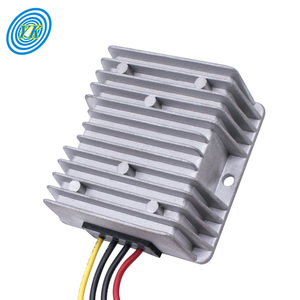
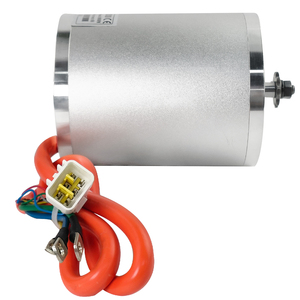
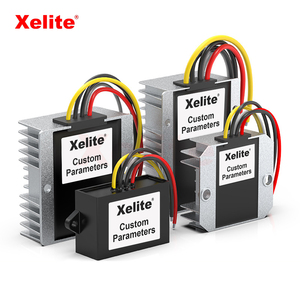
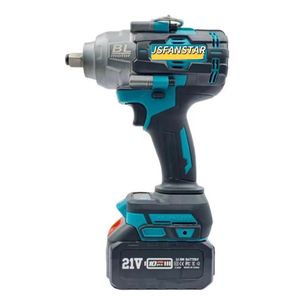
In modern industrial electronics, selecting a tier-one DC-DC converter factory and supplier is no longer just a purchasing decision—it is a critical system architecture parameter. High-density DC-DC conversion, precision voltage stabilization, and brushless DC (BLDC) motor drive units form the core powertrain of automated manufacturing equipment, smart microgrids, electric vehicles (EV), and telecommunication networks. Operating under wide input voltage fluctuations, severe thermal stress, and stringent electromagnetic compatibility (EMC) standards requires power components designed with rigorous engineering margins.
As global supply chains shift toward localized manufacturing resilience and high-efficiency power topologies, procurement leaders and OEM system architects must evaluate factories beyond surface-level pricing. A top-tier DC-DC manufacturer provides verifiable engineering depth, robust thermal management designs, complete component traceability, and long-term product availability guarantees.
This technical whitepaper examines the critical criteria for qualifying industrial power supply factories, explores technological evolution vectors in power electronics, provides actionable B2B procurement matrices, and addresses frequent technical challenges encountered by procurement officers and systems designers.
Inside our TÜV-inspected, ISO 9001:2015 certified manufacturing facilities.
Our high-speed Surface Mount Technology (SMT) lines utilize automated optical inspection (AOI) and 3D X-ray solder joint verification (AXI). PCBs destined for harsh outdoor, automotive, or marine environments undergo automated selective conformal coating to guard against humidity, airborne contaminants, and sulfurized air exposure.
Every single DC-DC unit, open-frame power board, and motor drive controller leaving our facility undergoes automated thermal stress testing. Units are subjected to 100% full-load dynamic burn-in cycles at elevated temperatures (+50°C to +70°C) to eliminate infant mortality failure modes prior to final packing.
Because engineering and production operate in unified facility hubs, we deliver fully customized output voltage profiles, specialized connector pinouts, planar transformer redesigns, and CANbus/PMBus digital telemetry integration tailored specifically to OEM platform specifications.
As enterprise OEMs transition into Industry 4.0 automation, electrification, and smart energy storage, B2B procurement strategies for power conversion hardware are undergoing fundamental transformations. B2B buyers must align their supply chain matrix with five major macro trends:
Traditional Silicon MOSFETs are reaching theoretical efficiency limits. Procurement specifications increasingly mandate Gallium Nitride (GaN) and Silicon Carbide (SiC) switching devices. Wide bandgap materials allow switching frequencies exceeding 500 kHz, drastically reducing inductive magnetics size and boosting efficiency past 96%.
Modern automated facilities are migrating from decentralized AC distribution to centralized 400V–800V DC bus networks. This shift eliminates multiple AC-to-DC conversion stages. Procurement departments are actively sourcing high-voltage DC-DC step-down converters capable of converting 450V–820V DC directly down to standard 24V/48V control rails.
To reduce single-point failure risks in 24/7 mission-critical operations, suppliers are required to offer modular N+1 ORing diode redundancy modules and hot-swappable 19-inch 3U rack units. This allows scaling system output power from 2 kW to 100 kW without complete electrical cabinet retrofits.
Analog-only power units are being rapidly displaced by digitally controlled power supplies. Integrated PMBus or CANopen communication interfaces transmit real-time thermal readings, output current ripple, and capacitor degradation markers to central PLCs, enabling predictive maintenance before catastrophic line downtime occurs.
Evaluating total cost of ownership (TCO) and engineering risk mitigation.
| Evaluation Parameter | Commodity Off-the-Shelf Suppliers | Certified OEM/ODM Factory Partner | Strategic Impact on OEM Operations |
|---|---|---|---|
| Conversion Efficiency | 82% – 88% (Silicon MOSFETs) | 94% – 97% (GaN/SiC Architecture) | Reduces cabinet heat output by up to 40%; eliminates auxiliary cooling fans. |
| Input Voltage Window | Narrow ±10% tolerances | Wide Input (e.g., 5V–120V or 450V–820V DC) | Prevents field burn-outs caused by voltage spikes or brownouts in weak grid environments. |
| MTBF & Lifespan | < 20,000 Hours (Standard caps) | > 50,000 to 100,000 Hours (105°C Long-life caps) | Dramatically lowers warranty claim costs and extends field service intervals. |
| Regulatory Approvals | Basic CE mark only | UL 62368-1, CSA, CE, RoHS, REACH, TÜV | Ensures seamless compliance clearance during international export audits. |
| Customization Agility | Fixed designs; Zero modifications | Custom V/I curves, Potting, Special Pinouts | Eliminates the need for external adapter boards or secondary regulation stages. |
How next-generation power topologies drive higher efficiency, power density, and acoustic performance.
Replacing traditional wire-wound transformers with multi-layer printed circuit board (PCB) planar magnetics allows dramatic reduction in height (down to 10mm low-profile designs). Planar magnetics offer exceptional thermal dissipation, uniform parasitic capacitance control, and automated repeatability during manufacturing.
Advanced soft-switching ZVS and Zero Current Switching (ZCS) resonant converter topologies minimize switching losses within high-frequency DC-DC converters. By eliminating hard-switching power loss spikes, power supplies achieve higher energy transfer density without thermal throttling.
Traditional mechanical switches in high-cycle DC motor circuits suffer from contact erosion and electrical arcing. The integration of solid-state wearless electronic DC MOSFET relays enables millions of switching cycles with zero maintenance, ideal for automated gate openers, robotics, and industrial actuators.
Essential answers for procurement officers, system integrators, and electrical design engineers.
