Engineered for extreme thermal resilience, continuous mission-critical duty, and maximum energy conversion efficiency across global industrial applications.
In the contemporary landscape of global electrification, telecommunications expansions, and heavy industrial automation, the role of high-voltage rectifiers and power modules has transitioned from passive utility components to strategic technology assets. Modern power conversion architectures are required to operate under extreme environmental stress, handle broad grid voltage variations, and deliver uncompromised power density while adhering to global regulatory frameworks such as UL, CSA, CE, RoHS, and REACH.
As a leading high-voltage factory and exporter operating under strict DIN EN ISO 9001:2015 quality management systems, our manufacturing facilities integrate end-to-end component engineering, high-frequency topology optimization, and automated stress testing. This whitepaper provides procurement executives, electrical engineering directors, and system integration specialists with deep technical insights into selecting, deploying, and maintaining high-voltage AC/DC rectifiers, telecom base station power modules, and electric vehicle (EV) DC fast-charging power conversion systems.
Every power module undergoes automated surface-mount technology (SMT) assembly, multi-stage AOI inspection, and 100% full-load thermal burn-in testing to guarantee zero-defect operational deployment.
Full adherence to TÜV, UL, CSA, and CE electrical safety specifications. Compliant with EU EuP Eco-Design requirements, RoHS material restrictions, and REACH chemical standards for international export.
Leveraging active Power Factor Correction (PFC > 0.99) and soft-switching resonant circuits (LLC/ZVS) to achieve power densities exceeding 45W/in³ with conversion efficiencies up to 96.8%.
Industrial power supplies operate under demanding electrical conditions where utility voltage surges, phase imbalances, and heavy inductive motor loads can induce significant electrical stress. Traditional line-frequency SCR (Silicon Controlled Rectifier) systems, while robust, suffer from low power factor, excessive physical bulk, and substantial harmonic distortion injected back into the AC grid.
Modern high-voltage exporter platforms utilize High-Frequency Switch-Mode Power Supply (SMPS) designs. By converting incoming AC power into a regulated high-voltage DC bus (typically 400V to 800V DC) prior to high-frequency isolation and secondary conversion, SMPS modules achieve superior dynamic response, sub-millisecond ripple suppression, and dramatically reduced magnetics footprints.
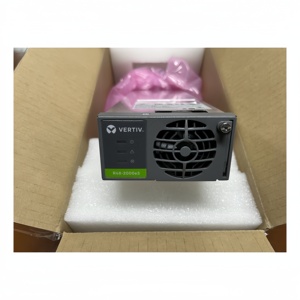
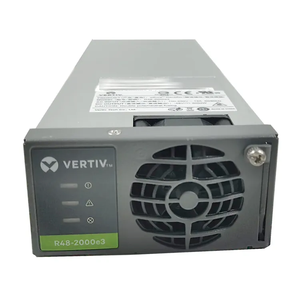
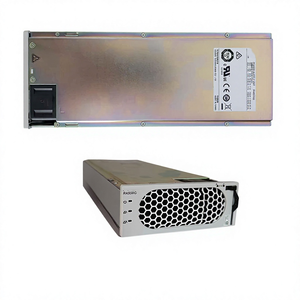
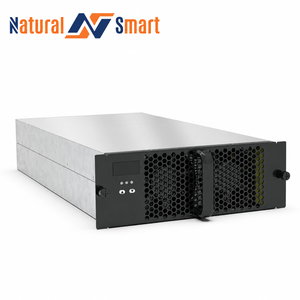
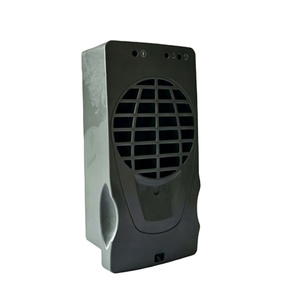
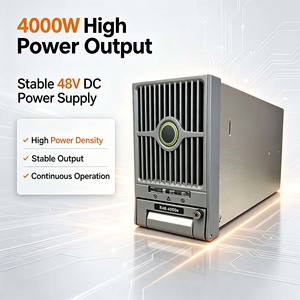
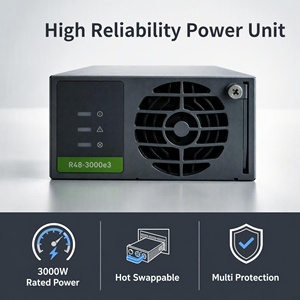
5G expansion, fiber-to-the-home (FTTH) rollouts, and edge computing nodes demand highly modular, hot-swappable 48V DC power solutions. Standard units such as the ZHIHENG R4850G series, Emerson Vertiv R48-2000e3, R48-3000e3, and R48-4000e represent the apex of standardized telecommunications power modules.
Electric vehicle charging infrastructure is rapidly evolving from 400V battery architectures to 800V and 1000V ultra-fast charging platforms. High-power AC/DC rectifier modules designed for EV fast chargers must deliver stable constant-current and constant-voltage (CC/CV) profiles across extremely broad output spectrums.
As demonstrated in our 20kW, 30kW, and 40kW EV Charging Power Modules, dual-stage topology featuring active PFC followed by an interleaved LLC resonant converter allows zero-voltage switching (ZVS) across the entire voltage range (150V to 1000V DC). This minimizes switching losses, drastically reduces electromagnetic interference (EMI), and allows high-temperature operation in dense outdoor charging kiosk cabinets.
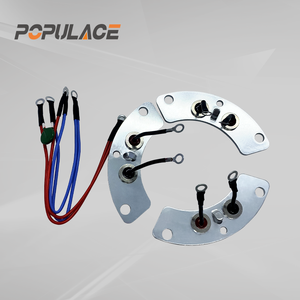
Industrial electroplating, anodizing, and heavy metal deposition require continuous high-current DC output with minimal AC ripple. High-voltage bridge rectifiers such as the POPULACE 220V T30 Alternator Module employ heavy-duty press-fit diode junctions mounted on high-thermal-conductivity copper substrates. This mechanical design mitigates thermal expansion fatigue caused by rapid current pulsing during electro-deposition cycles.
To assist procurement engineers and system architects in selecting the ideal high-voltage module, the matrix below details key electrical parameters, thermal dissipation methods, and target industrial deployments across our primary product families.
| Module Architecture | Nominal Output | Efficiency Peak | Input Voltage Range | Cooling Mechanism | Primary Application |
|---|---|---|---|---|---|
| POPULACE T30 Bridge | 220V DC / High Current | >94.0% | 180V – 260V AC | Conduction / External Sink | Electroplating, Heavy Motors |
| R4850G Telecom Module | 48V DC / 50A (2400W) | 96.5% | 85V – 300V AC Wide Range | Smart Forced Air Fan | 5G Telecom Towers, FTTH Nodes |
| 20kW–40kW EV Module | 150V – 1000V DC / 133A | 96.8% | 260V – 530V 3-Phase AC | Internal Dual Ball-Bearing Fan | DC Fast Chargers, Bus Depots |
| APR48 Heavy Duty | 48V DC Constant Voltage | >95.5% | 90V – 290V AC | Extruded Aluminum Heat Sink | 24/7 Long-Term Substation Power |
| Emerson R48-2000e3 | 48V DC / 2000W | 96.0% | 85V – 290V AC | Front-to-Back Airflow | Telecom Shelters, Remote Pop |
| R48-4000e High Power | 48V DC / 4000W | 96.2% | 176V – 290V AC (Full Power) | Variable Speed Dual Fan | Data Centers, Enterprise Switches |
| Vertiv R48-3000e3 | 48V DC / 3000W | 96.5% | 85V – 300V AC Wide Range | Self-Contained Smart Cooling | High-Density Network Cabinets |
Global procurement teams face increasing pressure to source components that not only satisfy immediate electrical requirements but also support long-term sustainability goals, supply chain resilience, and digital infrastructure integration. Over the next decade, three key technological transitions will redefine high-voltage power supply procurement:
The transition from traditional Silicon (Si) MOSFETs to Silicon Carbide (SiC) and Gallium Nitride (GaN) devices is revolutionizing power conversion efficiency. SiC MOSFETs allow higher breakdown voltages, faster switching frequencies, and significantly lower switching losses at high temperatures. In EV charging rectifiers and high-voltage DC/DC converters, SiC technology reduces volume by up to 40% while operating seamlessly in elevated ambient temperatures without thermal derating.
Industrial facilities are increasingly bypassing AC distribution in favor of localized High-Voltage DC microgrids fed by solar PV arrays, battery energy storage systems (BESS), and hydrogen fuel cells. Sourcing high-voltage rectifiers capable of direct DC-to-DC step-down conversion (e.g., 450V–820V DC input range down to 24V/48V control buses) eliminates intermediate inverter stages, boosting overall system efficiency by 6% to 10%.
Next-generation telecom rectifiers and EV power modules are no longer black-box components. Equipped with embedded microcontrollers, these units continuously monitor internal capacitor equivalent series resistance (ESR), fan RPM degradation, and thermal junction gradients. Early warning signals transmitted over CAN bus or SNMP protocols allow maintenance engineers to replace aging modules long before operational catastrophic failure occurs.
Sourcing high-voltage rectifiers directly from an established factory and exporter provides system integrators with direct engineering access, rigorous quality controls, and customized power profiles tailored to specific operating conditions:
Below are authoritative responses to the most frequently asked technical and commercial questions submitted by power system buyers, project managers, and electrical engineers.
Speak directly with our power application engineering team for technical evaluations, sample requests, and OEM volume quotes.