Technical Sourcing Directory & Industry Whitepaper

Top Trusted Inrush Limiter Factories & Exporters

Engineering-grade NTC Power Thermistors, Active Relay Bypass Limiters, and DIN-Rail Inrush Protection for Global Industrial OEMs

Product Directory

High-Performance Inrush Current Limiters

Explore top-tier power NTC thermistors and active DIN-rail limiters verified for switch-mode power supplies (SMPS), industrial drives, and appliance control units.
Xinshiheng MF52B Series NTC Thermistor Inrush Current Limiter

Xinshiheng MF52B Series NTC Thermistor Inrush Current Limiter

  • Resistance: 1Ω – 400Ω
  • Operating Temp: -50°C to +105°C
  • B-Value: 2200K – 4000K
  • High thermal response & stability
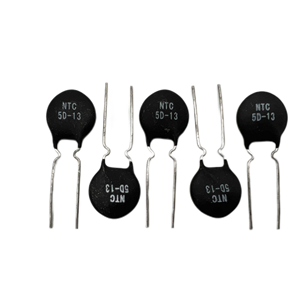
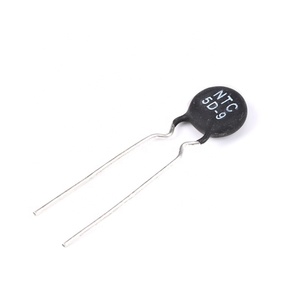
Inrush Current Limiting Limiter NTC Thermistor 5D-9

Inrush Current Limiter NTC Thermistor 5D-9 (5 Ohm, 3 Amp)

  • Zero Power Resistance: 5Ω
  • Max Steady Current: 3A
  • Disc Diameter: 9mm compact size
  • PCB Through-Hole Mounting
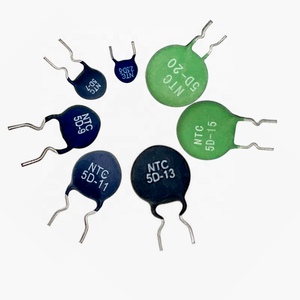
CDFL CDFL-5D-11 NTC Thermistor High Sensitivity

CDFL CDFL-5D-11 NTC High Sensitivity Inrush Limiter

  • Strong overload capability
  • High-sensitivity thermal ceramic
  • Engineered for Air Fryers & Outdoor Equipment
  • Enhanced mechanical endurance
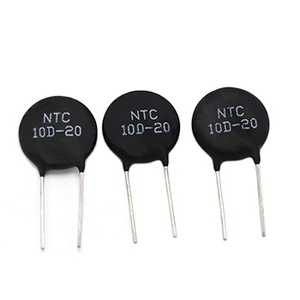
22D 9 Inrush Current Limiter NTC Thermistor

22D-9 Inrush Current Limiter NTC Thermistor for Electronics

  • Low residual resistance
  • High energy absorption rating
  • Designed for audio amplifiers & power supplies
  • Flame-retardant epoxy coating
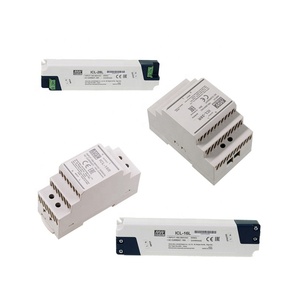
Meanwell ICL-28R 28A Din Rail Ac Inrush Current Limiter

Meanwell ICL-28R 28A DIN Rail AC Inrush Current Limiter

  • 28A continuous current handling
  • Integrated bypass relay (Active Suppression)
  • TS-35/7.5 or 15 DIN Rail Mountable
  • Over-temperature & circuit protection
Jeking 180 VAC to 264 VAC Screw Inrush Current Limiters

Jeking 180–264 VAC Screw Terminal 28A Inrush Limiter ICL-28R

  • Wide Input Voltage: 180–264 VAC
  • Heavy-duty screw terminal connection
  • Eliminates trip breaker nuisance triggering
  • Industrial automation standard enclosure
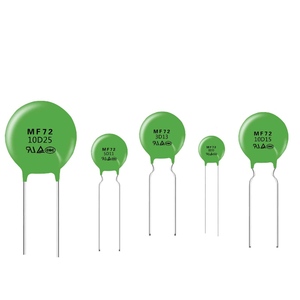
Inrush Current Limiter ICL SCK MF72 Power NTC Thermistor

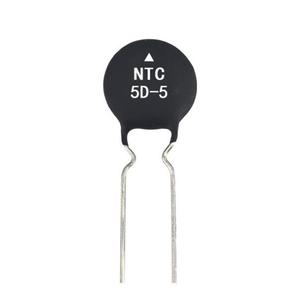
MF72 Power NTC Thermistor Series (5D-5, 8D-5, 10D-5, 16D-5)

  • Multi-specification radial lead series
  • Excellent surge current attenuation
  • Cost-effective power circuit protection
  • UL 1434 certified component
05D Series MF72 Inrush Current Limiter NTC Thermistor

05D Series MF72 High-Temp Inrush Limiter (-55°C to +200°C)

  • Ultra-wide rating: -55°C to +200°C
  • B-Value: 2800K nominal
  • Optimized for Energy Saving Lamps & Ballasts
  • Compact 5mm footprint
>95%
Inrush Spike Peak Reduction
100%
TÜV / ISO 9001 Process Audited
-55°C~+200°C
Thermal Endurance Range
3.6kW - 46kW
Active Industrial Power Handling
Technical Whitepaper

Engineering Guide: Inrush Current Mitigation & Selection Mechanics

A comprehensive analysis of transient electrical surges during cold-start powering of capacitive networks, transformers, and switch-mode power supplies.

1. Understanding the Physics of Inrush Current

When an AC or DC power line is energized, uncharged bulk filter capacitors, inductive transformers, and LED drivers present a near short-circuit impedance. This results in an immediate, destructive current spike—often 20 to 100 times the steady-state operating current—lasting for milliseconds.

Without adequate limiting devices, this transient rush causes false tripping of miniature circuit breakers (MCBs), contact erosion, rectifier diode failure, and severe EMI emissions that disrupt adjacent control microprocessors.

2. Negative Temperature Coefficient (NTC) Thermistors

NTC power thermistors rely on metal-oxide semiconductor ceramics (such as manganese, nickel, and copper oxides). At ambient temperature, the NTC exhibits high resistance (R25), effectively throttling the initial turn-on current spike.

As current flows through the NTC, self-heating causes its resistance to drop rapidly by orders of magnitude, allowing continuous load current to pass with minimal operational power loss. However, thermal reset delays (cooling period) must be factored into rapid power-cycling applications.

Comparative Matrix: Passive NTC Thermistors vs. Active Relay Bypass Limiters

Technical Parameter Passive Power NTC Thermistors Active Bypass Relay Limiters (e.g., ICL-28R / ESB)
Primary Mechanism Self-heating semiconductor ceramic resistance decay Fixed power resistor coupled with internal bypass contactor/relay
Cool-down / Reset Time 60s – 120s required for full thermal reset Instantaneous (< 100ms) re-arm capability
Continuous Power Efficiency Moderate (constant micro-power dissipation via heat) Ultra-High (~0W continuous dissipation across relay contacts)
Extreme Temp Operating Range -55°C to +200°C (wide component ceramic rating) -40°C to +70°C (enclosure & active electronics rating)
Ideal Applications Consumer electronics, air fryers, single SMPS units, LED drivers Industrial automation cabinets, multi-SMPS arrays, heavy motor drives
System Cost & Footprint Ultra-compact, low-cost component level Modular DIN-Rail enclosure, premium systems engineering unit
Market Vision 2025-2030

Future Procurement Trends in Surge Mitigation & Limiters

Strategic purchasing insights for electronic component procurement directors and OEM design engineers navigating next-generation energy standards.

GaN & SiC Power Supply Adoption

As Wide-Bandgap (WBG) semiconductors like Gallium Nitride (GaN) and Silicon Carbide (SiC) increase switching frequencies in industrial power supplies, input filter capacitance density rises. Sourcing teams are shifting toward high-joule rated limiters capable of handling tighter surge energy envelopes.

Zero-Crossing Switching Technology

Next-generation active DIN-rail limiters incorporate zero-crossing solid-state relays (SSRs). By triggering electrical activation precisely at the AC voltage zero-crossing point, voltage stress ($\Delta V/\Delta t$) is minimized, drastically extending power capacitor life.

Smart IoT Diagnostics & Thermal Telemetry

Industrial 4.0 factory automation calls for intelligent components. Premium exporters now offer limiters integrated with Modbus or IO-Link telemetry, delivering real-time thermal monitoring, fault logging, and predictive maintenance alerts before component burnout occurs.

Factory Expertise

Why Tier-1 Manufacturers & Distributers Partner With Us

Combining German engineering rigor with high-volume, certified export facilities to deliver unmatched component stability.

ISO 9001:2015 & TÜV Audited Quality

Every factory in our supply chain operates under certified DIN EN ISO 9001:2015 quality management systems. From raw material ceramic powder mixing (Manganese, Nickel, Cobalt oxide inspection) to automated lead-soldering, our automated production lines maintain strict tolerance controls ($C_{p}k > 1.67$).

  • 100% automated electrical parameter burn-in test
  • UL 1434, CSA, and CE mark compliance
  • RoHS & REACH heavy metal compliance certification

OEM Customization & Application Engineering

We do not just ship off-the-shelf components. Our power electronics engineering department offers custom-tailored solutions for complex project requirements:

  • Custom B-Value temperature coefficient formulation
  • Kinked or straight radial leads with custom cut lengths
  • Conformal-coated heavy-duty PCB assemblies for harsh outdoor environments
  • Pre-set bypass delay timing for active DIN rail limiters
Purchasing & Technical FAQ

Frequently Asked Questions by Industrial Sourcing Teams

Essential guidance on choosing the right inrush limiting topology, managing lead times, and ensuring regulatory compliance.

How do I accurately dimension an NTC inrush current limiter for a power supply?
To properly size an NTC thermistor, calculate three core parameters:
1. Zero-Power Resistance ($R_{25}$): Determined by the maximum allowable inrush current spike ($I_{peak} = V_{peak} / R_{25}$).
2. Maximum Steady-State Current ($I_{rms}$): Must exceed the maximum continuous operating current of the circuit to prevent thermal runaway.
3. Energy Capacitance Rating ($Joules$): The thermistor must safely absorb the energy stored in the power supply's bulk filter capacitors ($E = 0.5 \times C \times V_{peak}^2$) without cracking the ceramic disc.
Why should we select an active bypass relay limiter over a traditional NTC thermistor?
Active bypass limiters (such as the Meanwell ICL-28R or Camtec ESB series) use internal power resistors to limit inrush current and immediately bypass the resistor with a mechanical or semiconductor relay once the system energizes. This delivers two major engineering advantages: zero steady-state power loss (maximizing system efficiency) and immediate re-arm capacity for applications with frequent on/off power cycles where NTC thermistors cannot cool down in time.
What are the standard export lead times and MOQ for custom OEM limiters?
Standard NTC thermistors (MF72, MF52 series) maintain buffer stocks with a dispatch lead time of 3 to 7 business days. Custom OEM orders (tailored leads, specialized coating, custom thermal coefficients) typically require 2 to 4 weeks production time depending on volume. Minimum Order Quantities (MOQs) start as low as 1,000 units for standard components and 100 units for DIN-rail active limiters.
What safety certifications are available for international compliance auditing?
Our exported inrush current limiters carry full safety documentation required by international customs and compliance boards. This includes UL 1434 (Standard for Thermistor-Type Devices), CSA C22.2, CE compliance declarations, TUV Rhineland factory inspection certificates, and complete RoHS/REACH environmental compliance reports.
Can NTC thermistors be connected in series or parallel to increase ratings?
NTC thermistors can be safely operated in series to increase total resistance and surge voltage handling capability. However, connecting NTC thermistors in parallel is strictly discouraged. Because individual thermistors have minor resistance tolerances, the unit with the slightly lower resistance will draw more current, heat up faster, drop its resistance further, and take the vast majority of current, causing thermal failure.
How do environmental ambient temperatures affect NTC limiter selection?
NTC thermistor resistance decreases as temperature rises. In high-ambient environment applications (e.g., above 60°C inside sealed industrial power cabinets), the cold resistance ($R_{25}$) is reduced before turn-on, lowering its surge limiting capability. Our engineering team provides thermal derating curves to assist buyers in choosing higher $R_{25}$ ratings or active bypass limiters for severe thermal environments.

Request Factory-Direct Pricing & Technical Datasheets

Need custom samples, volume discounts, or engineer-to-engineer technical consultation? Connect with our global export team today.