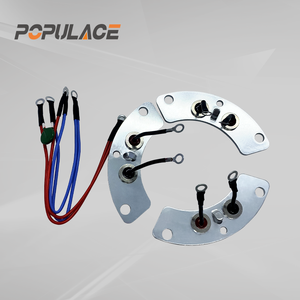
Explore our certified industrial rectifiers, linear conversion units, and DC power supply modules engineered for continuous, zero-downtime operation in critical environments.
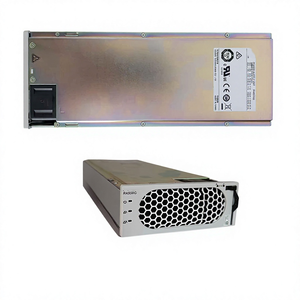
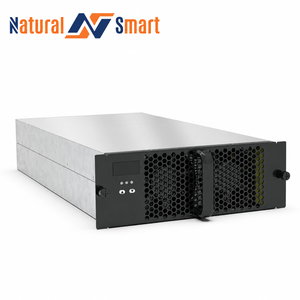
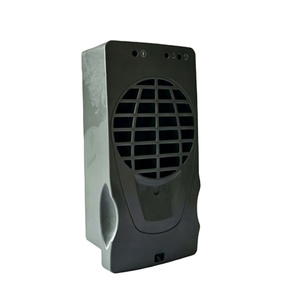
In high-precision laboratory environments, telecommunications backbones, medical diagnostic instruments, and automated manufacturing lines, raw electrical power quality directly dictates system longevity and measurement integrity. As a primary manufacturer and global supplier of industrial linear power supplies and high-reliability rectifier modules, our design methodology prioritizes fundamental electromagnetic compatibility (EMC), thermal equilibrium, and zero-compromise electrical insulation.
While modern switch-mode power supplies (SMPS) offer dense power profiles and high energy conversion efficiency, linear power supplies remain the absolute benchmark for ripple-free DC power. A linear power supply operates by dissipating excess voltage through a series-pass transistor operating in its linear region. This mechanism completely avoids high-frequency semiconductor switching noise, eliminating radio frequency interference (RFI) and electromagnetic interference (EMI) at the source.
When powering sensitive analog circuitry, audio processing units, high-resolution ADC converters, optical transceivers, and precision sensors, switching noise spikes can introduce signal artifacts, jitter, and measurement drift. Our engineered linear power architectures deliver sub-millivolt output ripple (<1mV RMS) and exceptionally fast transient response times (<50 microseconds), instantly dampening load spikes without voltage overshoot or ringing.
Because linear voltage regulation converts differential headroom voltage directly into thermal energy, cooling architecture dictates system reliability. Our fabrication facility utilizes advanced thermal modeling to optimize extrusion heatsink profiles, heat-pipe distribution manifolds, and forced-air cooling tunnels.
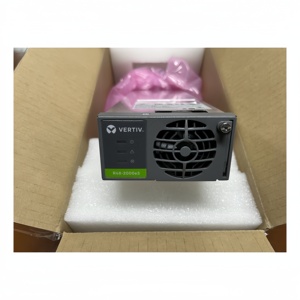
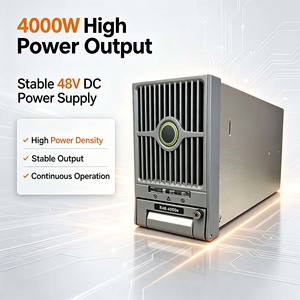
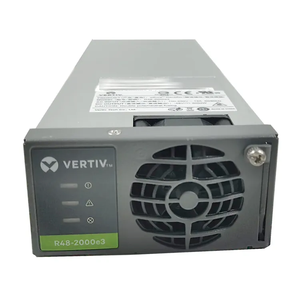
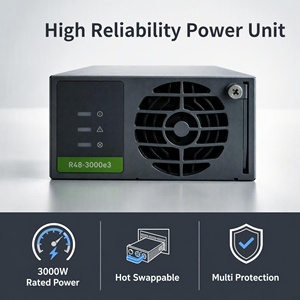
For telecom infrastructure, electroplating systems, EV charging networks, and industrial DC mini-grids, linear regulation is paired alongside high-frequency power factor corrected (PFC) rectifier stages. Our modular systems—such as the 48V telecom rectifiers and high-power 20kW-40kW EV charger modules—utilize dynamic DSP control, active current sharing, and hot-swappable shelf architectures to combine high efficiency (>96%) with exceptional DC output stability.
From initial topology simulation to automated SMD placement, 100% full-load burn-in testing, and certified safety compliance, our facility provides total end-to-end quality assurance.
Every power supply is designed, manufactured, and tested in strict compliance with ISO 9001:2015 standards. Component traceability is maintained across 100% of production lots.
All standard product families comply with worldwide safety directives including UL 62368-1, CSA C22.2, CE, RoHS, and REACH environmental standards for direct global export.
Our in-house R&D engineering team designs custom output voltage rails, modified form factors, special mechanical enclosures, and customized firmware parameters for specialized equipment platforms.
Before leaving the factory floor, every power unit undergoes thermal cycle aging and full dynamic load burn-in testing to eliminate infant mortality risks.
Compare the electrical characteristics of our linear regulated supplies against high-frequency switching rectifiers and hybrid power conversion systems.
| Electrical Parameter | Precision Linear Power Supplies | High-Frequency Telecom Rectifiers | DC EV Charging Power Modules |
|---|---|---|---|
| Primary Topology | Series-Pass Transistor / Linear Regulation | Active PFC + High-Frequency Switch-Mode | Three-Phase Resonant Soft-Switching (LLC) |
| Output Ripple & Noise | Ultra-Low (< 1 mV RMS) | Standard Industrial (< 200 mV p-p) | Controlled DC Ripple (< 0.5% Vout) |
| Transient Recovery Time | < 50 µs (Instantaneous Step Response) | < 200 µs | < 10 ms Load Step Response |
| EMI / RFI Radiation | Zero Internal Switching Radiation | EN 55032 Class B Compliant Filtered | Class A Industrial Conducted Noise |
| Typical Conversion Efficiency | 45% – 70% (Heat Sink Dissipated) | 95% – 97.5% Ultra-High Efficiency | 96.5% Peak Efficiency |
| Target Applications | Sensory Systems, Medical, RF Labs, Audio | 5G Telecom Base Stations, FTTH, Datacenters | Fast DC EV Infrastructure, Battery Charging |
Strategic procurement directors and system architects are evaluating power infrastructure investments based on long-term scalability, carbon footprint reduction, and smart digital integration.
The integration of Silicon Carbide (SiC) MOSFETs and Gallium Nitride (GaN) semiconductors into front-end power factor correction stages allows manufacturers to minimize magnetic transformer sizing while feeding ultra-stable linear output stages, yielding higher overall system density without compromising noise floors.
Modern automated plants are transitioning from localized AC-to-DC conversion toward centralized 450V–820V DC micro-grids. Power supplies with direct high-voltage DC input capabilities eliminate intermediate inversion losses, boosting total factory power efficiency by up to 12%.
Next-generation industrial rectifiers and power modules feature onboard microcontrollers outputting real-time telemetry over Modbus, PMBus, or CAN-Bus. System operators can remotely monitor capacitor thermal wear, ripple degradation, and load imbalance before physical failures occur.
Common technical inquiries answered by our senior power engineering and procurement team.
Linear power supplies regulate DC voltage using continuous series-pass regulation without high-frequency switching transistor oscillation. This results in virtually zero electrical switching noise, sub-millivolt ripple, zero electromagnetic interference (EMI), and instantaneous transient response. They are mandatory for high-precision instrumentation, medical diagnostics, low-noise audio, and sensitive RF receivers.
We utilize heavy aluminium extrusion heat sinks, high-thermal-conductivity interfaces, and conservative component derating guidelines (typically running components at under 60% of maximum voltage and thermal limits). Additionally, thermal shutdown sensors and premium 105°C-rated long-life capacitors ensure reliable continuous operation even in ambient cabinet temperatures reaching 60°C to 70°C.
Yes. Our telecom rectifiers and high-power DC modules feature built-in active current sharing circuits and internal decoupling MOSFETs/diodes. This allows multiple modules to be wired in parallel for scalable load current or N+1 fault-tolerant redundancy, enabling hot-swappable replacement without interrupting critical load power.
As a direct manufacturer, we offer full custom voltage output tailoring, specialized terminal connector blocks, custom mounting chassis (DIN-Rail, open frame, rack-mount), conformal PCB tropicalization coatings, and adjusted current-limit trip profiles. OEM projects undergo full engineering specification reviews with direct prototyping lead times.
Every shipment can be supplied with complete documentation packs including Certificates of Conformance (CoC), ISO 9001 inspection sheets, UL/CSA safety test reports, CE declarations, RoHS compliance statements, REACH material declarations, and individual unit burn-in inspection certificates upon request.
Consult with our senior application engineering team for customized voltage topologies, volume OEM pricing, and datasheet reviews.