Hot-swappable telecom rectifiers, high-voltage EV power modules, and precision plating bridge rectifiers built for continuous operating environments across Germany.
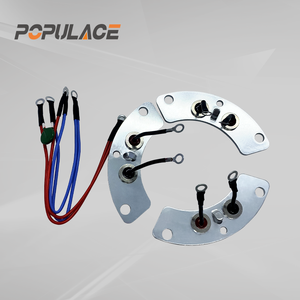
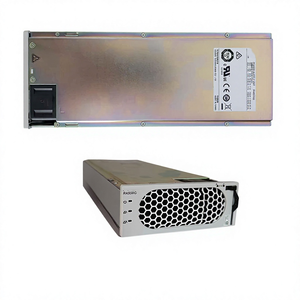
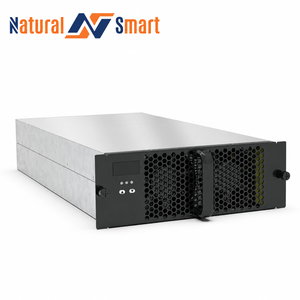
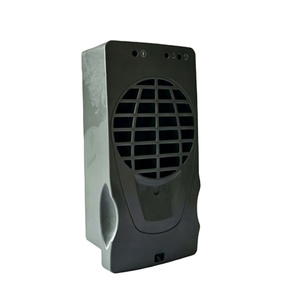
As the Berlin-Brandenburg metropolitan region evolves into a primary European hub for electromobility, data center expansion, and advanced industrial automation (exemplified by technology clusters such as Berlin-Adlershof and Siemensstadt 2.0), the requirement for ultra-reliable, high-efficiency DC power conversion has never been more critical. Modern industrial battery charging systems have shifted away from legacy phase-controlled SCR rectifiers toward high-frequency switch-mode power topologies utilizing Silicon Carbide (SiC) and Gallium Nitride (GaN) switching devices.
Industrial battery chargers engineered for the Berlin market operate as multi-stage, micro-processor controlled energy conversion units. Whether managing Lithium-Iron-Phosphate (LiFePO4), Nickel-Cadmium (NiCd), or Valve-Regulated Lead-Acid (VRLA) chemistries, continuous voltage adjustments based on real-time thermal monitoring prevent outgassing, thermal runaway, and premature plate degradation. Integrated CAN bus and RS485 MODBUS interfaces allow seamless telemetry integration into centralized Supervisory Control and Data Acquisition (SCADA) networks managed by local facility engineering teams.
| Electrical Parameter | Telecom & Data Center Specification | EV DC Charging Specification | Industrial DC-UPS Specification |
|---|---|---|---|
| Nominal DC Voltage | 48V DC (42.0V – 58.0V Adjustable) | 150V – 1000V DC Dynamic Range | 12V / 24V / 48V / 110V / 220V DC |
| Output Current Range | 50A to 3000A (Parallel Scalable) | Up to 133A per Module (Parallelable) | 10A to 400A Continuous |
| Power Factor (PFC) | > 0.99 at 50-100% Load | > 0.99 at 20-100% Load | > 0.98 Active PFC |
| Cooling Topology | Forced Air / Variable Speed Fan | Liquid Cooling / Smart Air Channel | Convection / Intelligent Forced Air |
| Operating Temperature | -40°C to +75°C (Derating above 55°C) | -30°C to +65°C Continuous | -25°C to +70°C DIN-Rail Mount |
| Safety & EMC Standards | EN 62368-1, EN 55032 Class B | CE, TÜV, IEC/EN 61851-23 | UL 61010-2-201, CSA C22.2, VDE |
Combining German precision engineering with certified quality control to deliver fail-safe power modules for critical applications.
Every rectifying unit and battery charging system undergoes rigorous multi-stage burn-in tests under full thermal and electrical stress. Manufactured under strict quality frameworks inspected by TÜV auditors, guaranteeing long-term traceabilty and component integrity.
Eliminate single-point-of-failure risks in mission-critical environments. Our 48V telecom rectifiers and high-power DC charging modules feature N+1 or N+2 redundancy capability, permitting live module replacement without dropping cabinet output power.
Standard product modules are pre-certified with CE, UL, CSA, RoHS, and REACH documentation. Full conformity declarations facilitate rapid CE marking for OEM machine builders targeting domestic sales in Germany or global export markets.
Direct communication with our application engineering team allows customized output voltage curves, tailored thermal derating profiles, conformal PCB coating for harsh industrial atmospheres, and customized physical connector configurations.
Tailored power topologies fulfilling specific regulatory and environmental requirements in Berlin's high-density infrastructure hubs.
Berlin’s aggressive municipal mandate to transition public bus fleets (BVG) and commercial logistics vehicles to 100% zero-emission electric drive systems requires heavy-duty DC fast-charging infrastructure. Our 20kW to 40kW AC/DC charging rectifier modules (150V–1000V output range) serve as the building blocks for multi-dispenser depot charging systems in areas like Berlin-Spandau and Neukölln. Ultra-wide output voltage ranges allow seamless charging across diverse fleet voltages, from light commercial vehicles up to 800V heavy transit buses.
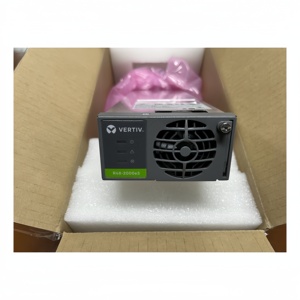
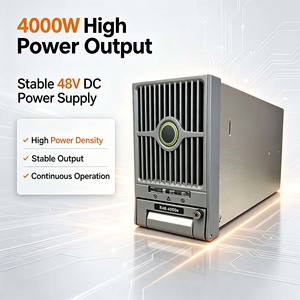
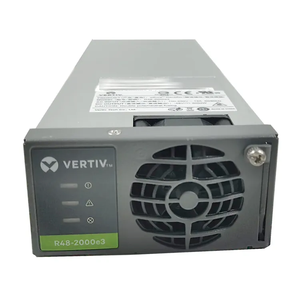
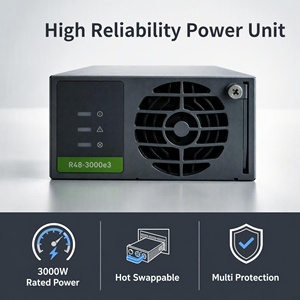
With Berlin acting as a critical internet exchange bridge between Western and Eastern Europe, Hyperscale and Edge data centers located around the Tempelhof and Berlin-Brandenburg region depend on uninterrupted 48V DC power. Hot-swappable telecom rectifiers such as the Vertiv R48-3000e3 and ZHIHENG R4850G series deliver up to 96.8% efficiency, dramatically reducing Power Usage Effectiveness (PUE) metrics and cooling demands while providing failure-proof DC back-up to FTTH networks and 5G base stations.
Automation lines, semiconductor equipment, and optical manufacturing systems in Berlin’s premier technology parks require clean DC voltage devoid of micro-interruptions. DIN-rail mountable DC-UPS units paired with constant-voltage rectifiers like the APR48 maintain critical PLC control states, sensor buses, and robotic actuators during transient line voltage sags on the municipal 400V 3-phase grid, preventing costly automated assembly line halts.
In accordance with Germany’s national Energiewende policies and local Berlin sustainability guidelines, industrial facilities are increasingly deploying rooftop solar PV coupled with Battery Energy Storage Systems (BESS). Traditional AC distribution introduces multiple conversion losses (DC to AC to DC). Localized industrial DC mini-grids operating at 450V–820V DC allow direct power coupling from solar/storage to variable-frequency drives (VFDs) and machine control supplies. Our DC/DC power converters and battery chargers are engineered specifically to interface cleanly with these next-generation industrial micro-grids.
As space in central Berlin comes at a high premium, EV charging site operators are transitioning from bulky standalone chargers to modular power cabinets housed in remote utility rooms. By leveraging 20kW to 40kW high-density rectifiers, system integrators can stack up to 12 modules in a single 19-inch rack frame, delivering up to 480kW of dynamic charging capacity for urban EV hubs near Berlin Hauptbahnhof, BER Airport, and major highway corridors (A10 / A100 Autobahn).
Modern battery chargers deployed in Berlin are no longer isolated energy devices. Under VDE-AR-N 4110 digital connectivity standards, chargers must respond dynamically to grid-operator signals. Integrated CAN-Bus, Modbus TCP, and SNMP interfaces allow remote automated curtailment, dynamic peak-shaving, and real-time battery health diagnostic reports accessible by facility managers via centralized IoT dashboards.
Clear answers regarding local technical compliance, delivery logistics, and system integration for engineers and purchasing managers in Berlin-Brandenburg.
Whether you require a single high-efficiency replacement rectifier module, a 40kW EV charging power unit, or a complete custom DC-UPS battery charging system for your Berlin production site, our technical sales engineers are ready to assist.
Contact Us