Engineered for extreme reliability, high continuous discharge rates, and total compliance with European electrical safety standards.
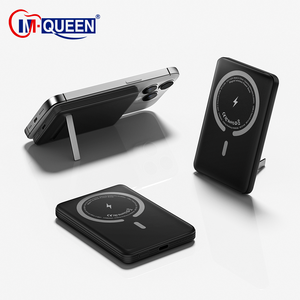
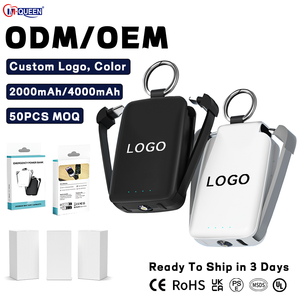
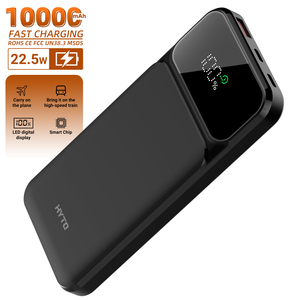
As France accelerates its transition toward green mobility, industrial decarbonization, and agricultural automation under the framework of the France 2030 Investment Plan and the EU Battery Regulation (EU) 2023/1542, industrial buyers and original equipment manufacturers (OEMs) demand unprecedented levels of safety, supply chain transparency, and energy density. Finding a reliable custom battery pack manufacturer capable of catering to strict French statutory requirements is critical for corporate risk management and market competitiveness.
Our manufacturing matrix combines state-of-the-art automated cell matching, advanced Battery Management System (BMS) software architecture, and rigorous quality control protocols. From high-capacity 18650/21700 lithium-ion cylindrical assemblies to ultra-durable Lithium Iron Phosphate (LiFePO4) traction battery modules, we engineering solutions tailored specifically for deployment across metropolitan France and overseas territories (DOM-TOM).
Under EU 2023/1542 regulations enforced in France, industrial and EV batteries placed on the market require comprehensive carbon footprint reporting, recycled content verification, and digital Battery Passport compliance. Our factory provides full upstream material traceability, verified ISO 14001 environmental data, and certified supply chain compliance to simplify French customs clearance and regulatory audits.
Selecting the correct electrochemical architecture is the cornerstone of successful equipment design. We utilize tier-1 A-grade cells (including Samsung SDI, LG Energy Solution, CATL, and EVE) integrated with proprietary smart BMS boards supporting CANbus, Modbus, and SMBus communication protocols.
| Chemistry Type | Nominal Voltage | Cycle Life (80% DoD) | Operating Temp (Discharge) | Primary French Target Applications |
|---|---|---|---|---|
| LiFePO4 (LFP) | 3.2V / Cell (36V-96V Packs) | 3,500 – 6,000 Cycles | -20°C to +65°C | Golf carts, industrial AGVs, micro-grids, solar energy storage systems in Southern France. |
| NMC (Nickel Manganese Cobalt) | 3.6V / Cell (12V-72V Packs) | 1,000 – 2,000 Cycles | -20°C to +60°C | Electric mobility, high-energy portable power stations, industrial power tools. |
| Li-Polymer (LiPo) | 3.7V / Cell (22.2V Drones) | 500 – 800 Cycles | -10°C to +50°C | Smart agricultural spraying drones (Beauce / Rhône Valley), light aviation robotics. |
Our custom battery pack engineering addresses unique local environmental, structural, and regulatory requirements across diverse French industries:
Combining German-inspired manufacturing discipline with flexible global production scale.
Every battery pack undergoes automated cell voltage sorting, micro-resistance grading, computerized ultrasonic ribbon bonding, and 100% full-cycle burn-in test before leaving the facility.
Integrated micro-controller BMS systems featuring over-charge, over-discharge, short-circuit, active cell balancing, and temperature-activated thermal cut-offs to maximize pack longevity.
Comprehensive technical dossier support: CE declarations, RoHS material certificates, REACH chemical compliance, UN 38.3 dangerous goods transport safety test reports, and IEC 62133 safety certification.
Direct technical and logistical answers to streamline your B2B sourcing process.
All lithium batteries are classified as Class 9 dangerous goods (UN3480 / UN3481). We provide complete Dangerous Goods (DG) packing, certified UN-rated cartons, MSDS documentation, and sea/air transport approvals. We deliver DDP (Delivered Duty Paid) to key logistics hubs including Paris CDG, Le Havre, Marseille, and Lyon.
We work closely with French importers and distributors to support compliance with local eco-organizations such as Corepile and Screlec. Our battery packs are designed for modular disassembly to comply with European circular economy and WEEE recycling mandates.
Yes. Our in-house firmware and hardware engineers can program custom SoC (State of Charge) algorithms, charge/discharge current limits, and enable RS485, CANbus 2.0B, or Bluetooth communication interfaces compatible with Schneider Electric, Siemens, or custom French machine controllers.
Standard prototype samples are delivered within 10–15 business days following technical specification approval. Mass production lead times typically range from 25 to 35 days depending on cell availability and enclosure customization. Flexible MOQs are available for industrial OEM trials.
Speak directly with our battery design engineers to review your electrical parameters, mechanical envelope, and target compliance requirements.
