Engineered to meet rigorous CE, TÜV, and DIN EN specifications with fully potted encapsulation for superior protection against environmental moisture, industrial dust, and thermal stress.
As the primary economic hub bridging Europe and Asia, Istanbul represents one of the most technologically demanding industrial environments in the Mediterranean and Black Sea regions. From the massive automotive assembly lines and metallurgical treatment facilities in the Gebze Organized Industrial Zone (GOSB) and Tuzla Industrial Zone to the dense marine logistics hubs along the Marmara coastline and Dilovası chemical cluster, power electronics must withstand exceptionally challenging operating conditions. Unprotected power supplies deployed across these zones frequently suffer early component degradation due to atmospheric humidity, conductive chemical particulates, airborne saline dust from the Bosphorus, and severe voltage fluctuations present on heavy-industrial mains grids.
To guarantee uninterrupted operation across critical automation systems, 5G telecommunication networks, electric vehicle (EV) charging stations, and galvanizing plants, modern system integrators are shifting away from traditional open-frame and standard conformal-coated power modules. Fully encapsulated (potted) power supplies—engineered with thermally conductive epoxy or silicone resins—have emerged as the gold standard for long-term operational integrity.
“In severe coastal industrial zones like Dilovası and Tuzla, atmospheric sulfur, salt mist, and ambient humidity rapidly degrade conventional PCB traces. Thermally optimized, CE-certified resin encapsulation isolates 100% of sensitive power semiconductor circuits, extending operational life expectancy beyond 10 to 15 years under continuous full-load operation.”
Electrical engineers operating in Istanbul and the broader Marmara industrial belt regularly encounter power quality phenomena defined by rapid load switching, high-frequency harmonic distortion, and nominal AC line transients. Standard European EN 50160 grid standards are often pushed to their limits when massive arc furnaces, heavy stamping presses, and high-power electroplating rectifiers operate simultaneously on shared regional substations. Encapsulated power solutions designed for export to Turkey must incorporate wide AC input windows (typically 85V AC to 300V AC or 3-phase 320V to 475V AC) alongside heavy-duty active Power Factor Correction (PFC) stages capable of maintaining PF > 0.99 even under partial load conditions.
Examining how high-density encapsulated rectifiers and power conversion modules solve real-world engineering challenges across Istanbul’s core industries.
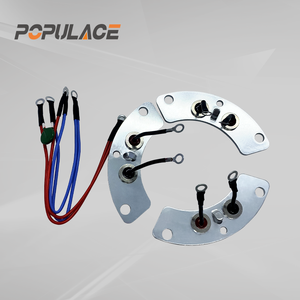
Chemical surface treatment plants require constant 24/7 low-voltage, high-current DC rectification in atmosphere saturated with acidic fumes. Modules like the POPULACE T30 alternator diode rectifier bridge provide total physical isolation, preventing chemical corrosion of active semiconductor junctions.
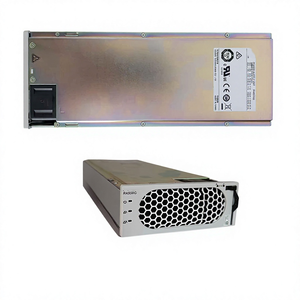
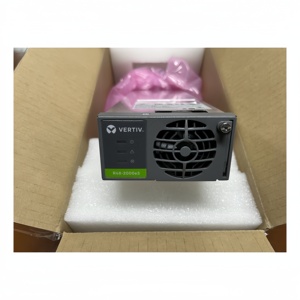
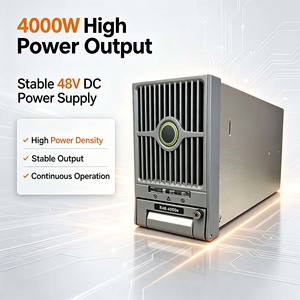
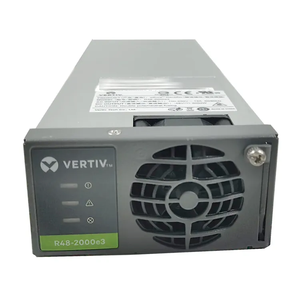
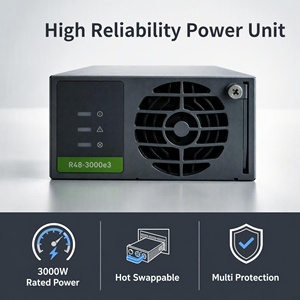
With Turkcell, Vodafone, and Türk Telekom rapidly expanding 5G outdoor base stations across urban and maritime corridors, hot-swappable 48V rectifiers (such as the ZHIHENG R4850G and Vertiv R48-3000e3) ensure continuous power delivery with >96% energy efficiency and zero downtime during maintenance.
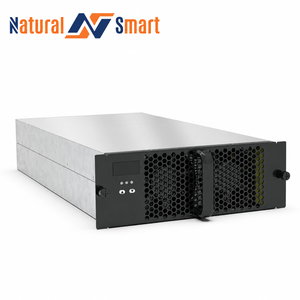
High-power public DC charging hubs along major transit highways demand scalable 20kW, 30kW, and 40kW AC/DC charging modules operating between 150V to 1000V DC. Full encapsulation safeguards the sensitive power electronics from extreme road dust, rain ingress, and thermal ambient spikes up to +50°C.
For mission-critical deployments in coastal and industrial locations like Istanbul, choosing the appropriate power supply protection mechanism is a paramount engineering decision. Standard acrylic, silicone, or polyurethane conformal coatings apply a thin film (typically 25–75 microns) over PCB components. While effective against light moisture, conformal coatings remain vulnerable to pinhole voids, mechanical scraping during installation, thermal expansion stress, and gradual moisture vapor transmission over time.
Conversely, full resin encapsulation involves submerging the entire power assembly inside an aluminum or flame-retardant polymer enclosure and vacuum-potting it with high-grade epoxy or silicone compounds. This process completely eliminates air pockets, forming a solid-state structure with exceptional physical and thermal characteristics.
| Performance Characteristic | Open-Frame SMPS | Conformal Coated PCB | Full Resin Encapsulated (Potted) |
|---|---|---|---|
| Ingress Protection Rating | IP00 / IP20 | IP54 Equivalent | IP67 / IP68 Fully Submersible |
| Thermal Conductivity (λ) | Air convection (~0.026 W/mK) | Air convection (~0.03 W/mK) | Potting Compound (1.5 - 2.5 W/mK) |
| Vibration & Shock Resistance | Low (1G - 2G max) | Moderate (2G - 3G) | Extreme (Up to 10G IEC 60068-2-6) |
| Corrosive Gas Isolation (H₂S, SO₂) | Zero Protection | Partial (Risk at component pins) | 100% Hermetic Isolation |
| Dielectric Isolation Voltage | 1500V - 2000V AC | 2500V AC | >3000V - 4500V AC High Pot |
| Expected Service Life (Istanbul Coastal) | 2–4 Years | 5–7 Years | 12–15+ Years Continuous |
A common misconception in power supply design is that encapsulating electronics inside a solid compound creates a thermal trap that leads to overheating. In reality, liquid potting compounds engineered with high thermal conductivity (λ ≥ 2.0 W/mK) act as an efficient thermal bridge. Heat generated by power MOSFETs, magnetic transformers, and output diodes is rapidly conducted outward from the hot spots to the aluminum outer case, which functions as an integrated heatsink. This reduces internal hot-spot temperature differentials by up to 25°C compared to air-cooled open-frame units, directly doubling component lifespan based on the Arrhenius thermal acceleration law.
Turkey’s national Industry 4.0 strategy and 2030 Decarbonization Roadmap are driving a massive transformation across regional manufacturing ecosystems. Key development vectors influencing power supply specification in Istanbul include:
Combining German-standard quality control with scalable manufacturing to deliver uncompromised reliability for global export.
Every manufacturing step—from SMT component placement and automated optical inspection (AOI) to vacuum potting and final assembly—is strictly monitored under audited quality management standards.
Prior to shipment, 100% of power supply modules undergo rigorous automated burn-in testing at elevated ambient temperatures (+50°C) under full load conditions to eliminate early life cycle failure risks.
Complete compliance documentation including EMC 2014/30/EU, Low Voltage Directive LVD 2014/35/EU, RoHS test reports, and TÜV certificate files provided upfront for rapid local compliance verification.
In-house R&D engineering teams can modify output voltage curves, pinout layouts, chassis dimensions, and firmware parameters for specialized equipment platforms.
Experienced in shipping to Turkey's major entry ports (Ambarlı, Haydarpaşa, and Sabiha Gökçen Cargo Hub). We provide complete ATR movement certificates and customs documentation to support smooth clearance under the EU-Turkey Customs Union.
Guaranteed component lifecycle support for OEM machine platforms, maintaining backward compatibility and form-fit-function continuity for 10+ years.
Direct answers regarding certification, customs handling, thermal performance, and local compatibility.
Because Turkey is part of the EU-Turkey Customs Union, products bearing valid CE marking and accompanied by a Declaration of Conformity (DoC) and ATR movement certificate pass through Turkish Customs (such as Ambarlı or Haydarpaşa) smoothly without requiring duplicate local TSE testing for standard industrial power electronics.
Coastal industrial areas in Istanbul experience high ambient relative humidity combined with airborne marine salt particles and airborne sulfur from shipping channels. Full potting encapsulates all electronic components in solid resin, completely blocking moisture and salt mist ingress that would otherwise cause micro-arcing and copper trace oxidation on standard PCBs.
Yes. Modules like the ZHIHENG R4850G, Vertiv R48-3000e3, and Emerson R48-2000e3 strictly follow standard 1U/3U subrack dimensions, connector interfaces, and CAN bus communication protocols, making them direct plug-and-play replacements for cabinets manufactured by Huawei, Vertiv, ZTE, and ETP48 series systems.
Our EV charging power modules utilize internal high-velocity forced air channels combined with potted magnetic assemblies and intelligent variable-speed fans. They maintain 100% full output power up to +50°C ambient temperatures with graceful thermal derating up to +75°C, ensuring reliable charger operation even inside sun-baked highway enclosures.
Every shipment includes a full factory acceptance test (FAT) report, 100% burn-in certificates, CE Declarations of Conformity, RoHS/REACH compliance statements, and detailed mechanical CAD/PDF drawings for immediate integration by your engineering team.
Standard stock power modules can be dispatched via expedited air freight to Istanbul Airport (IST) or Sabiha Gökçen (SAW) within 3 to 5 business days. Customized OEM/ODM production runs typically carry a 3- to 4-week lead time depending on order volumes and chassis specifications.
