Nagoya, as the industrial heartland of Japan’s Chubu region and Aichi Prefecture, stands as an unrivaled global hub for automotive manufacturing, high-precision machine tools, industrial robotics, and advanced transportation infrastructure. Operating within this ultra-demanding manufacturing ecosystem requires power electronics that transcend standard off-the-shelf commercial power supplies. Chassis mount power supplies are engineered specifically to overcome the physical, thermal, and electromagnetic constraints imposed by modern sealed industrial enclosures, machine tool control cabinets, and edge automation racks.
Unlike traditional DIN-rail power supplies that rely almost exclusively on free-air convection cooling, chassis mount AC/DC rectifiers and DC/DC converters utilize direct conduction cooling through heavy-gauge aluminum or cold-rolled steel baseplates. In harsh Nagoya factory environments—where airborne oil mists, metallic particulates from machining operations, and high ambient temperatures inside IP65/IP67 sealed control boxes prevent fan-assisted active airflow—conduction-cooled chassis mount architecture provides an vital thermal bridge. By transferring internal heat directly to the system enclosure wall or external cold plate, these units eliminate thermal hotspots, prevent premature electrolytic capacitor degradation, and guarantee continuous operational stability under heavy duty cycles.
Integrated thermal baseplates transfer heat directly to cabinet walls, eliminating internal fans and enabling sealed IP65/IP67 enclosure deployment without thermal derating.
Active Power Factor Correction (PFC > 0.99) supporting global single-phase and 3-phase AC inputs (85V–530V AC) with exceptional immunity to grid fluctuations.
Vibration-proof mechanically potted sub-assemblies tested to JIS C 60068 standards, capable of enduring continuous 5G shock loads on robotic arms and AGVs.
The procurement requirements of Nagoya’s OEM engine-builders, automated guided vehicle (AGV) integrators, and semiconductor equipment fabricators demand precise electrical customization. Understanding how chassis mount power modules integrate into localized manufacturing pipelines provides a distinct competitive advantage:
In Toyota City and Kariya assembly plants, robotic arms experience intense micro-vibrations and electromagnetic surge transients caused by heavy inductive welding equipment. Chassis mount power supplies equipped with wearless electronic DC MosFET switching modules replace mechanical relays, preventing contact erosion and insulating 24V control PLCs from high-frequency inductive kickback.
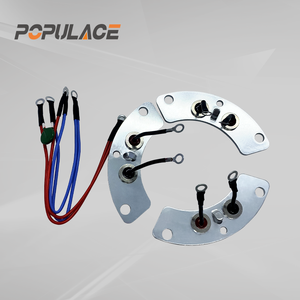
Nagoya’s advanced metal finishing facilities require stable, ripple-free high-current DC rectification. Custom modules such as the POPULACE 220V T30 bridge rectifier deliver high current density and low AC harmonic distortion, ensuring uniform galvanic deposition in chrome, zinc, and precious metal plating lines.
Automated material handling units operating within Komaki and Tokoname logistics parks utilize 48V/80V lithium battery banks. Chassis-mounted DC/DC step-down converters stabilize onboard sensor networks, LiDAR units, and drive actuators, operating seamlessly under continuous mechanical acceleration and thermal variations.
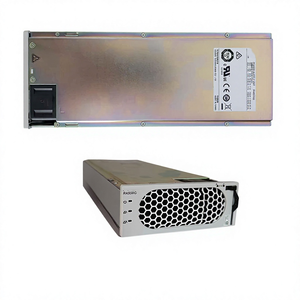
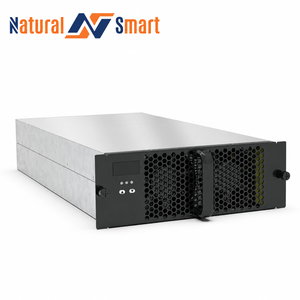
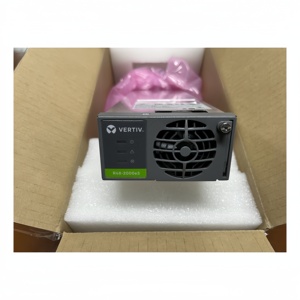
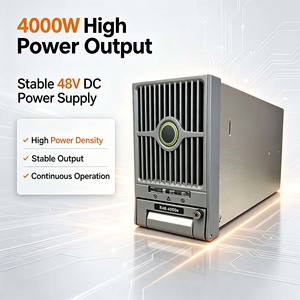
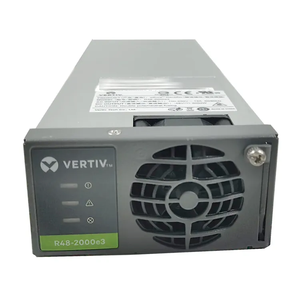
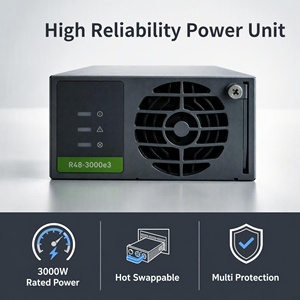
High-efficiency rectifiers (e.g., ZHIHENG R4850G and Vertiv R48-3000e3 series) form the backbone of 5G telecom cabinets and smart factory edge servers across Aichi. Offering hot-swappable 48V DC constant voltage output and up to 96.8% efficiency, these units minimize heat dissipation inside enclosed telecom shelters.
Selecting the optimal form factor is vital for machine performance, heat mitigation, and compliance with Japanese Industrial Standards (JIS). The table below contrasts Chassis Mount modules with traditional DIN-Rail and Open-Frame counterparts:
| Parameters & Features | Chassis Mount Power Supply | Standard DIN-Rail Unit | Open-Frame Design |
|---|---|---|---|
| Primary Cooling Method | Conduction / Baseplate | Free-Air Convection | Forced Air / Fan Required |
| Dust & Moisture Resistance | High (Fully Enclosed / Potted) | Moderate (Vented Casing) | Low (Exposed PCB Components) |
| Vibration Tolerance (JIS C 60068) | Extreme (Up to 5G - 10G) | Moderate (1G - 2G) | Low (Requires Custom Dampers) |
| Operating Temperature Range | -40°C to +85°C Baseplate | -25°C to +60°C Ambient | -10°C to +50°C (Sensitive to Airflow) |
| Cabinet Space Efficiency | Ultra-Thin Profile / Wall Mounting | Vertical DIN-Rail Height Needed | Custom Standoffs Required |
| Ideal Nagoya Industry Use | Robotics, CNC, AGV, Electroplating | Standard Control Panels | Enclosed Consumer Electronics |
The industrial electronics landscape in Central Japan is undergoing a profound transformation driven by three major vectors: smart factory automation (Industry 4.0), carbon neutrality targets, and the rapid expansion of EV battery manufacturing.
1. Adoption of 380V/48V DC Microgrid Architecture: Nagoya’s leading automotive component plants are increasingly replacing traditional AC distribution inside factories with high-efficiency DC microgrids. By connecting solar PV arrays, industrial energy storage systems (BESS), and regenerative drive motors directly to a high-voltage DC bus (450V–820V DC), energy losses from multiple AC-to-DC conversion stages are dramatically reduced. Chassis-mounted DC/DC converters play a central role in stepping down this DC backbone voltage to 24V or 48V DC for sensitive control systems.
2. High-Power EV Infrastructure Modules: As Aichi Prefecture leads Japan's transition toward electric vehicle mass production, the demand for modular 20kW, 30kW, and 40kW DC charging power rectifiers (capable of wide output ranges from 150V to 1000V DC) has surged. Chassis-mounted rectifiers with active liquid or high-velocity conduction cooling enable compact fast-charging stations across highway networks and industrial fleet depots.
3. Inrush Current Protection & Grid Stability: Heavy industrial machinery switching on simultaneously can cause severe line voltage dips and nuisance tripping of upstream circuit breakers. Integrating active AC Inrush Current Limiters (ESB series) alongside chassis power supplies ensures soft charging of large internal capacitor banks, safeguarding sensitive PLC controllers throughout the production line.
As an established manufacturer and global supplier of high-grade industrial power electronics, our commitment to engineering excellence is reflected in our fully traceable manufacturing processes, ISO 9001:2015 certification, and adherence to stringent European and international safety frameworks (UL, CSA, CE, RoHS, REACH).
100% of our switch-mode power supplies and rectifiers undergo rigorous burn-in testing under full electrical load, guaranteeing absolute reliability prior to dispatch.
Direct access to design engineers for custom output voltages, tropicalized PCB conformal coatings, modified wiring harnesses, and tailored firmware set-points.
Innovative UMS semiconductor switching relays eliminate mechanical contact wear, providing millions of trouble-free switching cycles in high-frequency DC applications.
Consult directly with our power electronics application specialists. We review your load profiles, enclosure thermal dynamics, and mechanical drawings to deliver optimized, quote-ready power solutions within 24 hours.
Get a Quote