Designed for seamless integration into commercial & industrial BESS containers, telecom power cabinets, EV fast-charging stations, and microgrid installations across Greater Melbourne.
The State of Victoria is undergoing one of the fastest energy supply decarbonizations in the Southern Hemisphere. Driven by the Victorian Renewable Energy Targets (VRET 2030 target of 65% and 2035 target of 95%), the closure of legacy brown-coal power assets in the Latrobe Valley has introduced unprecedented operational dynamics into the National Electricity Market (NEM). Greater Melbourne—as Victoria's primary industrial and urban demand center—faces significant challenges regarding grid voltage stability, network congestion, peak demand tariffs, and strict power quality constraints.
As a leading Tier-1 China Energy Storage System Manufacturer & Power Electronics Supplier, our engineering teams deliver fully integrated, high-reliability utility, Commercial & Industrial (C&I), and residential energy storage solutions engineered explicitly for Australian grid standards. By pairing high-density Lithium Iron Phosphate (LiFePO4) cell chemistries with robust, high-frequency AC/DC power conversion modules and active thermal management, our hardware withstands Victoria's highly volatile weather shifts—ranging from freezing winter mornings in the Yarra Ranges to 45°C summer heatwaves in Laverton and Dandenong.
Commercial precincts in Melbourne West (Truganina, Altona) and Melbourne South-East (Braeside, Hallam) face aggressive network demand charges from Distribution Network Service Providers (DNSPs) like Powercor and United Energy. Our containerized BESS units (500kWh to 2MWh) store excess roof-mounted solar generation, releasing it during 4:00 PM - 9:00 PM peak tariff windows to drop peak demand charges by up to 42%.
Ultra-fast DC charging depots (150kW - 350kW) installed along the Hume Freeway corridors and Melbourne Metropolitan centers frequently exceed existing localized transformer capacities. Our modular EV power modules and buffer batteries absorb grid power continuously at lower rates and deliver high-current bursts during multi-vehicle rapid charging sessions without triggering network upgrades.
Melbourne's agricultural export and cold chain facilities (Epping, Broadmeadows) rely on zero power interruptions. Utilizing our industrial-grade bi-directional power conversion systems (PCS) and hot-swappable 48V/220V rectifier banks, asset managers experience instantaneous micro-second islanding when localized grid trips occur during severe thermal storms.
Deploying energy storage hardware in Victoria requires full compliance with Australian National Standards. Below is an engineering overview of our product design parameters against local regulatory demands.
| Australian / Victorian Standard | Technical Mandate & Scope | Our Supply Chain & Manufacturing Solution | Grid / Site Impact |
|---|---|---|---|
| AS/NZS 5139:2019 | Safety of battery systems for use with power conversion equipment | Integrated non-combustible IP65 outdoor enclosures, pre-wired thermal runaway isolation, and explosion-proof relief valves. | Guarantees rapid approval from Energy Safe Victoria (ESV) and local certified electrical inspectors. |
| AS/NZS 4777.2:2020 | Grid connection of energy systems via inverters (Inverter Requirements) | Firmware-configured Volt-VAR and Volt-Watt response curves, under-frequency response, and active power control. | Seamless grid interconnection across CitiPower, Powercor, AusNet Services, Jemena, and United Energy networks. |
| IEC 62619 / UL 1973 | Cell level & Pack level electrical and thermal safety standards | Tier-1 Automotive-grade LiFePO4 cells with continuous multi-point internal thermal monitoring and smart BMS isolation. | Extended cycle life (>6,000 cycles at 80% DoD) under harsh industrial operation. |
| AEMO FCAS Compliance | Fast Frequency Response (FFR) within <1 second to stabilize grid inertia | High-frequency rectifiers and advanced PCS controller capable of bi-directional power injection within <5ms. | Enables asset owners to monetize energy assets via Australian spot market frequency ancillary services. |
As Victoria aims for 2.6GW of energy storage capacity by 2030 and 6.3GW by 2035, the commercial and technical expectations placed upon Chinese manufacturing partners have shifted dramatically. Simple cell sourcing is no longer enough; complete system intelligence is required.
With wholesale electricity prices in Victoria fluctuating rapidly—often dropping into negative pricing during sunny periods due to rooftop solar saturation and spiking during evening peaks—our energy storage systems feature native Virtual Power Plant (VPP) communications protocols (OpenADR 2.0b, Modbus TCP, IEEE 2030.5). This allows Australian aggregators to remotely control dispatch strategies dynamically.
Melbourne's temperate climate presents large thermal swings. Industrial users are rapidly transitioning from legacy forced-air cooling to closed-loop Liquid Cooling BESS architectures. Our liquid-cooled outdoor battery cabinets maintain cell-to-cell temperature differentials below 2.5°C, reducing parasitic HVAC auxiliary power consumption by over 30% and extending system service life by up to 4 years.
Combining rigorous German quality management methodologies (ISO 9001:2015 audited processes) with high-efficiency Chinese manufacturing, we deliver bankable energy storage systems engineered for minimum total cost of ownership (TCO).
Every power module, rectifier switch, and battery pack undergoes rigorous high-temperature burn-in testing, insulation resistance checks, and dynamic load testing prior to container loading at our factory.
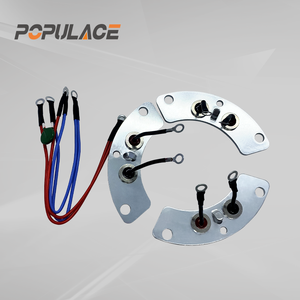
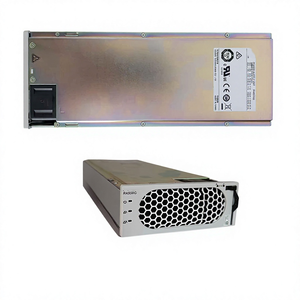
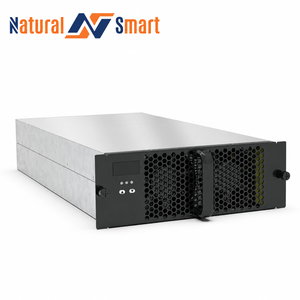
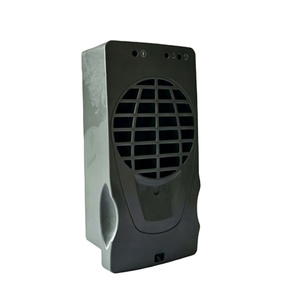
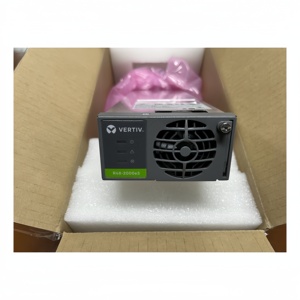
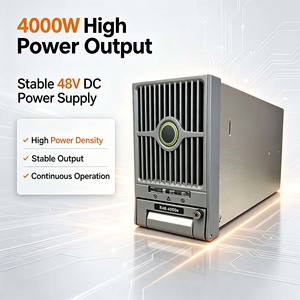
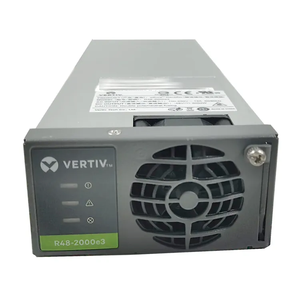
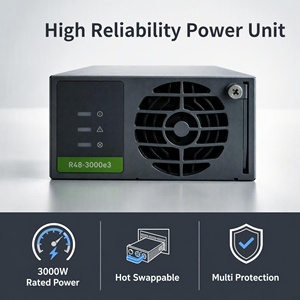
Our 48V telecom rectifiers and high-voltage energy storage converter modules feature true hot-swappable redundancy. System power can be expanded seamlessly from tens of kilowatts up to multi-megawatt configurations.
We provide end-to-end logistics handling including sea freight containerization straight to the Port of Melbourne (DP World / Patrick Terminals), managing customs documentation, hazardous goods (DG Class 9) compliance, and local transport coordination.
Speak directly with our senior power electronics engineers and Energy Storage solution architects. We provide full technical proposals, single-line diagrams (SLDs), and factory-direct pricing tailored for your Melbourne or Victorian grid project.
