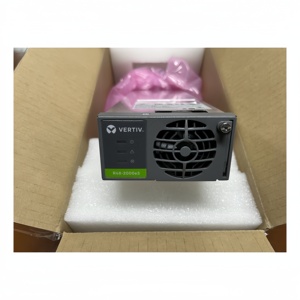
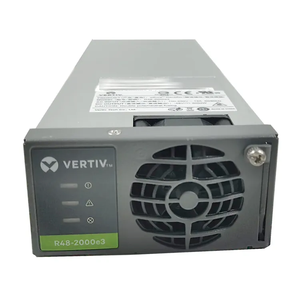
Engineered for data centers, telecom base stations, EV charging infrastructure, and heavy industrial automation across Ireland.
The Republic of Ireland has rapidly evolved into Western Europe’s premier hub for hyperscale data centers, biopharmaceutical manufacturing plants, advanced semiconductor fabrication, and expanding renewable microgrid architectures. As industrial automation across key commercial hubs such as Dublin, Cork, Galway, and Limerick transitions toward higher power density and sophisticated power electronics, grid stability and power quality have become top-tier operational priorities for electrical engineers and procurement specialists.
One of the most pressing challenges faced by facilities management and panel builders operating within the Irish grid standard framework (managed primarily by ESB Networks and EirGrid) is nuisance tripping of circuit breakers caused by extreme inrush current surges. When large switch-mode power supplies (SMPS), high-capacity AC/DC rectifiers, heavy industrial transformers, or variable speed drives (VSDs) are energized, their uncharged DC-link capacitors draw instantaneous surge currents that can exceed 20 to 60 times the nominal continuous operating current ($I_{peak} \gg I_{nominal}$).
Evaluating current limiter suppliers and exporters serving the Ireland market requires an end-to-end understanding of localized power compliance, thermal management in high-density enclosures, and the technical distinctions between passive NTC thermistors, phase-fired thyristors, and advanced active resistor-relay current limiters (such as the ESB series). This document serves as a comprehensive guide for Irish electrical specifiers, systems integrators, and industrial equipment importers seeking robust current control solutions.
To select the correct current limiter module or power supply for an industrial deployment in Ireland, design engineers must analyze the underlying physics of electrical transient suppression. Current limiters fall into two broad architectural categories: passive thermal-dependent limiters and active electronic bypass systems.
Negative Temperature Coefficient (NTC) thermistors are historically common due to low unit cost. Upon cold start, the NTC exhibits high resistance, suppressing the initial current spike. As current flows, internal power dissipation causes the thermistor to heat up, reducing its resistance and allowing full current passage.
However, NTC limiters present severe limitations in mission-critical applications across Irish pharmaceutical cleanrooms and data centers:
For high-reliability infrastructure, active limiters (such as German-engineered ESB platforms) utilize high-surge power resistors coupled with a precision-controlled bypass relay or semiconductor MosFET relay.
Upon connection to the mains grid (1-phase 230V or 3-phase 400V 50Hz AC common in Ireland), the current flows exclusively through a fixed power resistor, charging the load capacitors smoothly. Once the DC-link voltage reaches a predetermined threshold (typically < 10ms to 50ms), an integrated control circuit closes an ultra-low-wear relay across the resistor.
This active approach completely bypasses the current-limiting element during continuous operation, yielding zero thermal accumulation and guaranteeing immediate reset capability even during micro-power cuts.

All power solutions and inrush current limiter platforms distributed throughout the Ireland market are manufactured under rigorous DIN EN ISO 9001:2015 quality systems. From automated Surface Mount Technology (SMT) component placement to 100% full-load burn-in testing, our production facilities guarantee flawless execution.
Current limiters, rectifiers, and specialized power modules serve critical operational roles across major sector hubs in Ireland.
Data centers located in Grange Castle, Blanchardstown, and North Dublin consume a significant percentage of Ireland's grid capacity. High-density server cabinets housing parallel switch-mode power supplies can draw massive peak switch-on currents during power maintenance switchovers.
Deploying 3-phase active inrush current limiters prevents nuisance tripping of Type B and Type C circuit breakers on main distribution panels, protecting sensitive server hardware from grid voltage dips.
Global pharmaceutical leaders operating in Ringaskiddy (Cork) and Parkmore (Galway) run continuous process automation that requires zero unscheduled downtime. High-power electroplating, chemical dosing rectifiers, and climate control pumps generate heavy capacitive and inductive loads.
Industrial current limiters provide clean energy transitions, preventing harmonics and line flicker that could trigger cleanroom safety interlocks.
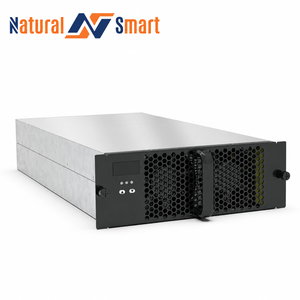
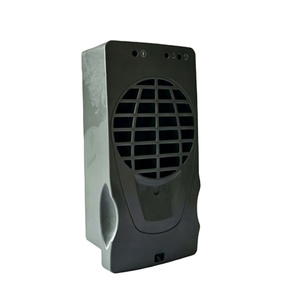
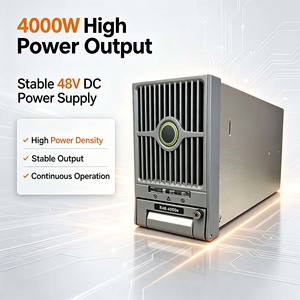
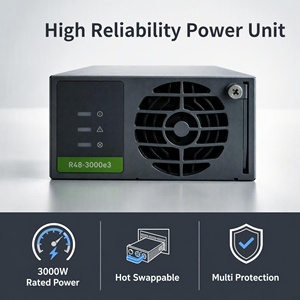
Nationwide broadband expansion and 5G base stations deployed across remote areas of Kerry, Donegal, and Mayo rely on robust telecom rectifiers (such as 48V 50A and 3000W modules). Hot-swappable rectifier systems equipped with built-in soft-start current limiting ensure seamless battery buffering during utility power dropouts.
Ireland's commitment to EV adoption and commercial fleet electrification has increased demand for high-capacity 20kW to 40kW DC EV charging modules. Incorporating active current limiting at the AC input stage prevents local transformer overload during high-demand fast charging cycles.
A detailed side-by-side comparison for system designers specifying hardware for Irish commercial installations.
| Performance Parameter | NTC Thermistor | Phase-Fired Thyristor | Active Resistor-Relay (ESB) | Wearless MosFET Limiter |
|---|---|---|---|---|
| Inrush Peak Reduction | Moderate (3x – 5x) | High (10x – 15x) | Extreme (> 30x) | Precision Digital Limit |
| Cool-Down / Reset Time | Slow (60s – 120s) | Immediate | Immediate (< 10ms) | Instantaneous |
| Continuous Thermal Loss | High (Continuous) | Moderate (Thyristor drop) | Near Zero (Relay Bypassed) | Minimal ($R_{DS(on)}$ dependent) |
| Capacitive Load Capability | Low (< 1,000 µF) | Medium (< 10,000 µF) | Unlimited (> 50,000 µF) | High |
| Suitability for Irish Grid (ESB) | Not Recommended | Industrial Only | Ideal (Data Centers/Pharma) | Ideal (Robotics/Precision) |
Several macro-environmental and regulatory factors are directly impacting how Irish businesses procure current limiting power supplies and industrial rectifiers:
Strict Grid Code Compliance (EN 50549 & EirGrid Standards): Due to the high proportion of renewable energy feed-in (wind power) on the Irish grid, grid voltage stability fluctuates more frequently than in continental Europe. Power supply equipment must tolerate wider input voltage ranges while maintaining strict current harmonics limits under IEC/EN 61000-3-2 and flicker controls under IEC/EN 61000-3-3.
Data Center Power Capping Regulations: The Commission for Regulation of Utilities (CRU) in Ireland has mandated stringent grid connection criteria for data storage facilities. Facility operators must demonstrate high energy efficiency and minimal impact on distribution networks, making high-efficiency rectifiers (with efficiency ratings exceeding 96%) and active inrush limiters essential for new planning approvals.
As a leading supplier and exporter catering to Irish industrial buyers, we bridge the gap between world-class German engineering and local logistics requirements:
In addition to stand-alone AC inrush limiters, modern automated lines require uninterrupted DC power delivery. Combining active current limiting with high-reliability telecom rectifiers (such as 48V 2000W/3000W units) and DC-UPS buffer modules guarantees total continuous operation.
Whether configuring redundant power supplies for a medical device manufacturing assembly line in Galway or replacing obsolete telecom power rectifiers in a regional switching hub, our comprehensive portfolio provides modular flexibility from 10W to 100kW.
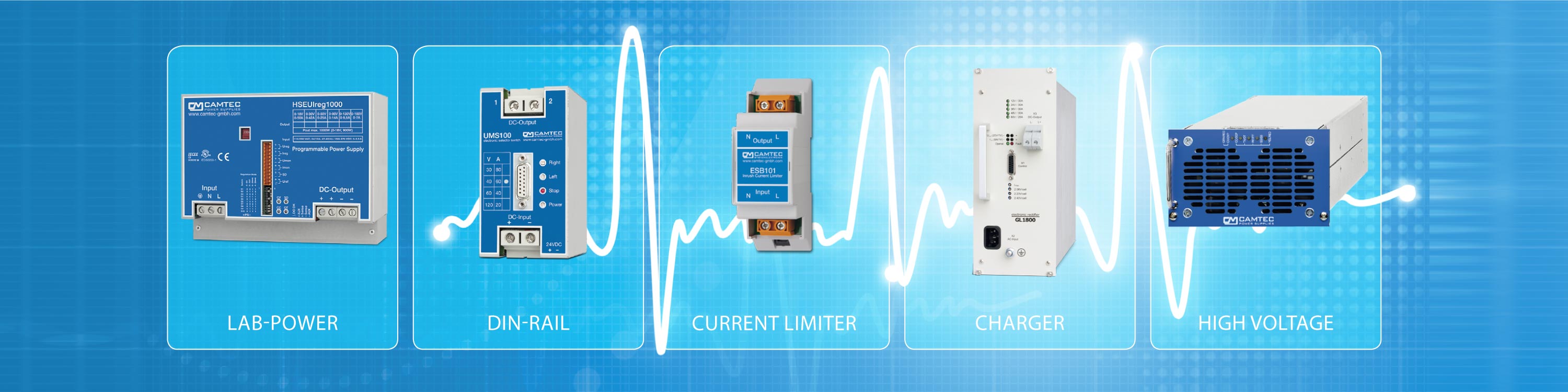
Addressing localized technical concerns, grid compliance questions, and supply chain logistics for the Irish market.
Speak directly with our technical team to specify the ideal inrush current limiter, power rectifier module, or custom DC-UPS solution for your Irish facility.
Get a Quote