Engineered for extreme reliability, hot-swappable redundancy, and seamless power backup across telecommunications, power substations, EV infrastructure, and heavy industrial plants.
A comprehensive engineering overview of direct current (DC) backup power systems, high-altitude derating, grid stability, and industrial battery charging solutions across Colombia.
As Colombia accelerates its industrial modernization, energy transition, and telecommunications expansion, the demand for robust, highly reliable Industrial DC Battery Chargers has surged across key economic hubs including Bogotá, Medellín, Cali, Barranquilla, and Bucaramanga. Colombia's unique topographical profile—ranging from high-altitude Andean plateaus above 2,600 meters to humid tropical coastal corridors—presents complex operating environments for critical power systems.
Industrial facilities, electrical utilities, telecommunications operators, and mining enterprises in Colombia cannot afford power disruptions. Unplanned downtime in critical infrastructure leads to millions of pesos in operational losses, compromised grid stability, and equipment degradation. To meet these stringent operational requirements, modern industrial plants are replacing traditional, low-efficiency SCR (Silicon Controlled Rectifier) chargers with advanced high-frequency switch-mode power supply (SMPS) modular battery chargers and switch-mode rectifiers.
Colombia's National Interconnected System (Sistema Interconectado Nacional - SIN) relies heavily on hydroelectric power, which accounts for over 65% of the national electricity generation. While hydro resources provide renewable energy, long-distance transmission networks traversing mountain ranges are susceptible to lightning strikes, seasonal drought fluctuations (El Niño phenomena), and voltage surges. In electrical substations and power generation facilities managed by companies like ISA, EPM, and Enel Colombia, industrial battery chargers act as the primary defense against control system collapse.
These chargers continuous power 110V DC and 220V DC auxiliary control circuits, protection relays, circuit breaker trip coils, and SCADA monitoring nodes. If primary AC mains drop out, the battery charger seamlessly transfers load requirements to stationary lead-acid (VRLA, OPzS, OPzV) or Nickel-Cadmium (Ni-Cd) battery banks without a single millisecond of transfer phase delay.
Tolerates grid voltage fluctuations from 90V AC to 300V AC, ensuring continuous battery charging during brownouts commonly experienced in rural or industrial Colombian grid fringes.
Fully compliant with Colombia's Reglamento Técnico de Instalaciones Eléctricas (RETIE), guaranteeing insulation safety, harmonic distortion mitigation (PFC > 0.99), and surge protection.
N+1 and N+2 parallel module configuration allows non-disruptive replacement of rectifier units during active operation, reducing Mean Time to Repair (MTTR) to under 5 minutes.
From high-altitude urban centers to coastal logistics ports, specialized DC power systems are customized for Colombia's diverse operating environments.
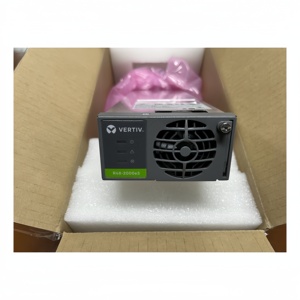
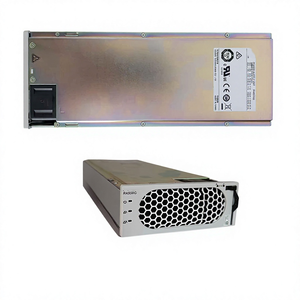
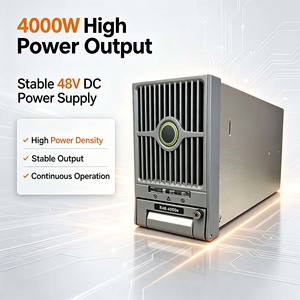
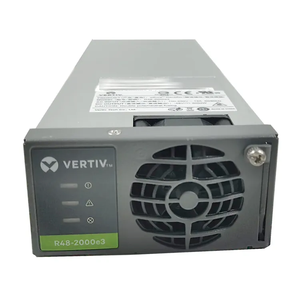
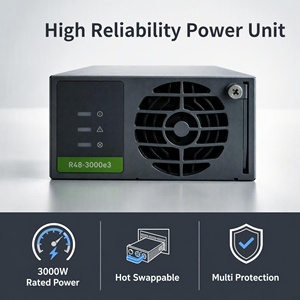
Colombia's major telecom operators (Claro, Tigo, Movistar, WOM) are expanding 4G LTE density and deploying 5G cell sites nationwide. These networks rely heavily on 48V DC hot-swappable rectifier modules like the ZHIHENG R4850G and Vertiv R48-3000e3. Installed in outdoor telecom cabinets and fiber-to-the-home (FTTH) central offices, these rectifiers convert incoming grid power into clean, low-ripple 48V DC power while maintaining battery float charging for emergency backup during localized outages.
In high-voltage transmission substations operated across Antioquia, Cundinamarca, and Santander, 110V and 220V industrial DC chargers feed protective relaying, emergency lighting, and circuit breaker trip mechanisms. Chargers operating at high elevations (e.g., Bogotá at 2,640m above sea level) incorporate thermal derating engineering to compensate for lower air density, preserving thermal performance and component longevity.
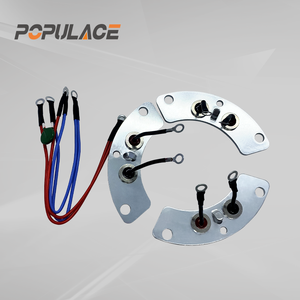
Large-scale coal, nickel, and gold mining projects in northern Colombia require rugged industrial battery chargers equipped with IP54 dust and moisture sealing. Rectifiers supplying electroplating, heavy equipment battery banks, and remote site monitoring utilize heavy-duty diode bridge modules (such as the POPULACE 220V T30) capable of withstanding extreme ambient temperatures, airborne dust, and high mechanical vibration.
Over 52% of Colombia’s land territory belongs to Non-Interconnected Zones (Zonas No Interconectadas - ZNI), including regions like Chocó, Amazonas, and San Andrés. Off-grid solar and wind hybrid microgrids rely on modular DC/DC charging rectifiers and DC-UPS units to regulate energy storage from solar arrays, ensuring smooth power delivery to rural clinics, water purification plants, and local telecom nodes.
Selecting the right rectifier technology depends on target application, voltage requirements, efficiency metrics, and maintenance strategy.
| Feature Parameter | High-Frequency SMPS Rectifier | Industrial SCR Thyristor Charger | Modular EV DC Fast Charger |
|---|---|---|---|
| Primary Target Applications | Telecom 48V, Data Centers, Control Systems | Substation 110V/220V DC, Heavy Power Generation | EV Fleet Depots, Public Charging Stations |
| Conversion Efficiency | 95.5% - 97.0% (Ultra High) | 85.0% - 89.0% (Standard) | 94.5% - 96.5% (High Power) |
| Power Density & Footprint | Compact 1U/2U Rack Mountable | Large Floor-Standing Cabinet | Modular Power Shelf (20kW - 40kW modules) |
| Redundant Architecture | N+1 Hot-Swappable Active Sharing | Dual Redundant Rectifier Cabinets | N+1 Dynamic Module Allocation |
| Harmonic Distortion (THD) | < 3% (Active Power Factor Correction) | 15% - 30% (Requires external LC filters) | < 5% (IEEE 519 Compliant) |
| Cooling Technology | Smart Fan Speed Control / Convection | Natural Convection / Forced Air | Forced Air Cooling with Dust Proof Ducting |
Key engineering shifts driving industrial procurement decision-making across South American markets.
1. Transition to Lithium Iron Phosphate (LiFePO4) Battery Chemistry: Traditionally, industrial plants in Colombia relied on VRLA lead-acid batteries due to initial cost considerations. However, modern industrial facilities are rapidly transitioning to LiFePO4 batteries because of their superior cycle life (3,000+ cycles vs 500 cycles for lead-acid) and wide operating temperature range. Modern industrial DC chargers must feature programmable multi-stage charging profiles (Bulk, Absorption, Float, Equalize) and CANbus/Modbus integration to interface directly with Battery Management Systems (BMS).
2. Altitude Temperature Derating Considerations (2,000m+ Above Sea Level): High-altitude regions such as Bogotá (2,640m), Manizales (2,160m), and Tunja (2,820m) experience reduced atmospheric pressure and thinner air density. Air density decreases by approximately 1% per 100 meters above 1,000m, reducing thermal dissipation effectiveness for forced-air cooled chargers. Custom-engineered exporters supply chargers with larger heatsink surface areas, derated thermal curves, and variable-speed fan dynamics to ensure continuous rated power output without thermal shutdown.
3. Strict RETIE Compliance & Power Factor Correction (PFC): Under Colombia's Ministry of Mines and Energy RETIE guidelines, imported industrial electrical equipment must comply with rigid safety standards. Rectifiers equipped with active PFC achieve a power factor greater than 0.99, reducing reactive power losses and preventing utility penalty tariffs enforced by local distribution companies like Codensa, EPM, and CENS.
German-engineered design protocols, rigorous quality control, and seamless direct export capabilities to Latin America.
Every single power module undergoes 100% full-load burn-in testing and automated electrical safety checks prior to packaging, guaranteeing a zero-defect arrival in Colombia.
From customized DC output voltages (12V, 24V, 48V, 110V, 220V, 400V) to coated circuit boards (conformal coating) for humid coastal zones, we tailor hardware for exact platform needs.
Extensive experience exporting to Colombia (Port of Buenaventura & Cartagena, El Dorado Airport cargo). Full documentation included: Certificate of Origin, CE, UL, and test reports.
Clear engineering and commercial answers for project managers, electrical designers, and import buyers.
Speak directly with our senior power electronics engineers. We provide technical calculations, altitude-adjusted spec sheets, compliance documentation, and competitive factory-direct pricing within 24 hours.
Send an Inquiry