Engineered for severe ambient stress, high-capacitance power supplies, inductive motor startup, and automation machinery across Toronto's industrial corridors.
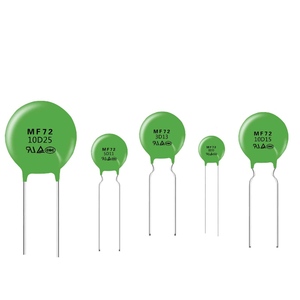
Resistance: 1Ω - 400Ω
Op. Temp: -50°C to +105°C
B-Value: 2200K - 4000K
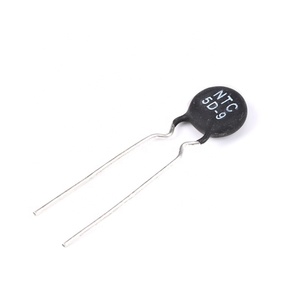
Zero-R (25°C): 5 Ohm
Max Current: 3.0 Amp
Disc Diameter: 9.0 mm
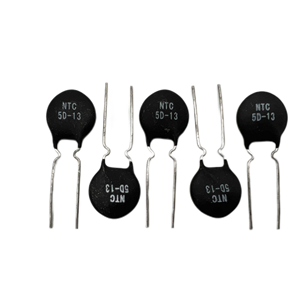
Sensitivity: High Stability
Overload Cap: Enhanced Surge
Application: HVAC & Appliances
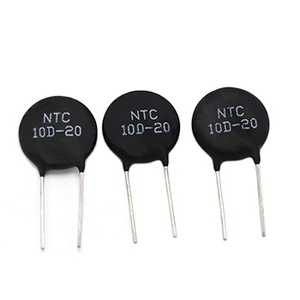
Disc Size: 9mm Radial
Type: Power NTC
Response: < 0.5 Seconds
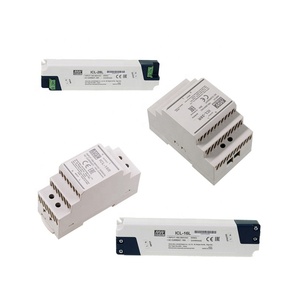
AC Input: 180 - 264 VAC
Continuous: 28 Amp
Mounting: TS-35/7.5 DIN Rail
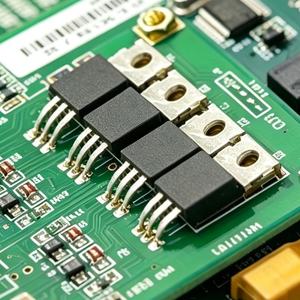
Input Voltage: 180 - 264 VAC
Peak Current: 28A Continuous
Terminal: Heavy Screw Clamp
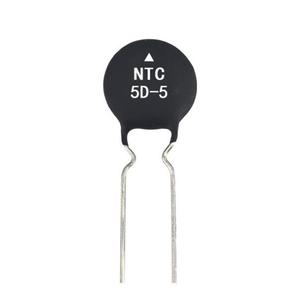
Range: 5D-5 through 18D-5
Body Coating: Flame-Retardant Resin
Compliance: RoHS / REACH
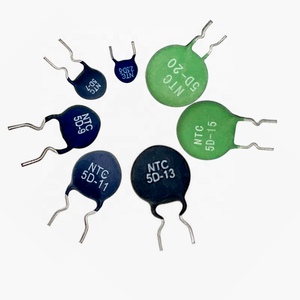
Thermal Range: -55°C to +200°C
B Constant: 2800K
Target Use: Ballasts & SMPS
Active Bypass Timing
Thermal Tolerance
Max Peak Capacity
TÜV Audited Production
Understanding electrical dynamics, capacitive charging spikes, thermal inertia, and component selection for industrial power distribution in Southern Ontario.
When switch-mode power supplies (SMPS), high-capacity bulk capacitors, variable frequency drives (VFDs), or toroidal transformers energize from an AC line, they present a near-zero initial impedance. During the first few milliseconds (typically 1 to 10 ms), charging currents can spike to 20x to 60x nominal operating current.
Without an inrush current limiter (ICL), these extreme current surges trigger nuisance tripping of upstream Type-B or Type-C miniature circuit breakers (MCBs), degrade contactor contacts through electrical arcing, and overstress rectifier bridges. In high-density manufacturing hubs like Mississauga and Brampton, unexplained breaker trips frequently trace back to unsuppressed capacitive inrush in modern power supplies.
Selecting between discrete Negative Temperature Coefficient (NTC) thermistors and active DIN-rail limiters (such as the ESB or ICL-28R series) depends on duty cycles and power scale:
NTC Thermistors: Cost-effective, compact component-level suppression. Cold resistance suppresses initial surge; operational self-heating lowers resistance. However, NTCs require cooling time after power shut-down to recover initial high resistance. Ideal for continuous-run equipment, lighting ballasts, and low-power SMPS boards.
Active DIN-Rail Relay Limiters: Feature integrated power resistors coupled with internal bypass relays. Upon switch-on, current flows through a fixed power resistor, clamping the surge. Within milliseconds, an internal circuit closes a bypass relay, bridging the resistor. This provides zero continuous heat loss, instant readiness for rapid power cycling, and precise surge suppression for heavy industrial loads up to 46 kW.
| Limiting Technology | Typical Power Range | Surge Suppression Method | Recovery / Reset Time | Primary Industrial Use Case |
|---|---|---|---|---|
| NTC Thermistor (Disc Type) | 10 W – 1,500 W | Thermally variable ceramic semiconductor | 60 to 120 seconds (Cooling down) | PCB embedded SMPS, LED Drivers, Small Appliances |
| Power NTC (MF72 / 22D) | 500 W – 3,500 W | Heavy-body ceramic oxide matrix | 45 to 90 seconds | HVAC Control Boards, Industrial Motors, Welders |
| Active DIN-Rail Limiter (ICL-28R) | 3.6 kW – 10 kW | Fixed power resistor + Internal bypass relay | < 100 milliseconds (Instant) | Automation Cabinets, Multi-SMPS Rail Banks |
| Heavy Duty ESB Limiter (3-Phase) | 10 kW – 46 kW | Thyristor / Relay hybrid control array | Immediate / Continuous dynamic protection | EV Charging Hubs, Industrial Automation Lines |
Deploying robust surge limiting technology to satisfy Ontario power grid stability and high-density industrial environment demands.
Automotive assembly plants in Oakville, Oshawa, and Brampton operate complex robotics cells and high-voltage DC battery formation racks. When entire automation banks initialize, simultaneous capacitive surge currents trip high-amperage facility breakers. Utilizing DIN-rail active limiters (like Meanwell ICL-28R and Jeking 28A modules) prevents transformer tripping and guarantees unscheduled uptime for line-critical robotics.
Industrial food processing facilities near Pearson Logistics Hub operate large compressor banks, automated conveyor belts, and flash freezers. Rapid cycling of inductive compressor motors generates violent line voltage sags and surge spikes. High-capacity power NTC thermistors (MF72 15D/18D series) buffer drive electronics from premature contact degradation and PCB line failures.
Toronto's financial sector and Markham’s tech hub rely on enterprise data centers. Uninterruptible Power Supply (UPS) units, high-density server racks, and DC rectifiers draw huge initial charging spikes when transferring to standby generators. Active bypass inrush limiters clean up current draw, preventing breaker trips across power distribution units (PDUs).
Commercial high-rises in Downtown Toronto utilize smart building automation networks. Variable air volume (VAV) controllers, air handling units, and high-efficiency LED lighting ballasts incorporate CDFL and 05D series NTC thermistors to absorb peak turn-on surge, protecting sensitive building management system (BMS) controllers.
Subway signal cabinets, Metrolinx rail electrification controls, and outdoor trackside switch enclosures experience sub-zero winter temperatures down to -30°C. Specifying wide-temperature NTC limiters rated from -55°C to +200°C (such as the 05D and MF52B series) ensures reliable cold-start surge limiting without thermal runaway.
Solar farm micro-grids and Battery Energy Storage Systems (BESS) across Southern Ontario deploy industrial DC/DC converters and grid-tied inverters. Active DIN-rail inrush current limiters manage pre-charge circuits for DC bus capacitors, eliminating contact welding on heavy-duty DC contactors.
Navigating CSA standards, Ontario Electrical Safety Code (OESC) updates, and grid modernization initiatives across Canadian industrial operations.
Industrial control panels installed in Ontario must comply strictly with the Ontario Electrical Safety Code (OESC) and carry recognized safety marks such as CSA C22.2 No. 14 or UL 508. Uncontrolled inrush currents that cause voltage sags or breaker tripping can fail ESA site inspections. Implementing certified active limiters (such as Meanwell ICL-28R) ensures panel builders meet stringent local harmonic and transient limits.
As Toronto plants transition toward Net-Zero carbon targets, legacy linear power supplies are being replaced by high-efficiency switch-mode power supplies (SMPS). While SMPS units improve operational efficiency, their large internal filter capacitors dramatically increase initial line inrush. Modern plant retrofits mandate front-end active inrush protection to preserve power quality across Toronto Hydro and Alectra distribution lines.
Delivering world-class component engineering, ISO 9001:2015 certified quality control, and rapid North American delivery.
Every NTC thermistor and DIN-rail limiter undergoes 100% automated electrical parameter verification, resistance tolerance checking, and surge breakdown testing prior to shipment.
Engineers can request customized ceramic oxide formulations, specific B-values (2200K to 4000K), special lead-forming, and conformal coatings for high-moisture industrial settings.
We maintain inventory reserve for high-demand series (5D-9, MF52B, ICL-28R), guaranteeing fast delivery across Toronto, Mississauga, Vaughan, and Scarborough.
Collaborate directly with senior application engineers to calculate precise peak surge Joules ($I^2t$), continuous power dissipation, and thermal derating curves.
Answers to common technical, regulatory, and purchasing questions regarding industrial inrush limiters in Ontario.
Dimensioning an NTC thermistor requires three parameters: 1) Maximum peak continuous operating current ($I_{max}$), 2) Total energy load of the circuit's bulk capacitors ($E = \frac{1}{2} C V_{peak}^2$), and 3) Minimum initial cold resistance needed to clamp current below breaker/rectifier limits. Ensure the NTC's energy rating ($Joule$) comfortably exceeds the calculated capacitor charging energy.
Standard NTC thermistors retain heat while operating, which lowers their resistance. If power is cycled rapidly (off-on within a few seconds), the hot NTC cannot limit the secondary inrush spike. Active DIN-rail limiters switch in a fixed power resistor for a few milliseconds, then bypass it with a mechanical relay. This means zero heat during operation, instant readiness for rapid power cycling, and zero continuous energy loss.
Yes. Our active limiters and power NTC series carry recognized safety approvals, including UL 60950-1, UL 508, CSA C22.2, and CE marks. They are fully compliant for installation inside industrial control panels inspected by the Electrical Safety Authority (ESA) in Ontario.
Cold ambient temperatures increase an NTC thermistor's initial resistance. At -30°C, an NTC provides higher surge suppression than at +25°C. However, extreme cold can lengthen the time required for the thermistor to self-heat and drop its resistance. For outdoor rail or traffic enclosures in Toronto, specify wide-temperature series rated from -55°C to +200°C (such as the 05D series) or use active relay limiters.
Standard models (including 5D-9, 22D-9, MF72 series, and ICL-28R DIN limiters) are stocked locally in regional warehouse facilities for 24-48 hour delivery across the Greater Toronto Area. Custom wire-leaded, specialized B-value, or conformal-coated batches typically ship within 2 to 3 weeks.
Yes. A single active inrush limiter (e.g., rated at 28A continuous) can front-end multiple 24V DC DIN-rail power supplies on a single circuit breaker. Calculate the total continuous current draw and combined capacitive surge of all supplies to ensure it remains within the limiter's continuous current and maximum energy rating.
Speak directly with our power electronics application team. Send us your system schematic, operating voltage, peak load profile, or component cross-reference list for immediate technical selection and formal pricing.
