Power Rectifier Manufacturers & Exporters in Canada

High-Efficiency AC/DC Power Modules, Telecom Rectifier Systems, and Industrial Direct Current Conversion Technologies Built for Harsh Environments

Industrial Product Portfolio

Featured Power Rectifier Modules & Direct Current Conversion Solutions

Explore high-performance modular rectifiers, telecom power units, EV charging modules, and heavy-duty plating rectifiers engineered for global export and demanding Canadian industrial frameworks.
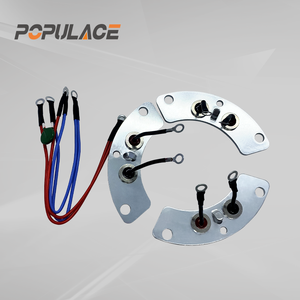
POPULACE 220V Voltage T30 Alternator Electroplating Rectifier Machine Module Bridge Rectifiers Diode T30

POPULACE 220V Voltage T30 Alternator Electroplating Rectifier Machine Module Bridge Rectifiers Diode T30

Get a Quote
ZHIHENG R4850G G2/G6/N2/N6 48V 50A Silver Rectifier Module for Telecom Base Station FTTH Hot-Swappable Compatible with ETP48-200

ZHIHENG R4850G G2/G6/N2/N6 48V 50A Silver Rectifier Module for Telecom Base Station FTTH Hot-Swappable Compatible with ETP48-200

Get a Quote
20kw 30kw 40kw DC EV Charging Power Module AC/DC Rectifier 150-1000V 133A for EV DC Charger CE TUV Certificate

20kw 30kw 40kw DC EV Charging Power Module AC/DC Rectifier 150-1000V 133A for EV DC Charger CE TUV Certificate

Get a Quote
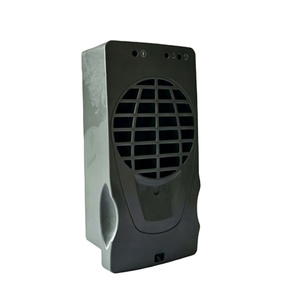
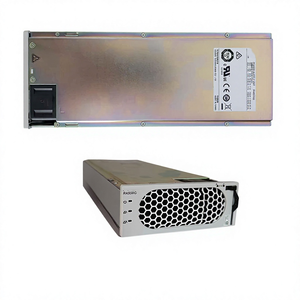
APR48 Rectifier Module 48V Constant Voltage Fast Heat Dissipation Power Module For Long-Term Continuous Operation

APR48 Rectifier Module 48V Constant Voltage Fast Heat Dissipation Power Module For Long-Term Continuous Operation

Get a Quote
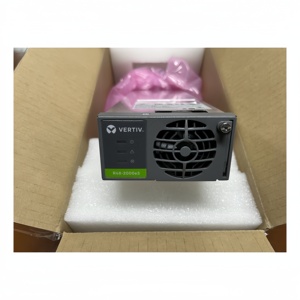
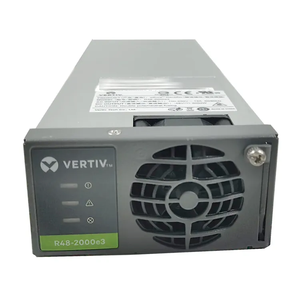
EMERSON VERTIY R48-2000e3 Rectifier Module New and Original 48V 2000W Telecom Power

EMERSON VERTIY R48-2000e3 Rectifier Module New and Original 48V 2000W Telecom Power

Get a Quote
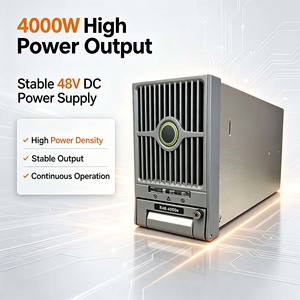
R48-4000e Rectifier Module High Power 4000W 48Volt DC Telecom Rectifier Module For Base Station Cabinet Power System

R48-4000e Rectifier Module High Power 4000W 48Volt DC Telecom Rectifier Module For Base Station Cabinet Power System

Get a Quote
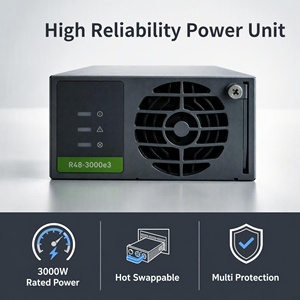
Vertiv R48-3000e3 Telecom Power Rectifier Module High Frequency Network Power 48V 3000W

Vertiv R48-3000e3 Telecom Power Rectifier Module High Frequency Network Power 48V 3000W

Get a Quote
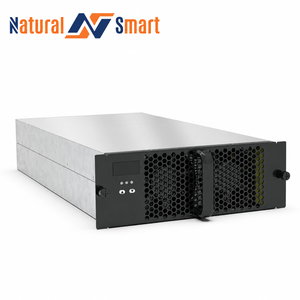
R48-3000e3 Telecom Rectifier Module 3000W 48V Output High Reliability AC DC Power Rectifier Module For Data Center

R48-3000e3 Telecom Rectifier Module 3000W 48V Output High Reliability AC DC Power Rectifier Module For Data Center

Get a Quote
96.5%
Peak Efficiency (SMPS)
-40°C
Cold Start Tolerance
100kW+
Scalable Modular Power
500kh
MTBF Reliability Rating

Executive Summary: The Evolving Power Rectifier Landscape in Canada

Canada’s industrial sector is undergoing a profound energy transition. Driven by stringent national decarbonization mandates, the rapid expansion of 5G telecommunication networks across vast geographical terrains, and massive investments in electric vehicle (EV) charging corridors, the demand for high-efficiency direct current (DC) power rectifiers has reached an unprecedented peak. As an essential link between alternating current (AC) electrical grids and specialized DC-powered equipment, power rectifiers must combine extreme conversion efficiency, active power factor correction (PFC), and robust thermal management.

Canadian electrical infrastructure presents distinct engineering challenges. Industrial operations across provinces such as Ontario, Quebec, Alberta, and British Columbia operate under strict Canadian Electrical Code (CEC) standards, CSA C22.2 certifications, and variable grid voltages (including unique 600V 3-phase industrial distributions). Furthermore, installations in northern territories require equipment designed to endure severe temperature swings ranging from sub-zero winter chills down to -40°C to elevated internal cabinet operational temperatures during peak summer performance.

Technical Insight: Modern switch-mode power rectifiers (SMPS) have replaced legacy SCR (Silicon Controlled Rectifier) units due to their compact footprint, high power density, dynamic response speeds under 10 milliseconds, and ultra-high efficiency ratings exceeding 96.5%. For Canadian system integrators and industrial procurement teams, selecting the optimal power rectifier platform directly impacts operational expenditure (OPEX), thermal management overhead, and system mean time between failures (MTBF).

This technical guide evaluates the engineering considerations, localized Canadian application scenarios, market trends, and technical specifications required when procuring and exporting high-reliability power rectifiers to the Canadian market.

Localized Application Scenarios across Canadian Industry

Power rectifiers serve as the foundational backbone for diverse industrial segments across Canada. Understanding regional application context allows electrical design engineers to correctly specify voltage ripple tolerances, dynamic response parameters, thermal derating curves, and communication protocol integrations.

1. Remote Telecom & 5G FTTH Networks

Extending fiber-to-the-home (FTTH) and 5G cellular coverage across rural Ontario, Northern Quebec, and Western Canada requires ultra-reliable 48V DC power rectifiers. Hot-swappable modules (such as the R4850G and APR48 series) operate within N+1 redundant power shelves, ensuring uninterrupted wireless connectivity even during grid switching or battery float-charging cycles.

2. EV Ultra-Fast DC Charging Corridors

Canada’s Trans-Canada Highway EV infrastructure deployment requires high-power AC/DC conversion modules ranging from 20kW to 40kW per blade. Operating within wide output voltage windows (150V DC up to 1000V DC), these CE/TUV-certified rectifiers enable fast-charging depots to power passenger EVs and commercial heavy fleets efficiently under fluctuating grid inputs.

3. Industrial Electroplating & Anodizing

Southern Ontario’s automotive manufacturing belt relies heavily on low-voltage, high-current electroplating rectifiers (such as the POPULACE 220V T30 module). Delivering continuous, low-ripple DC current is vital for ensuring precise metal deposition, uniform plating thickness, and minimized chemical bath degradation during continuous 24/7 manufacturing cycles.

4. Heavy Mining & Substation Control Systems

In the hard-rock mining hubs of Sudbury, Ontario, and Northern BC, power rectifiers provide stable DC control power for high-voltage switchgear, protection relays, and DC UPS battery banks. Rectifiers built for these environments feature conformal PCB coatings to prevent failure from airborne dust, corrosive ambient gases, and moisture exposure.

5. Hyperscale Data Center DC Backbones

Major cloud hubs in Montreal and Toronto are increasingly adopting high-efficiency 48V DC power distribution architectures. High-capacity 3000W and 4000W rectifiers (such as Vertiv R48-3000e3 and R48-4000e) deliver up to 96.5% thermal efficiency, reducing cooling costs while providing intelligent remote telemetry via SNMP and Modbus protocols.

Key Localized Trends in the Canadian Power Rectifier Market

Engineering departments and procurement officers evaluating power electronics suppliers in Canada must align with five major industry trends reshaping the market:

  • Transition to Silicon Carbide (SiC) Topologies: High-frequency switching circuits utilizing SiC MOSFETs allow power rectifiers to shrink physical dimensions by 40% while maintaining efficiency ratings above 96.5%. This power density gain is crucial for crowded cabinet enclosures.
  • Dynamic Thermal Management for Extreme Climates: Canadian deployments demand rectifiers with intelligent fan-speed control algorithms and low-temperature cold-start heating logic. This prevents thermal shock in remote enclosures exposed to rapid climate changes.
  • Harmonic Mitigation & High Power Factor (PFC > 0.99): Canadian electrical utilities impose strict limits on Total Harmonic Distortion (THD). Modern rectifiers feature active PFC circuits that keep THD below 5%, preventing grid interference and avoiding costly power factor surcharges.
  • Modularity & Zero-Downtime Hot-Swappability: To minimize field service calls in remote regions, Canadian telecommunications and utility providers require hot-swappable rectifier architectures. Defective modules can be replaced live without interrupting the downstream load.
  • Integration of Smart Telemetry & Energy Management: Industry 4.0 standards mandate embedded CAN Bus, RS485, and Ethernet interfaces for real-time monitoring of DC output voltage, load current, thermal metrics, and preventive maintenance alerts.

Power Rectifier Platform Engineering Selection Matrix

The matrix below provides comparative guidance for Canadian specifying engineers matching application demands to power rectifier topologies:

Rectifier Series / Platform Nominal Output Efficiency Rating Primary Industrial Target Key Engineering Feature
POPULACE T30 Series 220V AC / Custom DC 92.5% Industrial Electroplating & Surface Coating Low ripple, heavy-duty bridge diode architecture
ZHIHENG R4850G Series 48V DC / 50A (2400W) 96.2% Telecom Base Stations & FTTH Nodes Hot-swappable, full compatibility with ETP48-200 shelves
DC EV Charger Module (20kW–40kW) 150V–1000V DC 95.8% Commercial Fast EV Charging Depots Ultra-wide output voltage range, CE/TUV dual certified
APR48 Fast-Heat Dissipation 48V DC Constant Volt 95.0% 24/7 Continuous Telecom & Industrial Automation Optimized passive/active hybrid cooling chassis
EMERSON Vertiv R48-2000e3 48V DC / 2000W 95.5% Network Cabinets & Edge Computing High energy density in a compact form factor
Vertiv R48-4000e Heavy Power 48V DC / 4000W 96.0% Central Office Telecommunications & Big Data High-capacity current delivery, robust fault protection
Vertiv R48-3000e3 Telecom Power 48V DC / 3000W 96.5% Data Center DC Grids & Substation Backup Premium eco-mode efficiency, advanced DSP control

Manufacturing Excellence & Direct Export Capabilities to Canada

Partnering with an experienced global exporter of power rectifiers ensures that Canadian system integrators receive products built to exacting international standards with seamless logistics support.

Rigorous Quality Assurance & ISO Certification

Every power rectifier module undergoes multi-stage automated optical inspection (AOI), full-load burn-in testing under elevated temperature ambient conditions, and rigorous dielectric breakdown testing. Certified to ISO 9001:2015 quality management standards, our production lines ensure consistent batch-to-batch reliability.

  • 100% full-load electrical burn-in testing for all production units
  • Conforms to CE, UL, CSA, and RoHS environmental standard directives
  • Traceable component sourcing from tier-1 semiconductor manufacturers

Custom Engineering & OEM Modification Flexibility

We understand that standard off-the-shelf power modules do not fit every custom machine layout or specialized power cabinet. Our in-house research and development team offers full OEM customization services tailored to Canadian project specifications.

  • Customized output voltage setting profiles (12V, 24V, 48V, 110V, 220V, 400V DC)
  • Conformal coating options for tropicalized, humid, or high-salinity applications
  • Custom mechanical mounting brackets, 19-inch rack integration, and busbar layouts

Export & Supply Chain Reliability: We maintain established logistics corridors serving major Canadian commercial entry points including Vancouver, Calgary, Toronto, and Montreal. With streamlined customs documentation, comprehensive HS code classification, and direct technical support, we remove trade friction for Canadian importers.

Frequently Asked Questions by Canadian Engineers & Buyers

Below are technical answers to common questions raised by Canadian procurement officials, electrical contractors, and design engineers when specifying power rectifiers:

Q1: What compliance and safety standards apply to power rectifiers installed in Canada?
In Canada, power rectifiers must comply with the Canadian Electrical Code (CEC Part 1) and relevant CSA safety standards such as CSA C22.2 No. 107.1 for general use power supplies or CSA C22.2 No. 62368-1 for audio/video and ICT equipment. Standard export units featuring international CE, TUV, and UL recognized component marks simplify local field evaluations by authorities having jurisdiction (AHJ) across provinces.
Q2: How do sub-zero Canadian temperatures impact rectifier performance?
Sub-zero environments require rectifiers rated for cold-start operation down to -40°C. Standard commercial components may experience altered semiconductor threshold voltages or electrolytic capacitor ESR spikes at low temperatures. Industrial-grade rectifiers utilize specialized low-ESR capacitors, cold-start heating resistor paths, and conformal coating to ensure smooth startup without voltage overshoot under Canadian winter conditions.
Q3: Can these rectifiers accept 600V AC 3-phase input commonly found in Canadian industrial facilities?
While standard single-phase telecom rectifiers accept wide range inputs (85V–300V AC), heavy industrial power rectifiers and large EV charging modules designed for Canada can be configured for 600V AC 3-phase systems. Alternatively, delta-to-wye step-down transformers or 480V/600V step-down configurations are routinely implemented within modular power distribution cabinets.
Q4: What is the operational difference between high-frequency SMPS rectifiers and traditional SCR rectifiers?
High-frequency Switch-Mode Power Supply (SMPS) rectifiers switch at tens to hundreds of kilohertz (kHz), utilizing small ferrite transformers that dramatically reduce footprint, weight, and energy loss compared to 50/60Hz line-frequency SCR rectifiers. SMPS rectifiers offer faster dynamic response (<10ms), higher power factor (>0.99), and significantly lower output voltage ripple, making them superior for delicate electronics, 5G telecom, and modern plating.
Q5: How does N+1 hot-swappable redundancy benefit remote Canadian field sites?
N+1 redundancy configures power shelves with one additional module beyond the maximum load requirements. If a single rectifier module fails in a remote installation—such as a northern cellular tower—the remaining modules instantly take over the load without dropouts. Field technicians can then perform a hot-swap replacement on their next scheduled maintenance round without interrupting site operations.
Q6: What lead times and shipping options are typical for exporting power rectifiers to Canadian businesses?
Standard modular rectifiers (such as 48V telecom modules) are stocked for rapid air freight delivery, typically reaching Canadian distribution centers within 5 to 7 business days. Custom engineering runs or bulk container shipments for infrastructure projects are delivered via ocean freight to Vancouver or Montreal within 20 to 30 days, supported by complete customs clearance paperwork.

Request Technical Specifications & Wholesale Export Quotes

Partner with an industry-leading power supply manufacturer. Contact our engineering support team today to evaluate your load profiles, discuss custom OEM configurations, or obtain factory-direct quotes for Canadian delivery.