Designed for continuous, uninterrupted operation in traffic signal controllers, ITS roadside cabinets, EV fleet hubs, and telecommunications base stations. Fully compatible with standard backplane systems.
The Greater Seattle metropolitan region—stretching from Everett down to Tacoma, including key corridors along I-5, I-405, and SR 99—presents unique power conversion challenges for traffic control engineers and municipal agencies.
Seattle's urban traffic signal controllers (Type 332, 336, and NEMA TS2 Type 1/Type 2 cabinets) require clean, uninterruptible 24V DC and 48V DC power backbones. Our modular rectifiers incorporate inrush current limiting (ESB technology) to prevent nuisance tripping of upstream circuit breakers during grid restoration following winter storm outages.
Deployments near Elliott Bay, the Port of Seattle, and coastal Puget Sound corridors expose outdoor cabinets to high relative humidity and airborne salt mist. All power electronics are treated with heavy-duty conformal PCB coating, meeting rigorous anti-corrosion standards for long-term continuous operation without humidity breakdown.
Critical arterial infrastructure, such as the SR 99 Alaskan Way Viaduct Replacement Tunnel, the SR 520 Floating Bridge, and Seattle's iconic drawbridges (Ballard, Fremont, University, Spokane St), demand zero-millisecond power transfer. Our DC-UPS buffer modules ensure uninterrupted control logic operation during high-voltage switching events.
With Sound Transit expanding Link Light Rail and Bus Rapid Transit (BRT) routes across King, Pierce, and Snohomish counties, outdoor ticket vending, passenger information displays, and trackside signal power boxes rely on our high-efficiency high-frequency switch-mode power rectifiers to maintain continuous remote telemetry.
Modern traffic management in smart metropolitan zones like Seattle has evolved from basic electro-mechanical relay logic into complex edge-computing networks. Intelligent Transportation Systems (ITS) now house high-definition AI vision sensors, LiDAR monitoring, emergency vehicle preemption receivers, and 5G C-V2X (Cellular Vehicle-to-Everything) roadside units.
This technological leap demands an evolution in the power delivery powertrain. Conventional, unmonitored power supplies introduce ripple noise, heat dissipation challenges, and sudden switch-over delays that crash roadside Linux edge servers. Our high-efficiency AC/DC rectifiers and DC switch-mode power supplies address these precise failure vectors through sophisticated German-engineered topology.
A comparative overview of power architecture resilience under real-world Pacific Northwest utility grid conditions.
As Seattle advances its Vision Zero road safety initiative and expands smart city IoT connectivity, power supply specifications are evolving rapidly to meet new federal and municipal engineering codes.
Seattle Department of Transportation (SDOT) is upgrading key traffic intersections with AI-driven adaptive traffic signal timing (e.g., SCOOT/SCATS integration). These systems use high-performance industrial computers mounted inside signal enclosures, requiring ultra-low-noise 48V-to-12V/24V DC step-down converters with dynamic transient response.
In line with Washington State's Clean Buildings Performance Standard, municipal infrastructure projects are incorporating solar PV backbones and localized lithium battery storage into traffic cabinets. Our 450V-820V DC/DC mini-grid converters allow seamless coupling between DC micro-grids and standard 24V control buses without inverter loss.
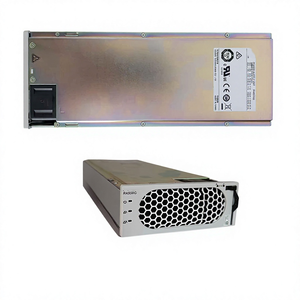
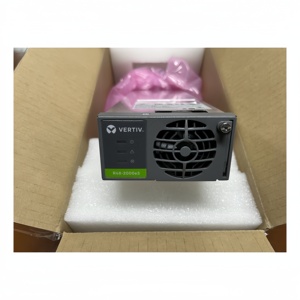
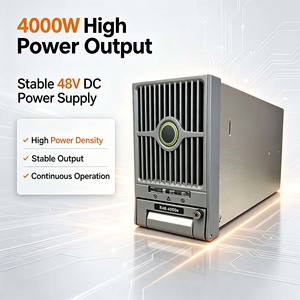
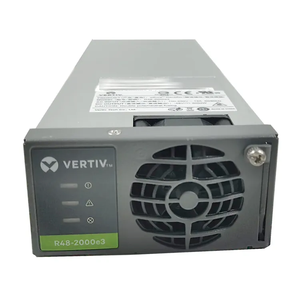
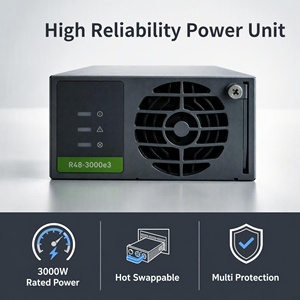
Traditional 120V AC signal cabinet power is giving way to centralized 48V DC bus architectures. 48V systems offer higher energy efficiency, reduced cable copper weight, safer maintenance for municipal electrical technicians, and direct compatibility with hot-swappable telecom rectifiers (such as R4850G and R48-3000e3 series).
Comparing standard off-the-shelf commercial power supplies against our specialized industrial-grade traffic control rectifiers engineered for Seattle municipal projects.
| Feature / Parameter | Standard Commercial Power Units | OEM Traffic Power Rectifiers (Our Engineering) | Impact on Seattle Systems Uptime |
|---|---|---|---|
| Operating Temperature Range | -10°C to +50°C (Forced Air) | -40°C to +75°C (Full Load Derating Profile) | Prevents winter freezing lockups & summer cabinet overheating. |
| Moisture & Salt Protection | Standard Uncoated Solder Mask | Conformal Coated (IPC-CC-830 Standard) | Resists corrosion from Puget Sound salt fog & 37+ inches of annual rain. |
| Inrush Current Protection | Basic NTC Thermistor (Slow Recovery) | Active ESB Electronic Limiter (Instant Reset) | Eliminates nuisance tripping of branch breakers during grid restarts. |
| Switching Component Reliability | Standard Mechanical Relays | UMS Wearless DC MosFET Semiconductor Relays | Provides 10+ million switching cycles with zero contact arcing. |
| Redundancy & Scalability | Fixed Single Output Unit | Hot-Swappable N+1 Modular Rectifiers (48V 50A / 3000W) | Zero-downtime maintenance; scale power from 2kW to 100kW on demand. |
| Safety & Regulatory Certifications | Basic CE Mark Only | UL, CSA, ISO 9001:2015, CE, RoHS, REACH Compliant | Ensures immediate compliance with WSDOT & SDOT electrical inspection. |
We combine rigorous European power electronics design principles with flexible export capabilities, delivering total power solutions that guarantee uptime across global transportation networks.
Every single power module undergoes rigorous, automated end-of-line testing, including full electrical parameter verification, thermal imaging inspection, and documented high-temperature burn-in testing prior to export packaging.
Our product lineup carries worldwide approvals including UL, CSA, CE, RoHS, and REACH certifications. Detailed test reports, Declaration of Conformity documents, and 3D STEP models are readily available for immediate engineering download.
We guarantee form-fit-function availability for OEM platform production life cycles spanning up to 10+ years. Form-factor longevity protects municipal clients from costly redesigns and re-certification cycles.
Whether you are designing NEMA TS2 signal cabinets, upgrading light rail telemetry backbones, or building fast DC charging infrastructure across Washington State, our power engineering team is ready to assist with sizing, specifications, and sample evaluation units.
